ADDIS ABABA: Ethiopia said Wednesday it would not be deterred from impounding water at its Nile mega-dam, despite a persistent impasse with downstream countries worried about their water supply.
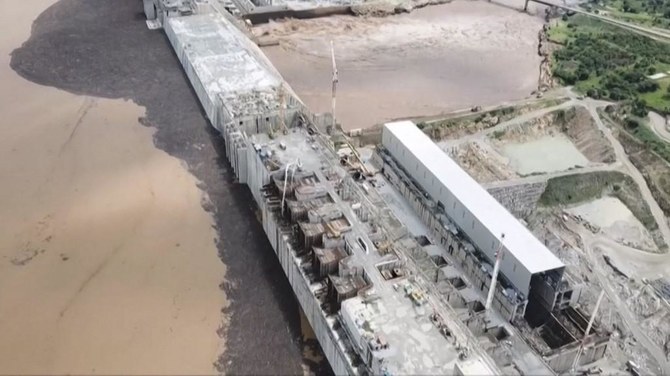
The Grand Ethiopian Renaissance Dam has been a source of tension in the Nile River basin ever since Ethiopia broke ground on it in 2011.
Downstream neighbors Egypt and Sudan view the dam as a threat because of their dependence on Nile waters, while Ethiopia considers it essential for its electrification and development.
The latest round of talks concluded Tuesday in Kinshasa with no resolution to long-running disputes over how the dam will be operated.
But Ethiopian water minister Seleshi Bekele told a press conference Wednesday that Ethiopia would continue filling the dam’s massive reservoir during the upcoming rainy season, which normally begins in June or July.
“As construction progresses, filling takes place,” Seleshi said.
“We don’t deviate from that at all.”
The reservoir has a capacity of 74 billion cubic meters.
Filling began last year, with Ethiopia announcing in July 2020 it had hit its target of 4.9 billion cubic meters — enough to test the dam’s first two turbines, an important milestone on the way toward actually producing energy.
The goal is to impound an additional 13.5 billion cubic meters this year.
Egypt and Sudan wanted a trilateral agreement on the dam’s operations to be reached before reservoir filling began.
But Ethiopia says filling is a natural part of the dam’s construction, and is thus impossible to postpone.
Last year Sudan said the filling process caused water shortages including in the capital Khartoum.
Seleshi disputed this Wednesday but said Ethiopia had offered to share data with Sudan during filling this year, adding that officials “don’t want to be made accountable for problems that we haven’t created.”
He complained, though, that Sudan and Egypt spent most of the time in Kinshasa pushing for an elevated role in negotiations for observers South Africa, the United States and the European Union.
Ethiopia has rejected this, saying it would undermine the process headed by the Democratic Republic of Congo, the current chair of the African Union.
Ethiopia’s foreign ministry said Tuesday it expected talks to resume later this month.
Egypt has described them as the last chance to reach an agreement, after President Abdel Fattah El-Sisi said last week that the region faces “unimaginable instability” over the project.
Sudan’s foreign minister, Mariam Al-Sadiq Al-Mahdi, told reporters Tuesday that Ethiopia “threatens the people of the Nile basin, and Sudan directly.”
Seleshi on Wednesday played down the possibility that tensions over the dam would lead to conflict.
“This kind of thinking is unnecessary, and exaggerating this kind of thing doesn’t benefit any country,” he said.


![]()

Ethiopia to go on filling Nile mega-dam despite impasse: Minister
Short Url
https://arab.news/jespp
Ethiopia to go on filling Nile mega-dam despite impasse: Minister
- The Grand Ethiopian Renaissance Dam has been a source of tension in the Nile River basin ever since Ethiopia broke ground on it in 2011


Latest updates


Recommended


© 2026 SAUDI RESEARCH & PUBLISHING COMPANY, All Rights Reserved And subject to Terms of Use Agreement.