

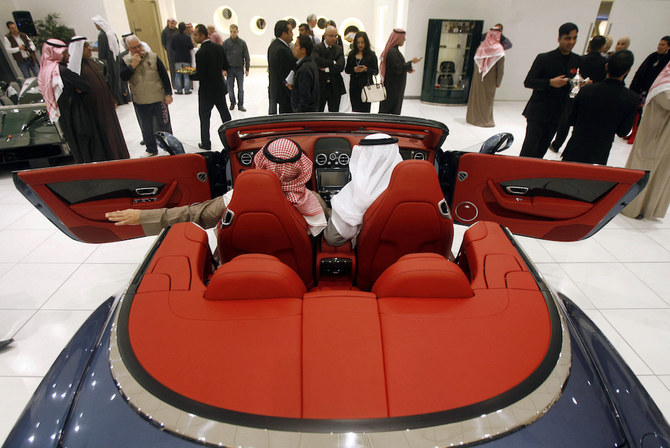


DUBAI: The global pandemic has drastically accelerated digitalization in consumer-facing industries, offering vendors an opportunity to survive the current slump but also pave the way for sustained future growth.
Global car sales were expected to shrink by 9.4 percent by the end of 2020. Many factors have contributed to this slide, including the COVID-19 pandemic and the subsequent decline in consumer purchasing power, plus weaker economies, a reduced need for transportation, and crashing oil prices.
The automotive market in MENA has been equally affected. Vendors in Saudi Arabia — which had one of the world’s fastest-growing motor industries between 2010 and 2015 — had a harsh time in 2020.
Between March and June, new car sales in Saudi Arabia fell by 60 percent, and visits to showrooms dropped by 80 percent. This has had serious repercussions for the service and aftermarket sectors, with the average spend per vehicle declining by 25 percent, periodic maintenance plunging by 75 percent and spare parts sales down by 70 percent.
So is it finally time for the region’s car retail industry to shift online?

A Saudi man looks at Nissan cars during the 30th International Riyadh Motor Show on November 29, 2016 in Riyadh. (AFP/File Photo)
It is certainly something to think about; looking at other markets, online tools have come to the rescue of ailing car dealers. In the US, where car sales are estimated at $840 billion, online transactions still account for only around 1 percent of the total, but their share has started to rise following COVID-19 restrictions.
“With coronavirus, we’ve seen an additional shift in the desire to purchase vehicles online,” Ernie Garcia, CEO of Arizona-based online used car retailer Carvana, told Reuters last August.
Some MENA auto retailers are beginning to recognize the value of online tools, suggesting that the “handshake deal,” which has long defined the regional marketplace, might not be the only way to do business in this sector in the future.
Last June, Mohamed Yousuf Naghi Motors (MYNM) launched its first virtual showroom for BMW cars in Saudi Arabia, allowing customers to remotely explore and compare models from both new and certified secondhand car collections. Mark Notkin, MYNM’s managing director, has described the move as “a step in the right direction.”
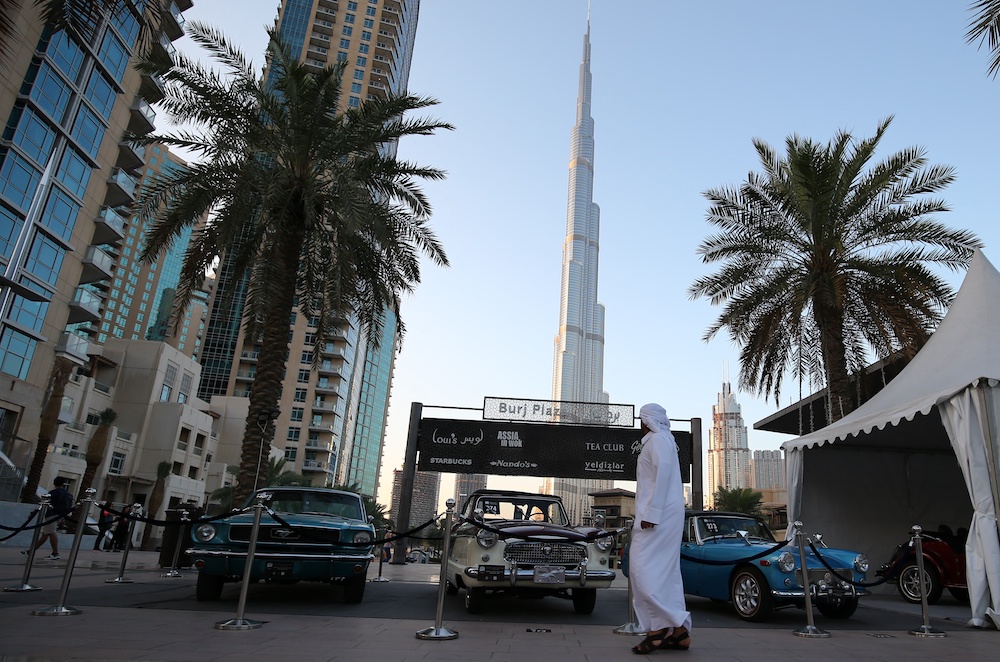
An Emirati looks at classical cars displayed in downtown Dubai on March 24, 2016 during the eight edition of Emirates Classic Car Festival. (AFP/File Photo)
Kia Motors followed suit by launching its “Live Stream Showroom” service, which offers personalized real-time video tours of select Kia dealerships in Saudi Arabia, Qatar and Pakistan. Customers can schedule live one-on-one sessions with a company representative to have their questions answered. Kia is expected to expand the service throughout MENA.
Seeking to lure wary car owners back into service centers and fuel the car aftermarket, Nissan started offering a door-to-door service in Saudi Arabia through a dedicated mobile app. Customers can arrange to have their vehicles picked up from a location of their choice and delivered back to their doorstep serviced and sterilized.
“Vehicle maintenance trends are becoming more convenience-oriented, and customers are now more inclined to avail themselves of services at their home or at their workplace rather than invest time in a service center,” Subhash Joshi, of market research group Frost & Sullivan, told a UAE daily.
It is still early to assess properly customer adoption of the new technologies offered by car retailers in the region.
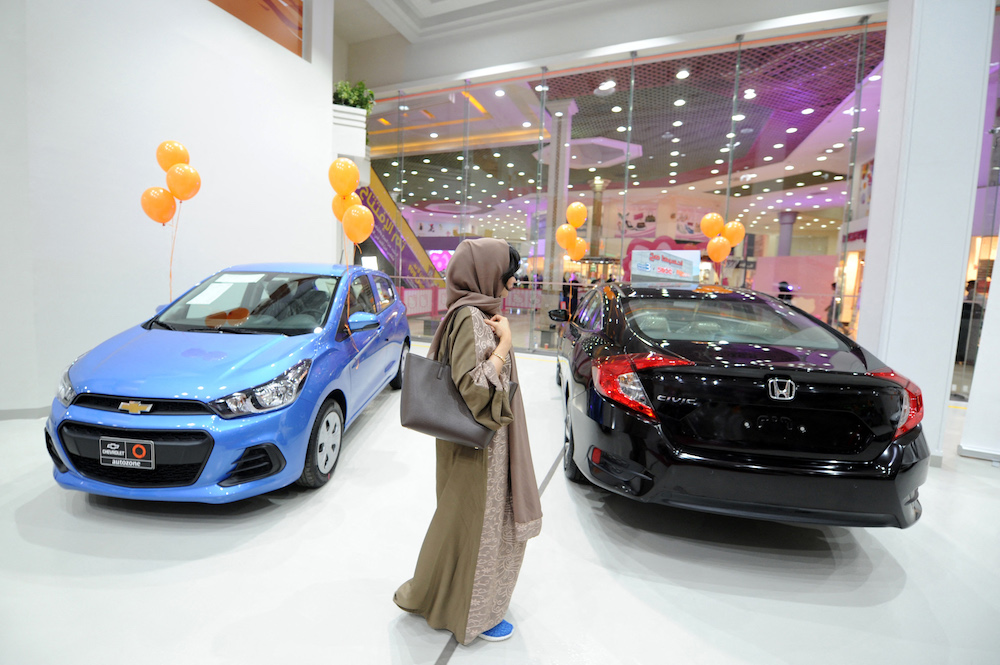
Saudi women tour a car showroom for women on January 11, 2018, in the Saudi Red Sea port city of Jeddah. (AFP/File Photo)
A study by YallaMotor surveyed 1,200 respondents from the GCC countries about their car buying preferences after the COVID-19 pandemic. According to the results, 60 percent of the car buyers polled would now prefer to buy online rather than from a showroom.
This might provide an early indication of shifting consumer and business attitudes in the region for a market segment that has long been resistant to online sales, but it is hard to predict whether this shift is here to stay.
“We hope that these initial results will help guide the automotive sector towards their next plan of action,” Jorge Bialade, YallaMotor’s general manager, said in a statement.
Irrespective of the long-term success of these newly launched online tools, the changes sparked by the pandemic and declining sales have pushed the auto industry to explore ways of reinventing its traditional experience.
As a result, the post-COVID car marketplace in MENA is likely to differ from the one in pre-pandemic times.
-----------------
* This report is being published by Arab News as a partner of the Middle East Exchange, which was launched by the Mohammed bin Rashid Al Maktoum Global Initiatives to reflect the vision of the UAE prime minister and ruler of Dubai to explore the possibility of changing the status of the Arab region.




