RAWALPINDI: Pakistan's informal financial realm, created by ordinary individuals to manage their money and savings through mutual assistance, is now being tapped by digital companies who claim to be striving for greater economic inclusion, especially for the country's female population.
Informal financial solutions like rotating credit and savings associations, or "committees" in local parlance, allow people to come together each month and contribute a fixed amount to generate a pool of money which is then handed over to a member on a rotational basis until everyone involved has taken the lottery.
According to the 2018 research by a fintech company, Oraan, the method is used by 41 percent of the population in Pakistan, mostly women, to manage their finances.
Oraan, a digital application which puts committee parties into the hands of its users, has been downloaded by thousands of people, 84 percent of them women, since its launch in 2018.
"Financial options for women in Pakistan are limited," the company's chief executive officer Halima Iqbal told Arab News over a conference call on Friday. "So, we started exploring things from that perspective and asked ourselves: If women cannot access financial services easily, how were they banking?"
Research pointed out that alternative banking solutions were the most popular tool to access finance, especially for women.
"We paid attention to how people were interacting with money in these spaces and what the inefficiencies were," she continued. "That's how Oraan came into being."
Unlike the traditional way, Oraan matches individuals with communities based on their budgets and needs, eliminating the requirement for an existing social group to join a committee.
This not only helps it provide an important financial service but also builds communities and multiplies possibilities for financial inclusion for its users.
"It's interesting to note that a product like a committee can create greater financial inclusion since it provides an easy entry point into the world of financial management," commented Farwah Tapal, the organization's chief operating officer.
Sana Tawfik, senior research analyst at Arif Habib Limited, spoke to Arab News about how banks could move toward informal banking solutions in the digital sphere.
"Our research shows that only nine percent of Pakistanis save for retirement," Tawfik told Arab News over the phone, "and people who engage with committees are only receiving lump sums as opposed to return on investments."
"Overall banks should look into the digitization of informal banking such as committee parties as something that the country should be moving toward because the numbers show people are familiar with it and it is a customer behavior they can build on."


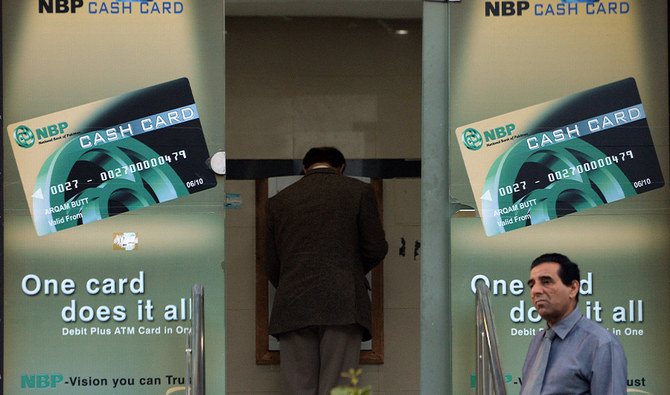
Pakistani fintech companies tap into informal banking sector to enhance financial inclusion
https://arab.news/6mpug
Pakistani fintech companies tap into informal banking sector to enhance financial inclusion

- Research shows 41 percent of Pakistanis rely on informal banking and financial solutions
- Management of Oraan fintech company says its customer base largely consist of women with limited financial options

Pakistan president meets UAE counterpart, explores trade, investment opportunities
- Asif Ali Zardari is in UAE on four-day visit to strengthen bilateral ties, review bilateral cooperation
- Both sides discuss regional, international developments, reaffirm commitment to promote peace
ISLAMABAD: President Asif Ali Zardari met his UAE counterpart Sheikh Mohammed bin Zayed Al-Nahyan in Abu Dhabi on Tuesday during which both sides explored new opportunities in trade, investment, energy and other sectors, Zardari's office said.
Zardari arrived in Abu Dhabi on Monday evening with a high-level delegation on a four-day official visit to the UAE to review trade, economic and security cooperation.
"The leaders discussed ways to further deepen the longstanding and brotherly relations between Pakistan and the UAE," a statement from Zardari's office said about his meeting with the UAE president.
"They reviewed the full spectrum of bilateral cooperation and explored new opportunities in trade, investment, energy, infrastructure, technology, and people-to-people exchanges, highlighting the significant potential for expanding economic and strategic partnership.
Zardari highlighted the significance of Al-Nayhan's visit to Pakistan last month, the statement said, expressing appreciation for the UAE's continued support for strengthening bilateral ties.
It said both sides also exchanged views on a range of regional and international developments, reaffirming their commitment to promoting peace, stability and sustainable development.
The meeting was also attended by Pakistan's First Lady Aseefa Bhutto-Zardari, the Pakistani president's son Bilawal Bhutto-Zardari, who is also the chairman of the Pakistan Peoples Party, Interior Minister Mohsin Naqvi and Pakistan's ambassador to the UAE.
ZARDARI MEETS AD PORTS CEO
Zardari earlier met AD Ports Group CEO Captain Mohamed Juma Al-Shamisi to discuss the group's investment initiatives in Karachi.
"Both sides agreed that the expansion and modernization of port infrastructure would strengthen trade flows and support Pakistan’s broader economic development and country’s seaborne trade," the President's Secretariat said in a statement.
It added that Zardari described the AD Ports Group's long-term investment and expanding role in Pakistan's maritime and logistics sector as a key pillar of Pakistan–UAE economic cooperation.
Pakistan and the UAE maintain close political and economic relations, with Abu Dhabi playing a pivotal role in supporting Islamabad during periods of financial stress through deposits, oil facilities and investment commitments.
The UAE is Pakistan's third-largest trading partner, after China and the United States, and a key destination for Pakistani exports, particularly food, textiles and construction services.
The Gulf state is also home to more than 1.5 million Pakistani expatriates, one of the largest overseas Pakistani communities in the world, who contribute billions of dollars annually in remittances, a crucial source of foreign exchange for Pakistan’s economy.
Beyond trade and labor ties, Pakistan and the UAE have steadily expanded defense and security cooperation over the years, including military training, joint exercises and collaboration in counter-terrorism and regional security matters.


