

Iran censors television drama featuring British spy

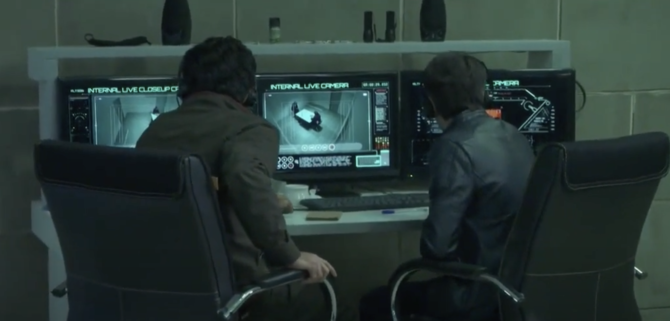
An Iranian television espionage drama has been censored by authorities over a plotline featuring a spy working for British intelligence during nuclear deal negotiations. (Screenshot/YouTube)
Short Url
Updated 26 March 2021
Follow

Iran censors television drama featuring British spy

  • Hit show ‘Gando’ causes stir with apparent reference to real-life UK agent embedded in Iranian nuclear negotiating team
  • ‘High-ranking member of government’ intervened to prevent show being aired, doctored dialogue

LONDON: An Iranian television espionage drama has been censored by authorities over a plotline featuring a spy working for British intelligence during sensitive nuclear deal negotiations. 

A “high-ranking member of the government” intervened to prevent the episode of “Gando” being aired for 45 minutes and demanded that dialogue be changed, according to Iranian media.

The show, funded by a body linked to the Islamic Revolutionary Guard Corps (IRGC), has proved controversial at the highest levels in Iran for its thinly veiled references to real-life events; even Iranian President Hassan Rouhani has criticized its portrayal of politicians.

The series portrays military intelligence officials as heroes, while implying that their civilian counterparts and relatives are vulnerable to Western spying operations.

The episode was eventually aired three-quarters-of-an-hour late, but certain scenes appeared to have been crudely edited.

State-run news agency, the Iranian Students’ News Agency (ISNA), reported that “a high-ranking member of the government had blocked the broadcast, and requested that the word ‘negotiating team’ not be included in the series.

“The sections where the word ‘negotiating team’ was used were changed and the word ‘team’ was removed from the dialogues,” it said.

The episode heavily focused on the role of British spies in Iran, and featured scenes of an MI6 agent in an office bedecked with Union flags and exterior shots of the service’s headquarters in London.

Its late broadcast appeared to be linked to the real case of Abdolrasoul Dorri-Esfahani, an Iranian diplomat and accountant accused of spying on behalf of the UK during the 2015 nuclear deal negotiations.

Dorri-Esfahani, who was part of Iran’s negotiating team during the crunch talks, was sentenced to five years in jail on espionage charges, though Mahmoud Alavi, Tehran’s intelligence minister, has insisted that he was innocent.

The present series of “Gando” features a character called Abdol Rasoul Ashrafi, a former accountant who is portrayed as working for MI6.

The latest episode also showed Iranian forces intercepting a British ship using speed boats and helicopters, a not-so-subtle reference to the Iranian hijacking of British tanker the Stena Imperio in the Strait of Hormuz in 2019.


Israel to partially reopen Gaza’s Rafah crossing

Updated 56 min 31 sec ago
Follow

Israel to partially reopen Gaza’s Rafah crossing

  • Reopening comes amid ongoing violence in the Palestinian territory
  • Gaza’s civil defense agency says dozens killed in Israeli attacks on Saturday

RAFAH, Palestinian Territories: Israel is set to partially reopen the Rafah crossing between the war-devastated Gaza Strip and Egypt on Sunday, following months of urging from humanitarian organizations, though access will be limited to the movement of people.

The reopening comes amid ongoing violence in the Palestinian territory, with Gaza’s civil defense agency reporting dozens killed in Israeli attacks on Saturday, while the Israeli military said it was retaliating against ceasefire violations.

The Rafah crossing is a vital gateway for both civilians and aid, but has remained closed since Israeli forces seized control of it in May 2024 during the war with Hamas, aside from a brief and limited reopening in early 2025.

Israel had previously said it would not reopen the crossing until the remains of Ran Gvili — the last Israeli hostage held in Gaza — were returned.

His remains were recovered days ago and he was laid to rest in Israel on Wednesday.

“The Rafah Crossing will open this coming Sunday (February 1st) in both directions, for limited movement of people only,” COGAT, an Israeli defense ministry body overseeing civil affairs in the occupied Palestinian territories, said on Friday.

Entry and exit “will be permitted in coordination with Egypt, following prior security clearance of individuals by Israel, and under the supervision of the European Union mission,” it added.

However, key details remain unclear, including how many people will be allowed to cross and whether those seeking to return to Gaza will be permitted entry.

A source at the border told AFP that Sunday would be largely devoted to preparations and logistical arrangements.

The crossing is set to open on Sunday on a trial basis to allow the passage of wounded individuals, ahead of a regular reopening scheduled for Monday, three sources at the crossing said.

However, no agreement has yet been reached on the number of Palestinians permitted to enter or exit, the sources added, noting that Egypt plans to admit “all Palestinians whom Israel authorizes to leave” the territory.

“Every day that passes drains my life and worsens my condition,” said Mohammed Shamiya, 33, who suffers from kidney disease and requires dialysis treatment abroad.

“I’m waiting every moment for the opening of the Rafah land crossing.”

Anxious wait

Safa Al-Hawajri, who has received a scholarship to study overseas, is also eagerly awaiting the reopening on Sunday.

“I’m waiting in the hope of fulfilling my ambition, which is tied to the reopening of the crossing,” said Hawajri, 18.

“I hope to be able to travel as soon as it opens.”

Located on Gaza’s southern border with Egypt, Rafah is the only crossing into and out of the territory that does not pass through Israel.

The crossing lies in an area held by Israeli forces following their withdrawal behind the so-called “Yellow Line” under the terms of a US-brokered ceasefire that came into effect on October 10.

Israeli troops still control more than half of Gaza, while the rest remains under Hamas authority.

The ceasefire has now entered its second phase and calls for reopening the crossing following the release or return of all Israeli hostages held by Palestinian militants.

Hamas had called for its full reopening in both directions after the remains of Gvili were brought back to Israel.

The reopening is expected to facilitate the entry of a 15-member Palestinian technocratic body, the National Committee for the Administration of Gaza (NCAG), established to oversee the day-to-day governance of the territory’s 2.2 million residents.

The committee is to operate under the supervision of the so-called “Board of Peace” chaired by US President Donald Trump.

The NCAG, headed by former Palestinian Authority deputy minister Ali Shaath, is expected to enter the Gaza Strip once the Rafah crossing reopens.

Violence continued ahead of the crossing’s reopening.

At least 32 people, including children, were killed on Saturday in Israeli air strikes in Gaza, reported the civil defense agency, which operates as a rescue force under the Hamas authority.

Israel’s military said the strikes were retaliation for an incident on Friday in which eight Palestinian fighters exited a tunnel in the city of Rafah, which it said violated the ceasefire.