

Egypt forecasts economic growth of 5.4% in 2021/22

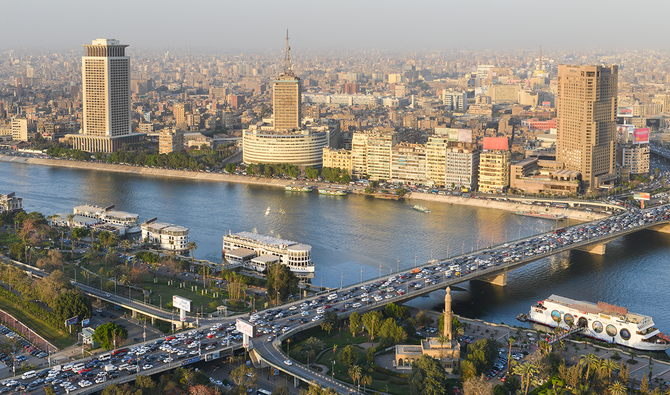
The finance minister said that the budget aims to reduce the country’s deficit and targets a growth rate of 5.4 percent of GDP. (Shutterstock/File Photo)
Short Url
Updated 26 March 2021
Follow

Egypt forecasts economic growth of 5.4% in 2021/22

  • The Egyptian Cabinet approved the draft budget for the next fiscal year 2021/2022

CAIRO: Egypt is forecasting economic growth of 5.4 percent in the next fiscal year 2021/2022, up from 3.3 percent expected in 2020/2021, according to the Egyptian Minister of Planning Hala Al-Saeed.

The Egyptian Cabinet approved the draft budget for the next fiscal year 2021/2022, which was presented by Finance Minister Mohamed Maait and will be submitted to parliament.

The finance minister said that the budget aims to reduce the country’s deficit and targets a growth rate of 5.4 percent of GDP. This will result in a surplus of about 1.5 percent of GDP, compared to estimates of a surplus for the current fiscal year of about 0.9 percent of GDP.

FASTFACT

The minister explained that the goals included support for economic activity — especially the industrial and export sectors — and an initiative for cash payment of arrears to exporters, support for programs for exporters, and a national project to switch vehicles to run on natural gas instead of diesel and gasoline.

The minister explained that the goals included support for economic activity — especially the industrial and export sectors — and an initiative for cash payment of arrears to exporters, support for programs for exporters, and a national project to switch vehicles to run on natural gas instead of diesel and gasoline.

Maait expected that the proceeds of budget revenues would reach about 1.3 trillion Egyptian pounds ($80 billion), according to estimates for the next fiscal year 2020/2021, compared to expected revenues of 1.117 trillion Egyptian pounds during the current fiscal year.

The estimates reflect an annual growth in revenues of 16.4 percent, achieved by expanding the tax base, activating electronic payments, expanding the use of modern methods of risk management, collecting government revenues and working to increase linking the proceeds to economic activity.

The budget also focuses on pushing social protection efforts, improving citizens’ standard of living, increasing wage allocations and rewards for workers, and financing grant incentives and transportation allowances for workers transferred to the New Administrative Capital.

Work is underway to increase the incomes of more than 10 million pensioners and to provide the necessary allocations to support food commodities, to finance the Takaful and Karama program, and the national project for the development of the Egyptian countryside within the Decent Life Initiative.


Saudi POS spending jumps 28% in final week of Jan: SAMA

Updated 06 February 2026
Follow

Saudi POS spending jumps 28% in final week of Jan: SAMA

RIYADH: Saudi Arabia’s point-of-sale spending climbed sharply in the final week of January, rising nearly 28 percent from the previous week as consumer outlays increased across almost all sectors. 

POS transactions reached SR16 billion ($4.27 billion) in the week ending Jan. 31, up 27.8 percent week on week, according to the Saudi Central Bank. Transaction volumes rose 16.5 percent to 248.8 million, reflecting stronger retail and service activity. 

Spending on jewelry saw the biggest uptick at 55.5 percent to SR613.69 million, followed by laundry services which saw a 44.4 percent increase to SR62.83 million. 

Expenditure on personal care rose 29.1 percent, while outlays on books and stationery increased 5.1 percent. Hotel spending climbed 7.4 percent to SR377.1 million. 

Further gains were recorded across other categories. Spending in pharmacies and medical supplies rose 33.4 percent to SR259.19 million, while medical services increased 13.7 percent to SR515.44 million. 

Food and beverage spending surged 38.6 percent to SR2.6 billion, accounting for the largest share of total POS value. Restaurants and cafes followed with a 20.4 percent increase to SR1.81 billion. Apparel and clothing spending rose 35.4 percent to SR1.33 billion, representing the third-largest share during the week. 

The Kingdom’s key urban centers mirrored the national surge. Riyadh, which accounted for the largest share of total POS spending, saw a 22 percent rise to SR5.44 billion from SR4.46 billion the previous week. The number of transactions in the capital reached 78.6 million, up 13.8 percent week on week. 

In Jeddah, transaction values increased 23.7 percent to SR2.16 billion, while Dammam reported a 22.2 percent rise to SR783.06 million. 

POS data, tracked weekly by SAMA, provides an indicator of consumer spending trends and the ongoing growth of digital payments in Saudi Arabia.  

The data also highlights the expanding reach of POS infrastructure, extending beyond major retail hubs to smaller cities and service sectors, supporting broader digital inclusion initiatives.  

The growth of digital payment technologies aligns with Saudi Arabia’s Vision 2030 objectives, promoting electronic transactions and contributing to the Kingdom’s broader digital economy.