

UN Security Council condemns escalation in Yemen’s Marib, Houthi attacks on Saudi Arabia

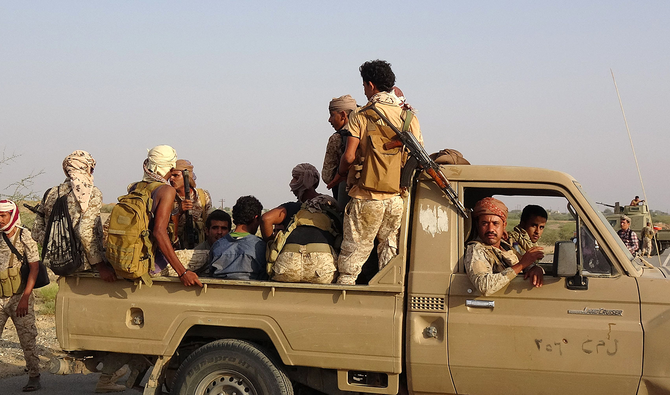
Houthi fighters chant slogans as they ride a military vehicle during a gathering in the capital Sanaa to mobilize more fighters to battlefronts to fight pro-government forces in several Yemeni cities, on January 3, 2017. (AFP/File)
Short Url
Updated 19 March 2021
Follow

UN Security Council condemns escalation in Yemen’s Marib, Houthi attacks on Saudi Arabia

  • The Houthi offensive on Marib places one million internally-displaced people at grave risk and threatens efforts to secure a political settlement
  • The council emphasized the importance of facilitating humanitarian assistance

NEW YORK: Members of the UN Security Council condemned the escalation in Yemen’s Marib and cross-border Houthi attacks against Saudi Arabia on Thursday.
Members called for a de-escalation in the conflict and an immediate end to the Houthi offensive on Marib. They condemned the militia’s use of child soldiers in the fighting there. 
The Security Council called on all parties to come together and work with the UN special envoy Martin Griffiths to negotiate a nationwide ceasefire in the country.
The Houthi offensive on Marib places one million internally-displaced people at grave risk and threatens efforts to secure a political settlement.
The council emphasized the importance of facilitating humanitarian assistance as well as the movement of fuel ships into Hodeidah port.
The council also called for a “global ceasefire” to facilitate COVID-19 vaccine distribution in the world’s hotspots.

Desert Storm: 30 years on
The end of the Gulf War on Feb. 28, 1991 saw the eviction of Iraq from Kuwait but paved the way for decades of conflict

Enter


keywords

UN warns of environmental hazards from Middle East war

Updated 3 sec ago
Follow

UN warns of environmental hazards from Middle East war

  • Several oil facilities in Iran were targeted by Israeli strikes Sunday, and Iran has also launched strikes on oil facilities in the region

UN chief Antonio Guterres’s office warned Monday of “serious environmental consequences” from recent strikes on oil facilities and desalination plants in the Middle East, saying they pose significant threats to air quality and drinking water.
“We continue to raise the alarm over the humanitarian impact of escalating violence across parts of the Middle East, which is driving rising civilian casualties, damage to civilian infrastructure and growing displacement of people,” the secretary-general’s spokesman Stephane Dujarric told a press conference.
He added that the United Nations was “particularly concerned by the number of reports of recent strikes on oil facilities, which could have serious environmental consequences across the region, with immediate possible impacts on safe water, on air that people need to breathe, and on food.”
Bahrain’s interior ministry had said Sunday that an Iranian drone attack also damaged a water desalination plant, which is essential infrastructure for the country’s economy and drinking water supplies.
“We reiterate again that all possible precautions must be taken to protect civilians from the impact of hostilities and to avoid damage to health facilities, schools, water systems and other essential infrastructure,” Dujarric said.
Several oil facilities in Iran were targeted by Israeli strikes Sunday, and Iran has also launched strikes on oil facilities in the region.