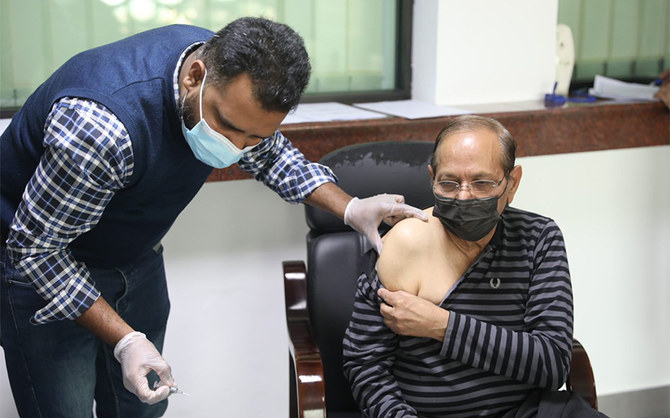
ISLAMABAD: Only 180,000, or 2.25 percent, of around eight million senior citizens in Pakistan had registered to get vaccinated against the coronavirus two weeks after the government launched a registration drive, Pakistani media reported on Friday.
Pakistan launched its COVID-19 vaccine drive earlier this month, saying it would inoculate health care workers in the first phase, followed by the elderly in March.
The government started registering senior citizens for the vaccination program on Feb 15.
“The Ministry of National Health Services (NHS) has described it as a slow response, considering that there are around eight million people above 65 years of age in Pakistan,” Pakistan’s Dawn newspaper reported, saying only 180,000 people above the age of 60 had registered.
“We urge people that they should register themselves so that they would be inoculated as soon as vaccine would reach at the Adult Vaccination Centers in Pakistan,” Dawn wrote, quoting a health ministry official.
Around 500,000 doses of vaccine produced by Sinopharm and donated by China had arrived in Pakistan on a military flight on February 1, allowing authorities to kickstart a nationwide inoculation campaign starting with health workers.
Pakistan has also been pledged 17 million doses of AstraZeneca’s COVID-19 vaccine under a global scheme to deliver coronavirus treatments to developing nations.
About 6 million doses will arrive by the end of March under the COVAX scheme, with the remainder due by mid-year, the health chief has said.


![]()

Only 2.25% of Pakistani senior citizens register for COVID-19 vaccine — report
Short Url
https://arab.news/z33sj
Only 2.25% of Pakistani senior citizens register for COVID-19 vaccine — report
- 180,000 of around eight million senior citizens have responded to government calls to register for vaccination program
- Government started registering senior citizens on Feb 15, “not a very positive response,” health ministry says
Latest updates


© 2026 SAUDI RESEARCH & PUBLISHING COMPANY, All Rights Reserved And subject to Terms of Use Agreement.