Fourth executive jailed in Britain’s Iraq oil bribery case

Short Url
Updated 01 March 2021
Follow

Fourth executive jailed in Britain’s Iraq oil bribery case

  • Paul Bond, 68, will spend 3 and a half years in jail for helping to pay bribes of more than $900,000
  • Unaoil paid more than $17 million in bribes to secure contracts worth $1.7 billion for itself and its Western clients

LONDON: A former sales manager of Dutch energy services company SBM Offshore was sentenced on Monday to three-and-a-half years in jail after being convicted by a London jury of bribing public officials to win oil contracts in post-occupation Iraq.
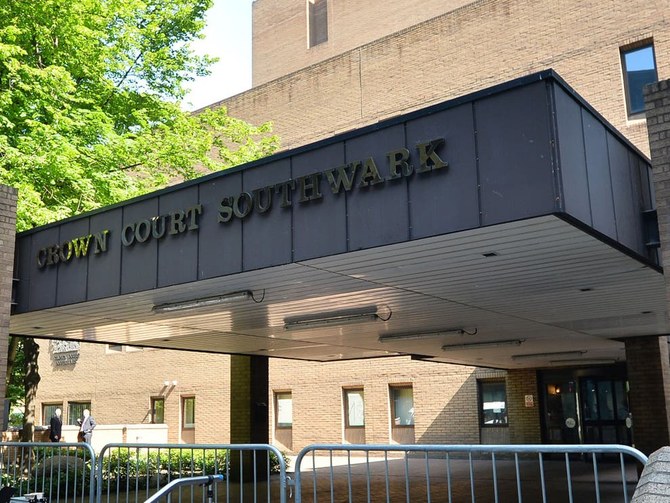
Paul Bond, 68, was found guilty of two counts of bribery after a retrial at London’s Southwark Crown Court on Wednesday . His sentencing hearing was delayed after the judge developed COVID-19 symptoms and self-isolated.
Bond is the fourth executive convicted after a five-year Serious Fraud Office (SFO) investigation into Monaco-based consultancy Unaoil, which uncovered bribes of more than $17 million to secure contracts worth $1.7 billion for Unaoil and its Western, blue-chip clients.
Bond had denied wrongdoing.
Prosecutors had said that Unaoil employees worked on behalf of SBM Offshore and with Bond to pay more than $900,000 in bribes to Iraqi public officials at Iraq’s South Oil Company and the Ministry of Oil to win a $55 million contract for offshore mooring buoys by skewing a competitive tender in their favor.
Basil Al Jarah, Unaoil’s former Iraq partner, was last year sentenced to three years and four months in jail after pleading guilty to five bribery counts in 2019. Unaoil’s former territory managers for Iraq — Ziad Akle and Stephen Whiteley — received five and three-year sentences respectively.
The SFO investigation originally centered on the prominent Ahsani family, which ran Unaoil. However, failed extradition attempts culminating in a clash in Italy with US prosecutors over the extradition of Saman Ahsani in 2018 scuppered the British agency’s attempts to pursue prosecution in Britain.
In October 2019 Saman Ahsani and his brother Cyrus pleaded guilty in the United States to being part of a 17-year scheme to pay millions of dollars in bribes to officials in the Middle East, Africa and Central Asia. Their father and Unaoil founder, Ata Ahsani, has not been prosecuted.
SBM Offshore, which has declined to comment, was fined $238 million by the US Department of Justice in 2017 under a deferred prosecution agreement.


Tug of war: how US presidents battle Congress for military powers

Updated 5 sec ago
Follow

Tug of war: how US presidents battle Congress for military powers

  • The last official declaration of war by Congress was as far back as World War II

WASHINGTON, United States: Donald Trump’s unleashing of operation “Epic Fury” against Iran has once more underscored the long and bitter struggle between US presidents and Congress over who has the power to decide on foreign military action.
In his video address announcing “major combat” with the Islamic republic, Trump didn’t once mention any authorization or consultation with the US House of Representatives or Senate.
In doing so he sidelined not only Democrats, who called for an urgent war powers vote, but also his own Republican party as he asserts his dominance over a largely cowed legislature.
A US official said Secretary of State Marco Rubio had called top congressional leaders known as the “Gang of Eight” to give them a heads up on the Iran attack — adding that one was unreachable.
Rubio also “laid out the situation” and consulted with the same leaders on Tuesday in an hour-long briefing, the US official said.
According to the US Constitution, only Congress can declare war.
But at the same time the founding document of the United States first signed in 1787 says that the president is the “commander in chief” of the military, a definition that US leaders have in recent years taken very broadly.
The last official declaration of war by Congress was as far back as World War II.
There was no such proclamation during the unpopular Vietnam War, and it was then that Congress sought to reassert its powers.
In 1973 it adopted the War Powers Resolution, passed over Richard Nixon’s veto, to become the only lasting limit on unilateral presidential military action abroad.
The act allows the president to carry out a limited military intervention to respond to an urgent situation created by an attack against the United States.
In his video address on Saturday, Trump evoked an “imminent” threat to justify strikes against Iran.

- Sixty days -

Yet under this law, the president must still inform Congress within 48 hours.
It also says that if the president deploys US troops for a military action for more than 60 days, the head of state must then obtain the authorization of Congress for continued action.
That falls short of an official declaration of war.
The US Congress notably authorized the use of force in such a way after the September 11, 2011 attacks on the United States by Al-Qaeda. Presidents have used it over the past two decades for not only the 2001 invasion of Afghanistan but a series of operations in several countries linked to the “War on Terror.”
Trump is far from the first US president to launch military operations without going through Congress.
Democrat Bill Clinton launched US air strikes against Kosovo in 1999 as part of a NATO campaign, despite the lack of a green light from skeptical lawmakers.
Barack Obama did the same for airstrikes in Libya in 2011.
Trump followed their example in his first term in 2018 when he launched airstrikes in Syria along with Britain and France.
But since his return to power the 79-year-old has sought to push presidential power to its limits, and that includes in the military sphere.
Trump has ordered strikes on alleged drug trafficking boats in Latin America without consulting Congress, and in June 2025 struck Iran’s nuclear facilities.
Perhaps the most controversial act was when he ordered the capture of Venezuelan president Nicolas Maduro in a lightning military raid on January 3.
Republicans however managed to knock down moves by Democrats for a rare war powers resolution that would have curbed his authority over Venezuela operations.
Trump has meanwhile sought to extend his powers over the home front. Democrats have slammed the Republican for deploying the National Guard in several US cities in what he calls a crackdown on crime and immigration.