‘Nation of one kidney’: Scarred by poverty, more Afghans turn to illicit organ trade

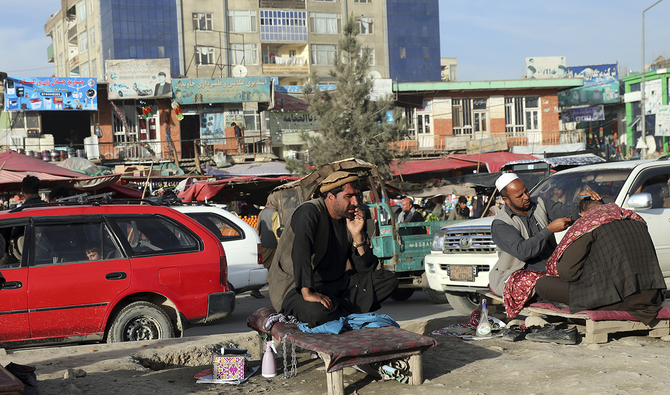
Recent media reports show that more than 1,000 kidneys have been traded in the past five years in Herat, one of Afghanistan’s largest provinces. (AFP)
Short Url
Updated 25 February 2021
Follow

‘Nation of one kidney’: Scarred by poverty, more Afghans turn to illicit organ trade

  • Herat residents and lawmakers accused the government of failing to provide jobs and alleviate them from poverty, leading to a rise in the illegal kidney trade

KABUL: When Fateh Shah and his two brothers sought to escape a debt trap a couple of years ago, he says they were left with two options: To either commit a crime to pay off their lenders or to sell their kidneys.

“We were fed up with their repeated harassment,” Shah, 35, told Arab News.

They fled to neighbouring Iran “with the help of a smuggler,” hoping to find a job there and send part of their earnings back home to pay off their debts in stages.

“But we got into more debt as we were deported soon after arriving in Iran ... The smuggler became our new lender, demanding money for the trip. It was a nightmare,” Shah said.

The three brothers finally decided to go under the knife, each earning 320,000 Afghans ($4,000) for selling one kidney.

“We had no other option … we could not take the humiliation, shouting and complaints of the lenders anymore. We either had to commit a crime to pay our hefty debts or sell our kidneys, and we decided to live with one kidney rather than stealing,” Shah said.

The Shah brothers are not alone. According to recent media reports, “confirmed figures” show that more than 1,000 kidneys have been traded in the past five years in Herat, one of Afghanistan’s largest provinces, which shares its border with Iran.

“Hundreds of people who have sold their kidneys live in Se Shanba Bazar village in Injil district in Herat,” the private TV channel Tolo News said in a report.

Shah says he learned about the illegal kidney trade in western Herat, where he, like many others, had settled after fleeing prolonged periods of drought, poverty and joblessness in the province of Badghis, in the northwest of the country.

So lucrative is the illegal kidney trade that two hospitals in Herat “offer transplantation services with the help of Iranian doctors,” according to the report, which added that children as young as seven and several women “were among those forced to sell their vital organs.”

The numbers shared by the Afghan authorities, who launched a probe into the trade soon after the report, are equally jarring.

“When the team visited the hospitals, it found that in one hospital 182 transplants had occurred … and 18 in another hospital,” said Dastagir Nazari, Health Ministry spokesperson.

He added that initial findings showed that the “transplantations had been going on in the two hospitals in Herat for at least two years.”

“But … we came to know that the number is much higher, especially in the Injil district, than in these hospitals,” Nazari said.

The alarming figures prompted authorities in Herat to conduct a more detailed investigation.

However, officials “found no document showing that trade has happened inside the hospitals” between donors and patients. Public health laws dictate that the “transplantation of a kidney can only happen when the donor is a relative of the patient, in need of the kidney,” with the illegal trading of organs punishable by law, Nazari said.

Experts blame the “health mafia” in Herat for the province’s dire straits.

“It is a reality that economic compulsions have put much pressure on our people, but the health mafia should not misuse the poverty of the people this way,” Waheed Qatali, the governor of Herat, posted on Facebook recently.

However, Herat residents and lawmakers accused the government of failing to provide jobs and alleviate them from poverty, leading to a rise in the illegal kidney trade.

“The government here is good in giving hollow slogans to people. It cannot stop this process because people have no alternative,” said Rafiq Shahir, a prominent figure in Herat.

He added that poverty was prevalent in many parts of Afghanistan despite the flow of hundreds of billions of dollars in foreign aid since the Taliban’s ouster in a US-led invasion in 2001 because “authorities live a luxurious life.”

Dr. Nawrooz Haqmal, an Afghan health expert based in the UK, agreed, saying that “people had no choice but to break the law”, which prohibits the illegal sale of kidneys.

“The sad reality has been reported for years wherein the private health sector has been involved in illegal businesses,” he told Arab News.

“Also, the silence of the leadership of the public ministry about the details of this illegal business has created confusion about the law enforcement in the capital of one the major cities,” he added.

Ordinary Afghans were still able to joke about the issue, with a satirical TV program featuring Herat’s illegal kidney trade as its main topic last week.

Impersonating President Ashraf Ghani, who has repeatedly vowed to improve the livelihood of the Afghans since assuming office more than six years ago, one artist said: “The people of Herat are wise to sell their kidneys to boost their economy. Afghans were very rich, and each possesses a treasure in their bodies for selling.”

“Hope to see you, the nation of Afghanistan, soon with one kidney,” he added.


Bangladesh votes in its first election since the 2024 Gen Z uprising that ousted Hasina

Updated 5 sec ago
Follow

Bangladesh votes in its first election since the 2024 Gen Z uprising that ousted Hasina

DHAKA, Bangladesh: Bangladesh on Thursday held its first election since 2024 mass protests toppled Sheikh Hasina’s government with balloting being largely peaceful in a vote seen as a test of the country’s democracy after years of political turmoil.
A projection showed that an alliance led by the Bangladesh Nationalist Party, or BNP, took the lead with 127 seats, while its main challenger, an 11-party alliance led by the Jamaat-e-Islami party, garnered 32 seats and three seats by others, according to Dhaka-based Jamuna TV.
Official results were expected on Friday. Bangladesh is a parliamentary democracy in which 300 lawmakers are elected through direct voting.
After a slow start, crowds converged on polling stations in the capital, Dhaka, and elsewhere later in the day. By 2 p.m., more than 47 percent voters had cast their ballots, the Election Commission said.
At one Dhaka polling station, poll officials manually counted the paper ballots and checked each for validity before tabulating the results. Political party representatives were present as election observers, and security officials kept a close watch on Thursday evening.
More than 127 million people were eligible to vote in the country’s first election since Hasina’s ouster after weeks of mass protests, dubbed by many as a Generation Z uprising. Hasina fled the country and is living in India in exile, while her party was barred from the polls.
As the voting closed, Hasina’s Awami League party, which was barred from the election, rejected Thursday’s election.
“Today’s so-called election by Yunus, who seized power illegally and unconstitutionally, was essentially a well-planned farce,” the former governing party said in a statement on X. “The people’s voting rights, democratic values, and the spirit of the constitution were completely disregarded in this deceptive, voter-less election conducted without the Awami League,” it said.
‘Birthday of a new Bangladesh’
The BNP’s Tarique Rahman is a leading contender to form the next government. He’s the son of former Prime Minister Khaleda Zia and returned to Bangladesh in December, after 17 years in self-exile in London. Rahman has pledged to rebuild democratic institutions, restore the rule of law and revive the struggling economy.
Television stations reported late Thursday that Rahman won in two constituencies, one in Dhaka and another in his northern ancestral home.
Challenging the BNP is an 11-party alliance led by Jamaat-e-Islami, the country’s largest Islamist party, which was banned under Hasina but has gained prominence since her removal.
The conservative religious group’s growing influence has fueled concern, particularly among women and minority communities, that social freedoms could come under pressure, if they come to power. Bangladesh is more than 90 percent Muslim, while around 8 percent are Hindu.
Jamaat-e-Islami leader Shafiqur Rahman expressed optimism after casting his vote at a polling station.
The election “is a turning point,” he told The Associated Press. “People demand change. They desire change. We also desire the change.”
Bangladesh’s interim leader, Muhammad Yunus, was upbeat about the election.
“This is a day of great joy. Today is the birthday of a new Bangladesh,” Yunus told reporters.
Election follows turbulent period
Yunus, a Nobel Peace Prize laureate, has said the interim government was committed to delivering a credible and transparent election. As part of that effort, around 500 international observers and foreign journalists were present, including delegations from the European Union and the Commonwealth, to which Bangladesh belongs.
Bangladesh’s Parliament has 350 seats, including 300 elected directly from single-member constituencies and 50 reserved for women. Lawmakers are chosen by plurality and the parliament serves a five-year term. The Election Commission recently postponed voting in one constituency after a candidate died.
The election follows a turbulent period marked by mob violence, attacks on Hindu minorities and the media, the growing influence of Islamists and weakening of the rule of law.
It could reshape the domestic stability of Bangladesh, a country whose post-1971 history since gaining independence from Pakistan has been marked by entrenched political parties, military coups and allegations of vote rigging. Young voters, many of whom played a central role in the 2024 uprising, are expected to be influential. Around 5 million first-time voters are eligible.
“I think it is a very crucial election, because this is the first time we can show our opinion with freedom,” said Ikram ul Haque, 28, adding that past elections were far from fair.
“We are celebrating the election. It is like a festival here,” he said.
Referendum for reforms
Thursday’s election is a critical test not just of leadership, but of trust in Bangladesh’s democratic future. Voters can say “Yes” to endorse major reform proposals that stemmed from a national charter signed by major political parties last year.
Yunus was also enthusiastic about the referendum.
“Voting for a candidate is important, but the referendum is very important. The whole of Bangladesh will change,” he said.
If a majority of voters favor the referendum, the newly elected parliament could form a constitutional reform council to make the changes with 180 working days from its first session. The proposals include the creation of new constitutional bodies and changing parliament from a single body to a bicameral legislature with an upper house empowered to amend the constitution by a majority vote.
The BNP and Jamaat-e-Islami both signed the document with some changes after initially expressing some dissent.
Hasina’s Awami League party — still a major party in Bangladesh though banned from the polls — and some of its former allies were excluded from the discussion. From exile, Hasina denounced the election for excluding her party.
Some critics have also said that the referendum has limited the options put before voters.