

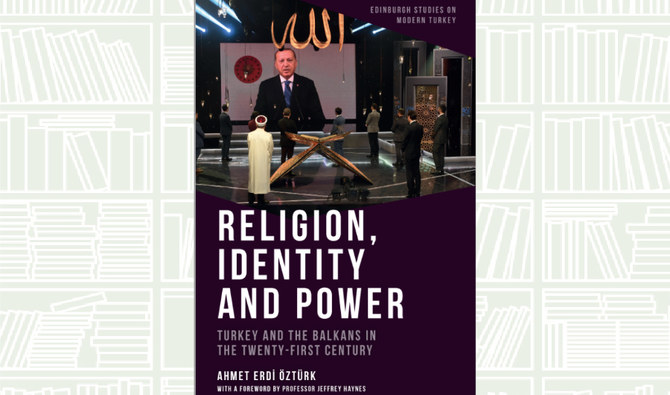

Author: Ahmet Erdi Ozturk
This recently published book explores, from a historical perspective, Turkey’s current political maneuvers and religious leverages in the Balkans under President Recep Tayyip Erdogan. It presents Albania, Bulgaria and North Macedonia as case studies of Turkey using soft and hard policy instruments in the region.
Author Ahmet Erdi Ozturk, an associate professor at London Metropolitan University and Marie Sklodowska-Curie fellow at Coventry University in the UK and the German Institute for Global and Area Studies, wrote the book after a study in several Balkan countries that took more than three years to complete and included interviews with almost 130 high-ranking individuals.
It suggests that Turkey insistently interferes in Balkan politics using religion, state power and imaginary identities, dubbed by some as neo-Ottomanism, and that this presence gradually becomes a threat to the secularism and sovereignty of the countries it targets.
The book, published by Edinburgh University Press, not only aids understanding of Turkish-Balkan diplomatic relations, but also the complex relationship between the regime in Ankara under Erdogan and the Muslim communities in the three countries.
Beyond that, it is about more than just Turkey and the Balkans; it also deepens our understanding of how religion can be used as a form of soft power in global affairs. It examines a number of political parties, for example Besa in Macedonia, that are linked to the regime in Ankara and the ways in which they interact with Turkish state apparatus.
The underlying strategy behind the construction of new mosques across the Balkans as a way to turn these countries toward Turkey rather than West is also examined in detail.


