

Saudi desert gateway fast becoming the next tourist hotspot

1 / 7
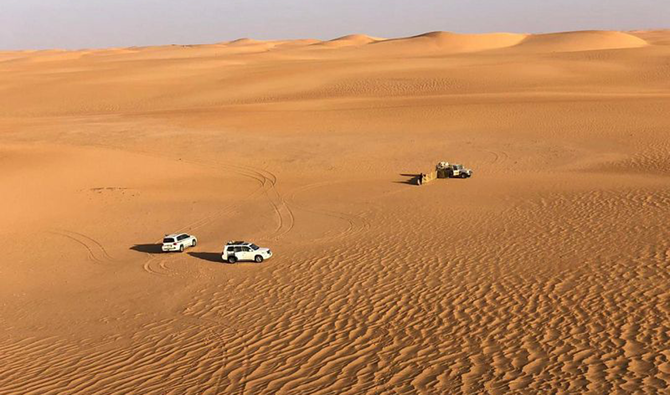
Contrary to popular belief, the desert is not totally isolated. Since ancient times the region has been home to nomadic Bedouins, while also offering a route for commercial caravans journeying from Yemen. (SPA)
2 / 7
The Bedouin, with their rich social traditions and desert survival skills, are a major attraction for visitors. (SPA)
3 / 7
The Bedouin, with their rich social traditions and desert survival skills, are a major attraction for visitors. (SPA)
4 / 7
The Bedouin, with their rich social traditions and desert survival skills, are a major attraction for visitors. (SPA)
5 / 7
The Bedouin, with their rich social traditions and desert survival skills, are a major attraction for visitors. (SPA)
6 / 7
The Bedouin, with their rich social traditions and desert survival skills, are a major attraction for visitors. (SPA)
7 / 7
The Bedouin, with their rich social traditions and desert survival skills, are a major attraction for visitors. (SPA)
Short Url
Updated 17 February 2021
Follow

Saudi desert gateway fast becoming the next tourist hotspot

  • Between November and March, the area offers the promise of adventure for hikers, nature lovers

JEDDAH: The city of Najran on the edge of the Empty Quarter — one of the world’s largest sand deserts — is fast becoming Saudi Arabia’s most promising tourist destination, as visitors come in search of historical sights and tales of generations past.

Between November and March when seasonal winds ease, the desert offers the promise of adventure for hikers and nature lovers, while others prefer the relative comfort of road trips.

The vast sea of sand extends from the Al-Arid mountain range and nature reserve to Yadamah Province’s high Uruq Al-Mundafin.

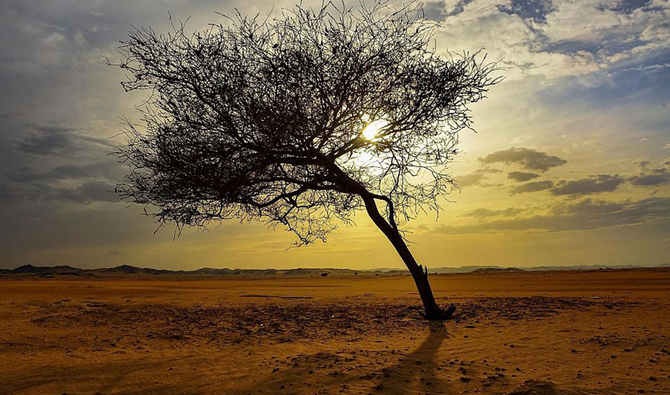
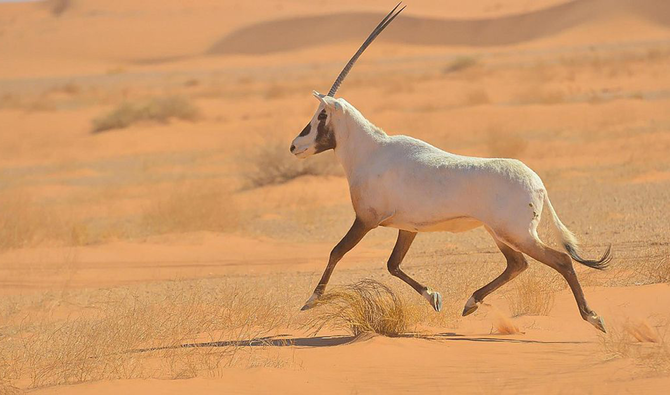
Home to unique desert vegetation, the reserve is considered a sanctuary for a number of threatened desert species, such as the Arabian oryx, the Arabian red fox, the ostrich, the goitered gazelle and Arabian bustard.

Tourist guide Mohammed Al-Mustanir told Arab News that the Bedouin, with their rich social traditions and desert survival skills, are a major attraction for visitors.

“Raising camels is still their trademark, and they take care of their herds across the sandy regions from Uruq Bani Zabadah to Hamra Nathil,” he said.

According to Al-Mustanir, tourist groups visiting Najran in the past two years made the Empty Quarter and the archaeological sites of Hima wells a top priority.

“What distinguishes the Empty Quarter from other deserts is the difference of the sand dunes in terms of color, form and height,” he said.

HIGHLIGHTS

• The vast sea of sand extends from the Al-Arid mountain range and nature reserve to Yadamah Province’s high Uruq Al-Mundafin.

• Home to unique desert vegetation, the reserve is considered a sanctuary for a number of threatened desert species, such as the Arabian oryx, the Arabian red fox, the ostrich, the goitered gazelle and Arabian bustard.

• Another popular spot is the Sharurah’s Hamra Nathil, 400 km from Najran.

• Proof of its rich history can be seen through old wells found in the dunes of Al-Minkhali and Umm Al-Wahat, along with the wells of Khatma over 100 km away from Khibash Province.

Al-Mustanir’s tour kicks off 15 km from the airport at the nearest point to the Empty Quarter in Urq Bani Zabadah, where the golden dunes can rise as high as 80 meters.

Another popular spot is the Sharurah’s Hamra Nathil, 400 km from Najran. “It’s an important grazing land in the desert and is often frequented by camel owners because of its abundant grass and old wells,” he said.

Reem Al-Abdali, a project coordinator in Jeddah who visited Najran four years ago, said: “My older sister and I wanted to see the sights around the country. Najran has stayed with me the most due to the historical and archaeological sites, inscriptions on the mountains, the ancient castle and the beautiful waterfall park.” 

Al-Abdali has no doubt that Najran will flourish as a tourist destination, as people will want to explore the desert and see more of the Saudi people’s rich heritage.

“Unfortunately, we didn’t venture into the Empty Quarter, but maybe in the future,” she said. “I believe the investment in tourism will definitely attract more people not just from foreign countries but locals as well.”

Contrary to popular belief, the desert is not totally isolated. Since ancient times the region has been home to nomadic Bedouins, while also offering a route for commercial caravans journeying from Yemen.

Proof of its rich history can be seen through old wells found in the dunes of Al-Minkhali and Umm Al-Wahat, along with the wells of Khatma over 100 km away from Khibash Province.

These wells bear witness to the numerous caravans traveling from south to north. The remains of dried lakes also highlight the region’s earlier biodiversity.


Rebuilding lives: Saudi initiative gives fresh hope to amputees

Updated 08 December 2025
Follow

Rebuilding lives: Saudi initiative gives fresh hope to amputees

  • Baitureh Health Association has provided life-changing support to more than 1,000 people
  • Prosthetic limbs can cost up to $76,000

MAKKAH: The Baitureh Health Association for the Care of Amputees has quickly become one of Saudi Arabia’s most impactful humanitarian initiatives, transforming support for people with lost limbs.

Established in 2020, the association deals with people’s physical, psychological and social needs and fills a long-standing gap in the national health system.

CEO Badr bin Alyan told Arab News that the initiative was created in response to a growing need, driven by amputations linked to accidents, blood disorders, occupational injuries and other causes.

Its operations were “based on service integration rather than fragmentation, enabling beneficiaries to return to their lives with confidence, ability and independence,” he said.

This holistic process covers everything from initial evaluations to psychological and physical rehabilitation, family support, prosthetic fitting and ongoing maintenance.

Its psychological support programs include group sessions led by certified mentors who have undergone similar experiences, as well as field visits to support patients before and after amputation.

More than 1,000 people across the Kingdom have so far benefitted from the association’s work, about 10 percent of them children, whom Alyan said were “the most sensitive and the most in need of intensive psychological and family support.”

Its specialist programs for children — My First Step and Therapeutic Entertainment — help young people adapt to prosthetics, overcome trauma and build confidence in a safe and supportive setting.

The association has completed more than 300 prosthetic fittings, including silicone cosmetic limbs, mechanical, hydraulic, electronic and 3D-printed models. 

Alyan said the type of prosthetic selected depended on a number of factors, such as age, lifestyle, type of amputation, activity level and psychological readiness.

Children also have to undergo frequent adjustments to their new limbs to account for their growth.

Each prosthetic cost between SR20,000 ($5,300) and SR285,000, Alyan said.

The association funds its work through sponsorships, community contributions and strategic partnerships.

Despite its success, Alyan said there were still challenges to be faced, including the lack of a consolidated base for the provision of psychological support and therapy services and prosthetics development and maintenance.

There was also a shortage of local experts, he said.

In response, the association set up a rehabilitation center, which Alyan said would help to localize prosthetics manufacturing, reduce costs and accelerate fitting processes and create opportunities for local experts to develop their knowledge and experience.

But providing prosthetics was only part of the association’s work, he said.

“Rebuilding a human life is the deeper goal.”