HONG KONG: US oil prices rallied past $60 a barrel on Monday for the first time in more than a year, fueled by concerns about supplies as Texas is hit by a severe cold snap that traders warn could slash output.
West Texas Intermediate surged 2.19 percent to $60.77 in Asian trade, its highest since January last year before the oil market collapsed as the coronavirus pandemic battered demand.
Crude has been rallying for months on the back of optimism over an expected recovery in the global economy, Joe Biden’s stimulus package, and hopes that slowing virus infection rates and vaccine rollouts will see a surge in demand as life gradually returns to a semblance of normality.
Brent broke the $60 marker last week, while both contracts have rallied more than 20 percent since the start of the year.
A decision by OPEC and other major producers to slash output last spring has also provided crucial support, particularly after prices crashed into negative territory in the early days of the pandemic.
Saudi Arabia’s announcement last month that it would reduce production even further in February and March added to the price gains.
WTI has been given an extra jolt by forecasts that production in major producing state Texas could be curtailed by a cold blast, which has forced wells to shut down, hit transportation and caused power outages.
“The cold snap, the additional Saudi cuts, the fresh US stimulus promise are all helping,” Vandana Hari, of Vanda Insights in Singapore, said.
“But the single biggest factor — and one the doubters have probably been missing or disbelieving — is that Covid on a global level is in a retreat, for more than four weeks now.”

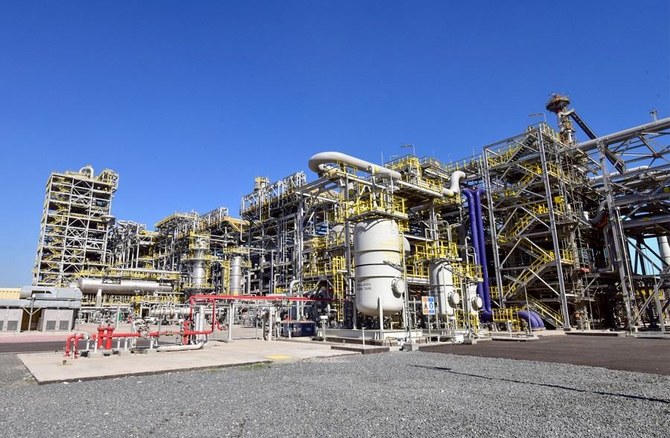
WTI crude breaks $60 a barrel on oil supply worries
https://arab.news/cx7xk
WTI crude breaks $60 a barrel on oil supply worries
- West Texas Intermediate surged 2.19 percent to $60.77 in Asian trade
- Brent broke the $60 marker last week
‘The future is renewables,’ Indian energy minister tells World Economic Forum
- ‘In India, I can very confidently say, affordability (of renewables) is better than fossil fuel energy,’ says Pralhad Venkatesh Joshi during panel discussion
- Renewables are an increasingly important part of the energy mix and the technology is evolving rapidly, another expert says at session titled ‘Unstoppable March of Renewables?’
BEIRUT: “The future is renewables,” India’s minister of new and renewable energy told the World Economic Forum in Davos on Wednesday.
“In India, I can very confidently say, affordability (of renewables) is better than fossil fuel energy,” Pralhad Venkatesh Joshi said during a panel discussion titled “Unstoppable March of Renewables?”
The cost of solar power has has fallen steeply in recent years compared with fossil fuels, Joshi said, adding: “The unstoppable march of renewables is perfectly right, and the future is renewables.”
Indian authorities have launched a major initiative to install rooftop solar panels on 10 million homes, he said. As a result, people are not only saving money on their electricity bills, “they are also selling (electricity) and earning money.”
He said that this represents a “success story” in India in terms of affordability and “that is what we planned.”
He acknowledged that more work needs to be done to improve reliability and consistency of supplies, and plans were being made to address this, including improved storage.
The other panelists in the discussion, which was moderated by Godfrey Mutizwa, the chief editor of CNBC Africa, included Marco Arcelli, CEO of ACWA Power; Catherine MacGregor, CEO of electricity company ENGIE Group; and Pan Jian, co-chair of lithium-ion battery manufacturer Contemporary Amperex Technology.
Asked by the moderator whether she believes “renewables are unstoppable,” MacGregor said: “Yes. I think some of the numbers that we are now facing are just proof points in terms of their magnitude.
“In 2024, I think it was 600 gigawatts that were installed across the globe … in Europe, close to 50 percent of the energy was produced from renewables in 2024. That has tripled since 2004.”
Renewables are an increasingly important and prominent part of the energy mix, she added, and the technology is evolving rapidly.
“It’s not small projects; it’s the magnitude of projects that strikes me the most, the scale-up that we are able to deliver,” MacGregor said.
“We are just starting construction in the UAE, for example. In terms of solar size it’s 1.5 gigawatts, just pure solar technology. So when I see in the Middle East a round-the-clock project with just solar and battery, it’s coming within reach.
“The technology advance, the cost, the competitiveness, the size, the R&D, the technology behind it and the pace is very impressive, which makes me, indeed, really say (renewables) is real. It plays a key role in, obviously, the energy demand that we see growing in most of the countries.
“You know, we talk a lot about energy transition, but for a lot of regions now it is more about energy additions. And renewables are indeed the fastest to come to market, and also in terms of scale are really impressive.”
Mutizwa asked Pan: “Are we there yet, in terms of beginning to declare mission accomplished? Are renewables here to stay?”
“I think we are on the road but (its is) very promising,” Pan replied. There is “great potential for future growth,” he added, and “the technology is ready, despite the fact that there are still a lot of challenges to overcome … it is all engineering questions. And from our perspective, we have been putting in a lot of resources and we are confident all these engineering challenges will be tackled along the way.”
Responding to the same question, Arcelli said: “Yes, I think we are beyond there on power, but on other sectors we are way behind … I would argue today that the technology you install by default is renewables.
“Is it a universal truth nowadays that renewables are the cheapest?” asked Mutizwa.
“It’s the cheapest everywhere,” Arcelli said.


