

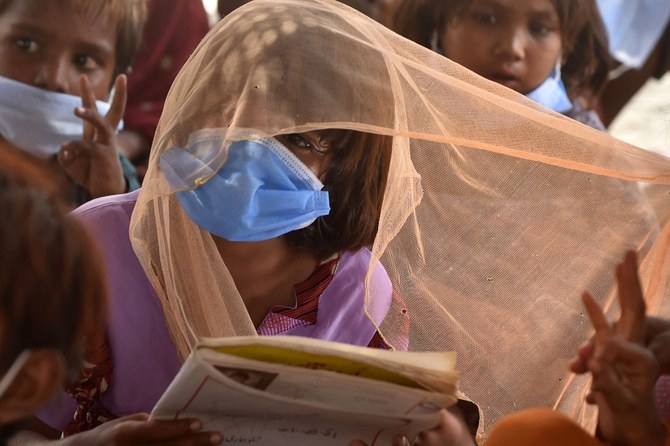

PESHAWAR: In northwestern Pakistan, a young philanthropist has opened the first school for nomadic children to get them off the streets and break the cycle of illiteracy and poverty that has for generations consumed their community.
The Muhammad Trust School was founded in Dera Ismail Khan, Khyber Pakhtunkhwa province in November last year by Muhammad Mehsud, a business administration graduate. It has since enrolled over 60 boys and girls from the vulnerable community that for decades has been living on the banks of the Indus River, relying on odd jobs and begging for sustenance.
Since the children support their families in earning a living, Mehsud had to convince their parents to give them a chance for an education and better future.
"Initially, these people were reluctant since they were afraid of losing their income, but they started taking interest in my proposal when I offered these children uniform and books without charging them anything," he told Arab News on Saturday.
"With every passing day now, we see new admissions ... Today, 34 girls and 30 boys are enrolled in my school."
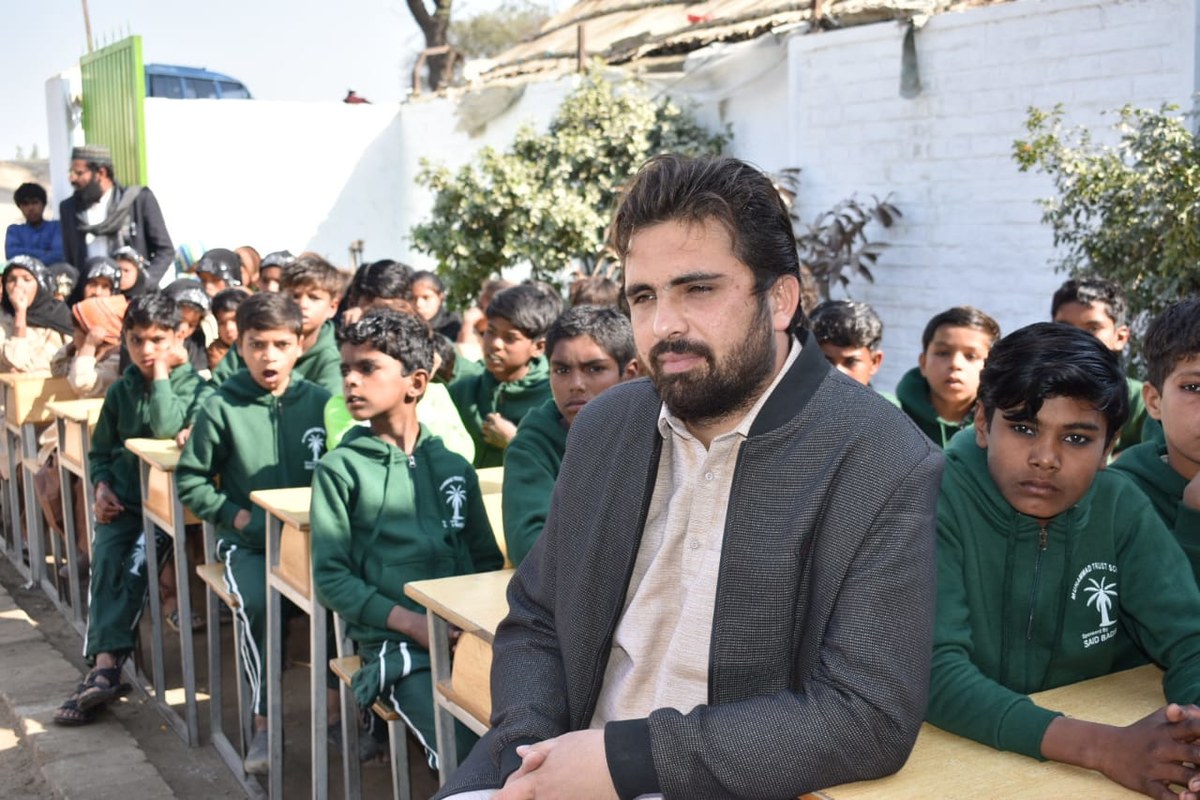
Muhammad Mehsud, the founding principal of the Muhammad Trust School, can be seen along with his students in Dera Ismail Khan on February 5, 2021. (Photo courtesy: Muhammad Trust School)
Mehsud's initiative springs from his own experience of being displaced and homeless.
He was in sixth grade when his family was uprooted from his hometown in South Waziristan due to a military operation in 2009 against militant outfits operating in the area.
“Suddenly, we found ourselves in tents like members of this community,” he said. “The experience significantly changed my life and I thought about setting up a school to improve the lives of vulnerable children from impoverished backgrounds."
According to Sahibzada Muhammad Naeem, district social welfare officer, Dera Ismail Khan’s nomadic community, which now comprises about 800 families, has lived near the Indus River since the independence of Pakistan in 1947. He said that they relocate from one area to another in response to changing weather conditions.
With the school, community members say their life will now change.
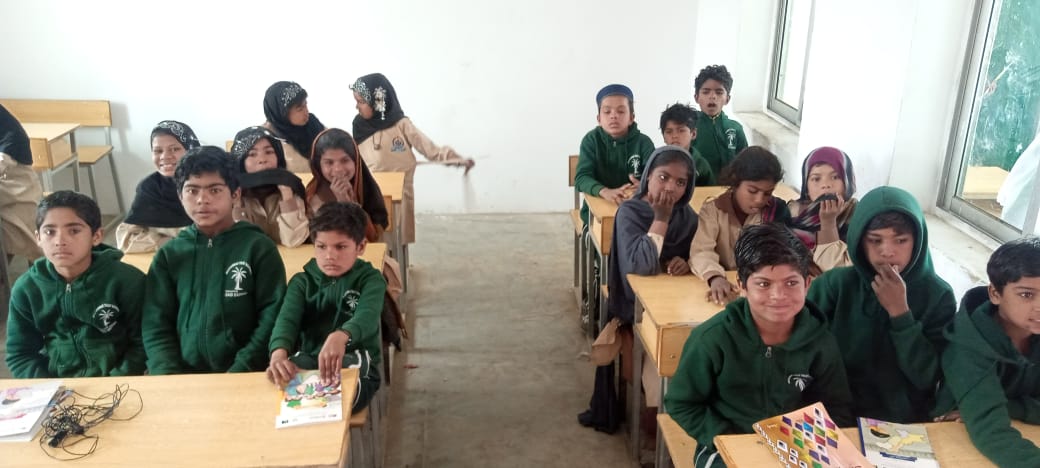
Children belonging to a nomadic community can be seen at the Muhammad Trust School in Dera Ismail Khan on February 13, 2021. The school was opened last November. (Photo courtesy: Muhammad Trust School)
Faiz Muhammad, 60, who like the rest of the group never got a chance to attend a school as his family would not stay at one place for longer durations.
“I spent my life in misery like others before me ... My 12 children used to collect money, food and other items from different parts of the city,” he told Arab News.
"I have enrolled my two daughters and sons with a hope to see a better tomorrow."
His eight-year-old daughter, Najma Bibi, said that since joining the school she is no longer begging for money on the streets and is hopeful to become a doctor one day.
"When I go home after attending my classes now, my father says I will become a doctor and treat patients.”
While Mehsud said that he had reached an agreement with families whose children attend his school that they would not relocate, if they do he will not stop supporting them.
“We have an alternative plan to set up tent schools if these families decide to move from this area at some stage,” he said. "I’m firm to make them stand on their own feet.”


