



ISLAMABAD: At a small facility in Pakistan’s eastern city of Lahore, Nida Khan and her team of six employees produce a line of nut butters, milks and chocolates. Hundreds of kilometers away in the capital Islamabad, Rabia Farhan makes artisan and diet-friendly granola products out of a home kitchen for sale at local farmers’ markets and for special orders shipped across the country.
Both entrepreneurs have seen their small businesses expand since the country went into lockdown in March last year following the coronavirus outbreak that led to a port closure and the decline of foreign consumer food product imports. Touted as a big win by the government toward easing Pakistan’s ballooning balance of payments crisis, imports spiked again in December with an over 30 percent imbalance in the trade deficit.
Food products account for nearly $5 billion of Pakistan’s annual import bill while exports have remained around $4.5 billion, according to central bank data. Over 35 percent of the country’s workforce is employed in agriculture and a further 2.5 percent in food processing.
“I believe that if we want our local businesses to grow and give them opportunities to come up with better products, we need to give them the space; if we keep bringing stuff from outside, no-one will come to local businesses,” Farhan said, whose company ‘Crusts and Clusters’ has grown steadily since she founded it in the summer of 2019.
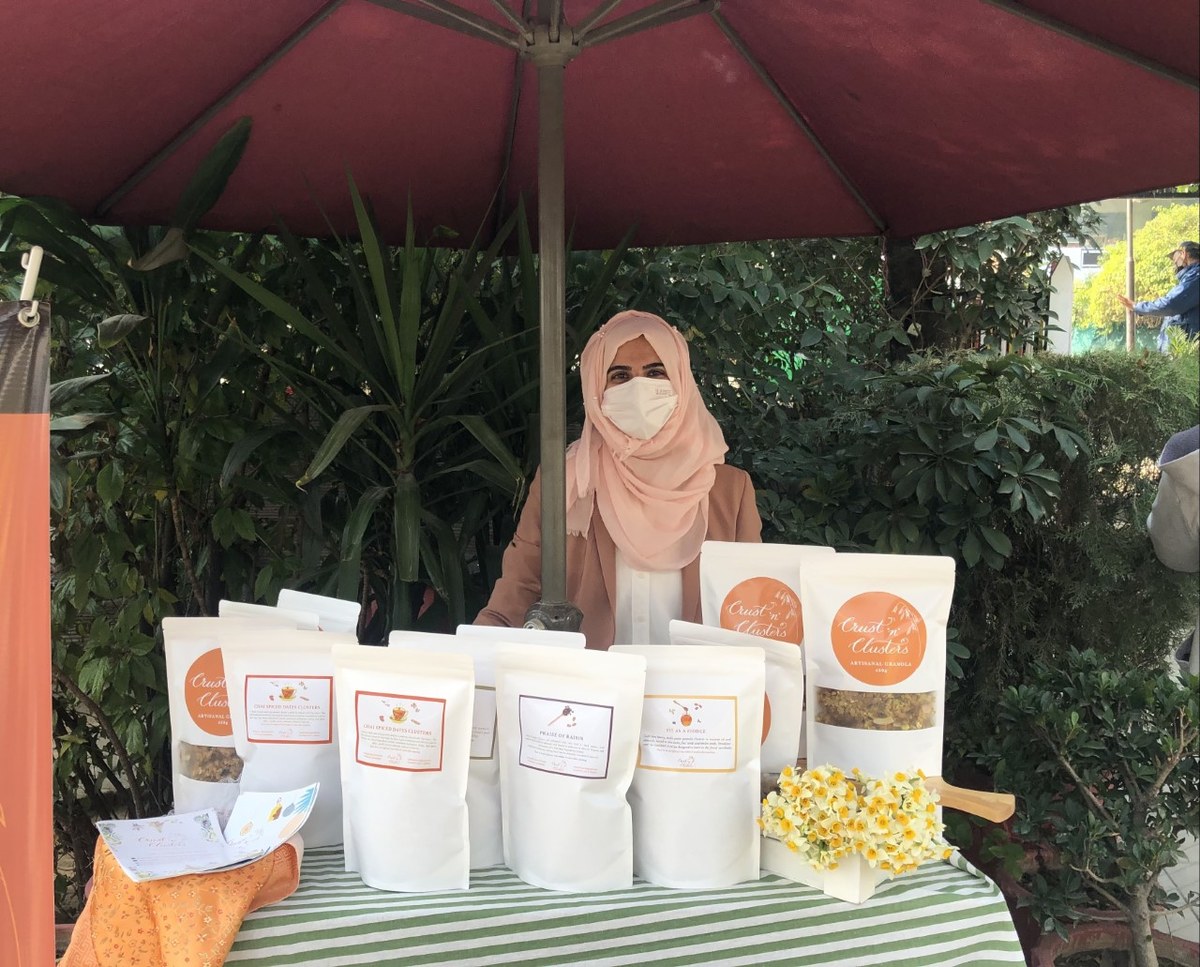
Rabia Farhan stands behind her Crusts and Clusters stall at the Islamabad Farmers Market, Islamabad, February 6, 2021. (AN photo)
“Somehow, just now, I feel that people are starting to appreciate small businesses. Just a few years ago people used to only like imported products.”
Farhan began making granola for sale after the encouragement of friends, and now single-handedly manages her orders while continuing to teach science at a local middle-school.
While business owners are happy with the breathing room reduced imports have provided, experts say protectionist measures such as tariffs are not sustainable in building up the local packaged food market.
“There is a lot of economic potential. If you take the right path with this industry there is even a lot of export potential,” Saad Ashraf from Dawn Foods, one of Pakistan’s largest packaged food companies said.
“Government support is essential. A majority of start ups fail in the first year… these companies need guidance and government support,” he added, pointing out restrictions such as heavy taxes and duties that new businesses have to contend with.
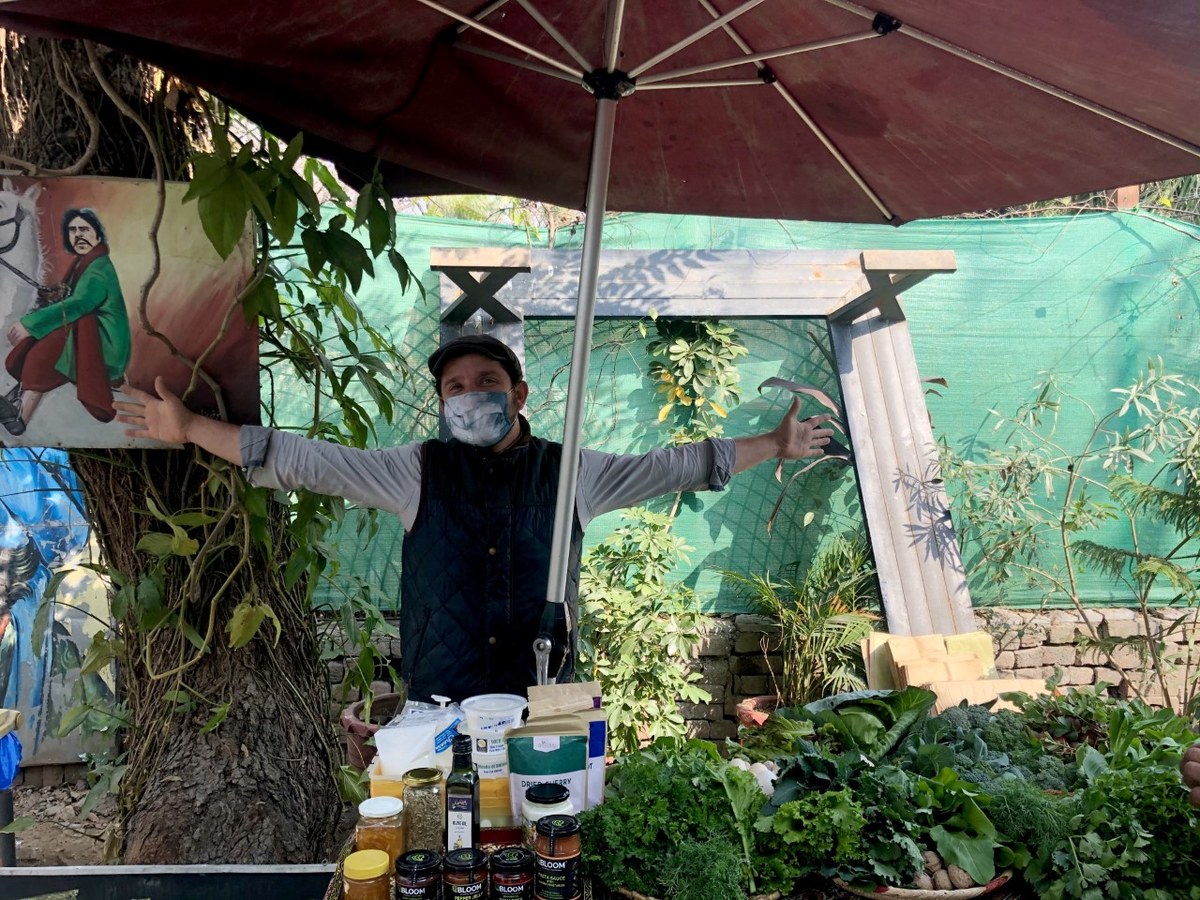
Farmers market founder Qasim Tareen poses from behind his Isloo Fresh stall at the Islamabad Farmers Market, Islamabad, February 6, 2021. (AN photo)
Pakistan’s information and finance ministries did not respond to Arab News’ requests for comment.
Founded in 2017, Khan’s Thoughtful Kitchen has seen orders for its nut-based products more than double in the past year to around 500 jars of nut-butter and bottles of milk leaving her facility weekly.
“The demand keeps increasing by the day… After the imports closed about a year ago [the big supermarkets] started contacting me,” she said, and added that direct orders from across the country have also picked up.
But attempts to get small business loans and support from the government have proved fruitless for emerging packaged food producers.
“It’s been months since I applied [for loans] but I have not heard back. If I had some investment I could have grown more but right now I have to rely on what I earn,” Farhan said.
Pakistan currently sits at number 108 on the World Bank’s ease of doing business index, a 28 point improvement from the previous year but small business owners complain there are a slew of regulatory and taxation related hurdles.
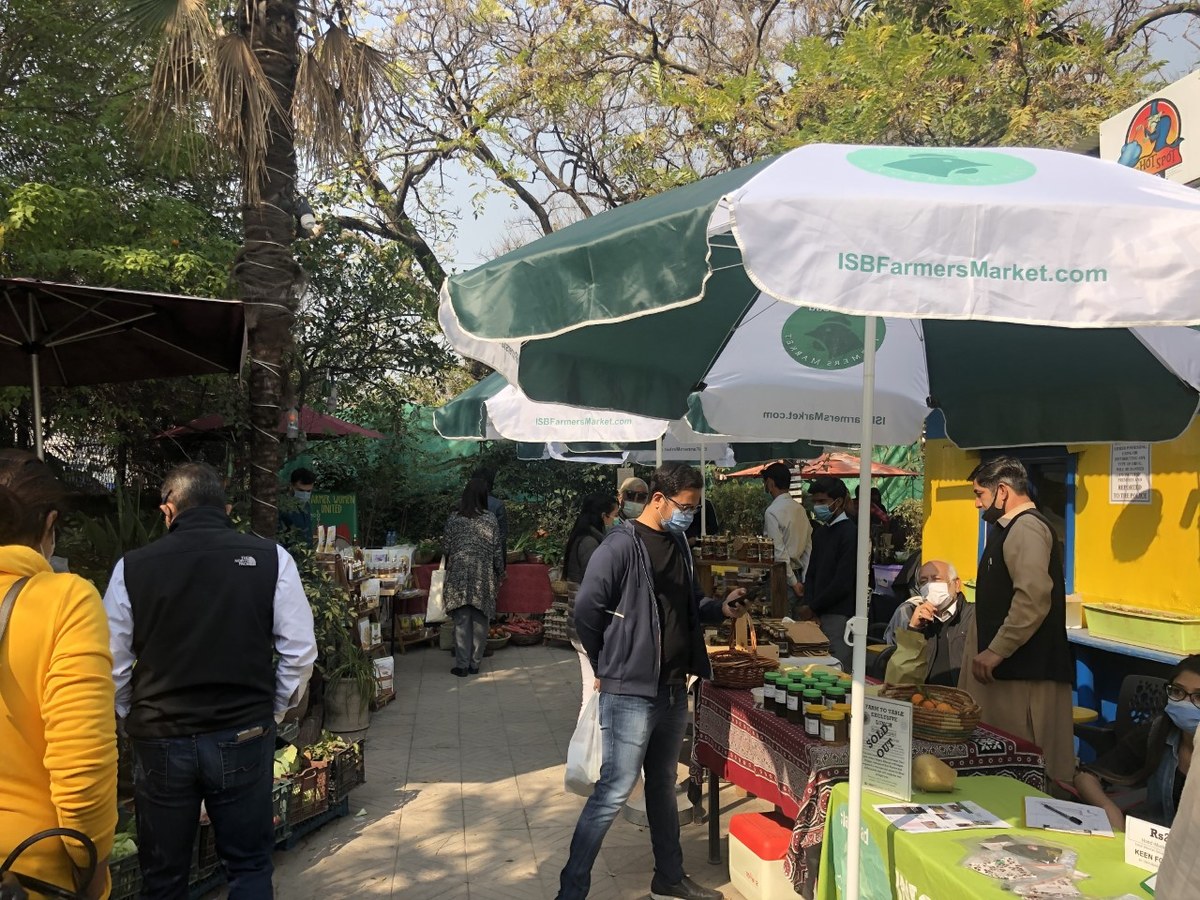
Shoppers browse products at the Islamabad Farmers Market, Islamabad, February 6, 2021. (AN photo)
“So far not that much of the loans have been given out. Of the allocated 100 billion rupees, only five billion have been dispersed. And that has been mostly for real estate and IT related business-- but not much for agriculture,” a senior official who asked not to be identified and works with the government to disperse loans and support to small and medium enterprises, told Arab News.
At the Islamabad farmers market, vendors are crowded into a small space that normally functions as seating for a popular ice cream parlour. Attendance has grown significantly since the market kicked off in 2013, as have the number of suppliers, and the market plans to expand and move to a new location.
“As soon as we restarted, there was this wave of increasing demand and also a lot of food producers wanted to take advantage, so there was a wave of renewed interest,” the market’s founder Qasim Tareen told Arab News, and said that orders had tripled in the past year.
“A lot of smart local producers have caught on to that and improved on quality, packaging, delivery, and also focusing on e-commerce.”
When it comes to this new food sector having a meaningful economic impact, however, Tareen too believes that state support is essential-- but has not been forthcoming so far.
“For it to be scaled there would have to be government support. A government authority that is aware, willing, and innovative enough to take advantage of this.”


