

Pakistan wants 'truly bilateral relationship' with United States — national security advisor

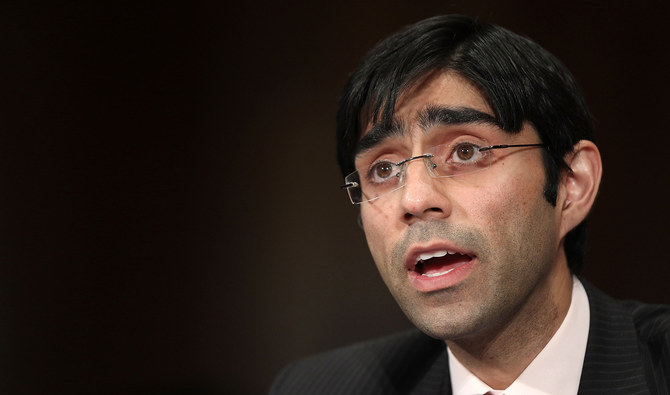
Moeed Yusuf during a hearing before the Senate Foreign Relations Committee at May 5, 2011 on Capitol Hill in Washington, DC. (AFP/File)
Short Url
Updated 12 February 2021
Follow

Pakistan wants 'truly bilateral relationship' with United States — national security advisor

  • The prime minister’s advisor on national security says no third country lens should be applied to the diplomatic ties between the two countries
  • Yusuf says Pakistan is pursuing economic security paradigm and the world should recognize that

ISLAMABAD: Special Assistant to Prime Minister on National Security and Strategic Policy Planning Dr. Moeed Yusuf said on Friday that Pakistan’s foreign policy was guided by its economic interests and his country was looking at its relationship with the United States from the same perspective. 

“Our goal is to get to a truly bilateral relationship with the US,” Yusuf told a ceremony arranged by a local think tank, Tabadlab, to launch a policy brief on the US-Pakistan ties via a video link. “No third country lens should be applied to this relationship. This has been the tragedy of this relationship for the past two decades and before that as well.” 

He said there had been a shift in his country’s diplomatic approach and the international community should recognize that. 

“We are decidedly on an economic security paradigm now which essentially means that we are focused on working with our geo-economic location more than the geostrategic element of that location,” he continued. “We want to operate as the melting pot for positive global economic interests.” 

Discussing the China-Pakistan Economic Corridor, Yusuf said it was not just about north-south connectivity, though Islamabad wanted economic dividends from its partnership with China. 

He noted that his country was “also open to eastward connectivity” with India while maintaining that the option was closed for now “because of where India stands.” 

The prime minister’s advisor said that Pakistan was looking for “development partnerships, not assistance,” and was open to every country in the world. 

“It’s critical that the world updates its narrative about Pakistan, especially the West where Pakistan has been the whipping boy for the longest period,” he added. 

Meanwhile, the policy paper prepared by Tabadlab, a local think tank, pointed out that American policies were undergoing a “significant shift” in South Asia since Washington was striving for greater strategic alignment with India. 

It also pointed out that US withdrawal from Afghanistan, along with other geopolitical realities, would require continuous American engagement with the region, particularly with Pakistan. 

“Building a closer relationship with Pakistan offers the US alternative pathways of furthering its own national interests such as contending with the growing influence of China,” it noted. “A more comprehensive engagement with Pakistan would also enable the US to further other goals of mutual interest with Pakistan as well as other regional countries, such as preventing conflict, terrorism, economic instability and contending with the threat of climate change.” 

The policy brief also observed that Pakistan’s role in negotiating peace in Afghanistan provided unique opportunities to policymakers in Islamabad to proactively explore means for establishing “a comprehensive and resilient bilateral relationship with the United States.” 


Pakistan approves upgrades to national ID cards in push to strengthen digital ecosystem

Updated 6 sec ago
Follow

Pakistan approves upgrades to national ID cards in push to strengthen digital ecosystem

  • The amendments allow for QR-based verification, authentication controls, biometric expansion, and card format updates
  • The measures advance integrated digital governance through National Data Exchange Layer and broader digital ID ecosystem

ISLAMABAD: Pakistan has notified amendments to the National Identity Card and Pakistan Origin Card rules and introduced QR-based verification and stronger fraud controls, the National Database and Regulatory Authority (NADRA) said on Tuesday, amid efforts to strengthen the country’s digital ecosystem.

The amendments modernize Pakistan’s identity document framework by legally embedding QR-based verification, strengthening authentication controls across digital services, expanding biometric recognition and updating card formats for key citizen categories.

A core reform is the statutory introduction of the Quick Response (QR) code as a defined security and verification feature, authorizing the use of “QR code or any other technological feature” in lieu of current microchip enabling NADRA to adopt evolving verification technologies without repeated rule amendments.

This QR-enabled capability directly strengthens Pakistan’s Digital ID ecosystem and supports interoperability through the National Data Exchange Layer, according to the national database regulator.

“This establishes a robust legal basis for quick and secure verification of identity credentials in both offline and online environments,” NADRA said.

“This will also enable all citizens to carry similar card instead of currently prevalent two types of national identity cards one of which is with microchip and the other without.”

Pakistani state media reported in August that the country was developing digital identities of all its citizens to enable secure and efficient payments. The measures came as part of a broader effort to digitize the economy for greater transparency.

QR-based credentials allow rapid front-end validation of identity attributes in service delivery settings, while also enabling back-end systems to confirm authenticity and status through trusted exchanges. This is expected to improve speed, transparency and consistency of identity verification across government entities and regulated sectors, reduce manual handling, and lower the risk of fraud and impersonation, according to NADRA.

The amendments also strengthen the enforcement effect of card suspension. The Rules now clarify that where a card is suspended, all verification, authentication and related services linked to that card shall stand suspended forthwith. This closes a key risk area by ensuring that once a card is suspended, it cannot continue to be used through digital verification channels or institutional authentication processes.

“The amendments also introduce standardized identification for residents of Azad Jammu and Kashmir by requiring an inscription indicating ‘Resident of Azad Jammu and Kashmir’ in the manner specified by the Authority, thereby ensuring uniform geographic identification on the document,” NADRA said.

“Overall, these amendments strengthen the legal and technological foundations of Pakistan’s identity system by enabling secure QR-based verification, reinforcing the integrity of digital authentication services, improving biometric assurance,” it said. “They also advance readiness for integrated digital governance by supporting structured interoperability through the National Data Exchange Layer and a broader Digital ID ecosystem.”