

Lancet greenlights Russia’s Sputnik V vaccine

A nurse prepares a dose of the Sputnik V Covid-19 vaccine for a patient at a clinic in Moscow, December 30, 2020. (AFP)
Short Url
Updated 02 February 2021
Follow

Lancet greenlights Russia’s Sputnik V vaccine

  • Experts said the Phase III trial results meant the world had another effective weapon to fight the deadly pandemic
  • A two-dose regimen of the vaccine — administered 21 days apart — was 91.6% effective against symptomatic COVID-19

DUBAI: Sputnik V, the Russian anti-COVID vaccine, has been given the green light by the prestigious British medical journal The Lancet and is set to expand its global roll-out, including in the Middle East.

The Lancet on Tuesday published a peer-reviewed article which showed the Russian product joining the ranks of vaccines with more than 90 percent efficacy. It also rated Sputnik’s advantages in terms of safety, logistics and longevity.

Kirill Dmitriev is the chief executive of the Russian Direct Investment Fund (RDIF), which has led the development of the vaccine.

He said that the drug, which is already registered in 16 countries, would be in 25 in the next two weeks and that he was in talks with Saudi health authorities and drug companies to register and manufacture the jab in the Kingdom.

The Russian vaccine, the first to be registered by any national authority, has been criticized in some quarters because of a lack of testing and transparency. But Dmitriev said that Russia was “right” all along.

“This is a vaccine for all mankind,” he added. “This is a great day in the fight against the COVID-19 pandemic. The data published by The Lancet proves that not only is Sputnik V the world’s first registered vaccine, but also one of the best.”

Sputnik, which was developed at the Gamaleya Institute in Moscow, was subjected to a third-phase review involving 19,866 volunteers receiving the two-dose treatment. It showed 91.6 percent efficacy. Until now, only the vaccines developed by Pfizer and Moderna have achieved 90 percent-plus efficacy rates in third-phase trials.

“Sputnik V generated a robust humoral and cell-mediated immune response,” The Lancet said, adding that it had an “excellent” safety profile.


WATCH FULL INTERVIEW

Frankly Speaking: RDIF’s Kirill Dmitriev


It found “no serious adverse events associated with vaccination, as confirmed by an independent data monitoring committee - no strong allergies, no anaphylactic shock.”

Publication in The Lancet is not an official medical endorsement but does mean the drug has been reviewed by a body of scientific experts and is a serious potential treatment for the disease.

In a statement, the RDIF said that Sputnik V had advantages over other vaccines with a 90 percent efficacy rate, including “a well-studied and highly efficient human adenoviral vector mechanism proven safe over decades; the vaccine’s low cost in comparison to other approaches; and fewer logistics requirements with a storage temperature of between two to eight degrees celsius allowing for easier distribution worldwide.”
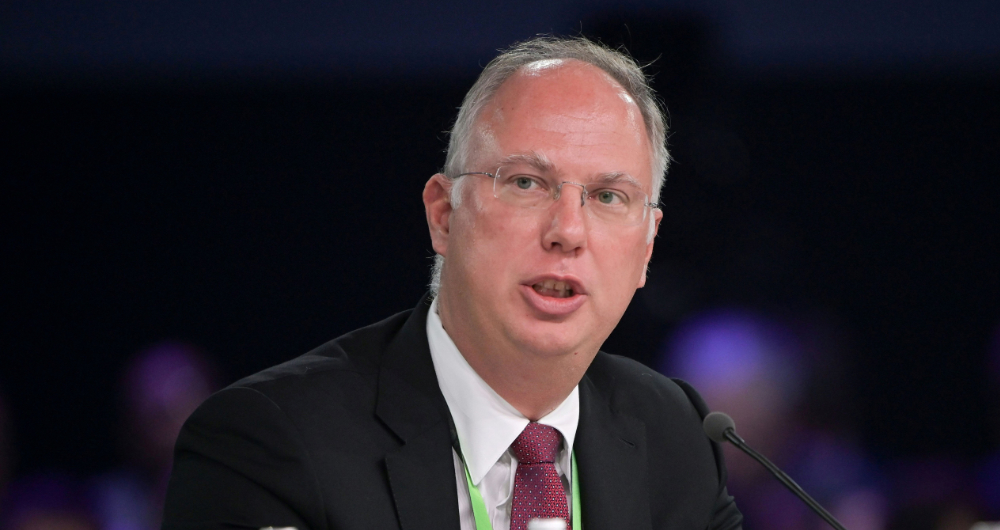


Kirill Dmitriev is the chief executive of the Russian Direct Investment Fund (RDIF), which has led the development of the vaccine. (AFP)

Dmitriev said that the fund’s partnership with AstraZeneca, the British-Swedish drug company that has produced its own vaccine in collaboration with Oxford University, could raise the efficacy rate of the Oxford product over a two-shot dosage.

He said that he was in discussions with medical authorities in Saudi Arabia, the UAE and Azerbaijan to conduct clinical trials of a joint Sputnik-Oxford product.

RDIF is also talking to Chinese vaccine producers about joint ventures to improve the efficacy of their products, Dmitriev said.


UN chief launches first global, independent scientific panel on artificial intelligence

Updated 5 sec ago
Follow

UN chief launches first global, independent scientific panel on artificial intelligence

  • Secretary-General Antonio Guterres nominates 40 experts to serve on body ‘dedicated to helping close the AI knowledge gap and assess the real impacts of AI’
  • It will ‘help the world separate fact from fakes, and science from slop … at a moment when reliable, unbiased understanding of AI has never been more critical,’ he adds

NEW YORK CITY: UN Secretary-General Antonio Guterres on Wednesday formally launched what he described as the only global, independent scientific body focused on artificial intelligence, and submitted his recommendations for the experts to serve on it.

“It will be the first global, fully independent scientific body dedicated to helping close the AI knowledge gap and assess the real impacts of AI across economies and societies,” he told reporters in New York.

“And this could not be more urgent. AI is moving at the speed of light. No country can see the full picture alone.”

The Independent International Scientific Panel on Artificial Intelligence was established by the UN General Assembly through a resolution in August. Guterres said he has now submitted a list of 40 experts from all regions as his proposed candidates for the new body, which was mandated by world leaders under the UN’s Pact for the Future.

The panel is intended to provide authoritative, science-based analysis at a time when AI is developing rapidly and reshaping economies, governance and social life, but regulatory approaches remain fragmented.

Guterres underscored the need for shared understanding among countries to help develop effective safeguards, promote innovation for the common good, and strengthen international cooperation.

The UN said the panel would serve as a global reference point, helping policymakers and the public distinguish between reliable evidence and misinformation, and grounding debates on AI in independent scientific assessment.

The initiative comes amid growing concern over the societal, economic and security risks posed by unchecked technological competition.

“We need shared understandings to build effective guardrails, unlock innovation for the common good, and foster cooperation,” Guterres said.

“The panel will help the world separate fact from fakes, and science from slop. It will provide an authoritative reference point at a moment when reliable, unbiased understanding of AI has never been more critical.”

The proposed members of the panel were selected following an open global call that attracted more than 2,600 applicants, whose expertise spanned fields including machine learning, data governance, public health, cybersecurity, child development and human rights. The chosen candidates are expected to serve in a personal capacity, independent of governments, businesses or other institutions.

The panel will operate on an accelerated timeline, with its first report due in time to inform a Global Dialogue on AI Governance scheduled for July. UN officials said the findings were expected to support international efforts to build common ground on AI governance during a period of heightened geopolitical tensions and technological rivalry.

Guterres framed the initiative as part of a broader push to ensure that AI is shaped collectively, guided by scientific evidence and global solidarity, rather than allowing its development to outpace international cooperation.