
LOS ANGELES: Six white Mississippi police officers tortured two innocent Black men using a sex toy, Tasers and a sword in an hours-long attack that ended with one man shot through the mouth and neck, the US Department of Justice said Thursday.
The brutal assault, and its subsequent cover-up in which the men left one victim bleeding as they hid evidence of their crimes, is the latest race-tinged stain on US policing.
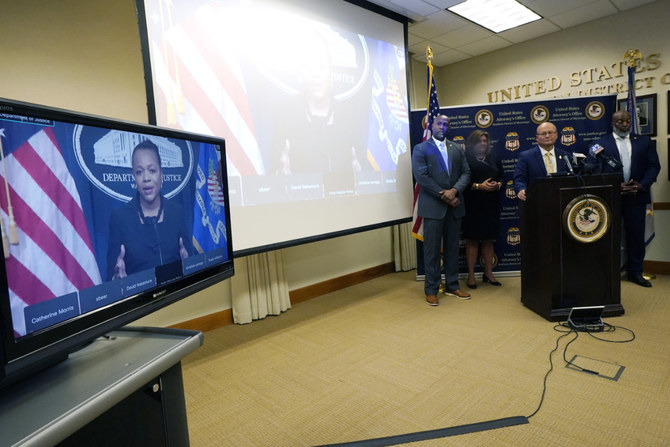
“The defendants in this case tortured and inflicted unspeakable harm on their victims, egregiously violated the civil rights of citizens who they were supposed to protect, and shamefully betrayed the oath they swore as law enforcement officers,” said Attorney General Merrick Garland.
Five now-former members of Mississippi’s Rankin County Sheriff’s Department and one former member of the Richland Police Department pleaded guilty Thursday to multiple charges including civil rights conspiracy, deprivation of rights under color of law and obstruction of justice.
All six acknowledged that while responding to a report of suspicious activity on January 24 this year, they kicked in a door at a house and began a sustained and unprovoked attack on two Black men there.
They handcuffed the men and racially abused them, warning them to “stay out of Rankin County,” the DoJ said.
“The defendants punched and kicked the men, tased them 17 times, forced them to ingest liquids, and assaulted them with a dildo,” a press release said.
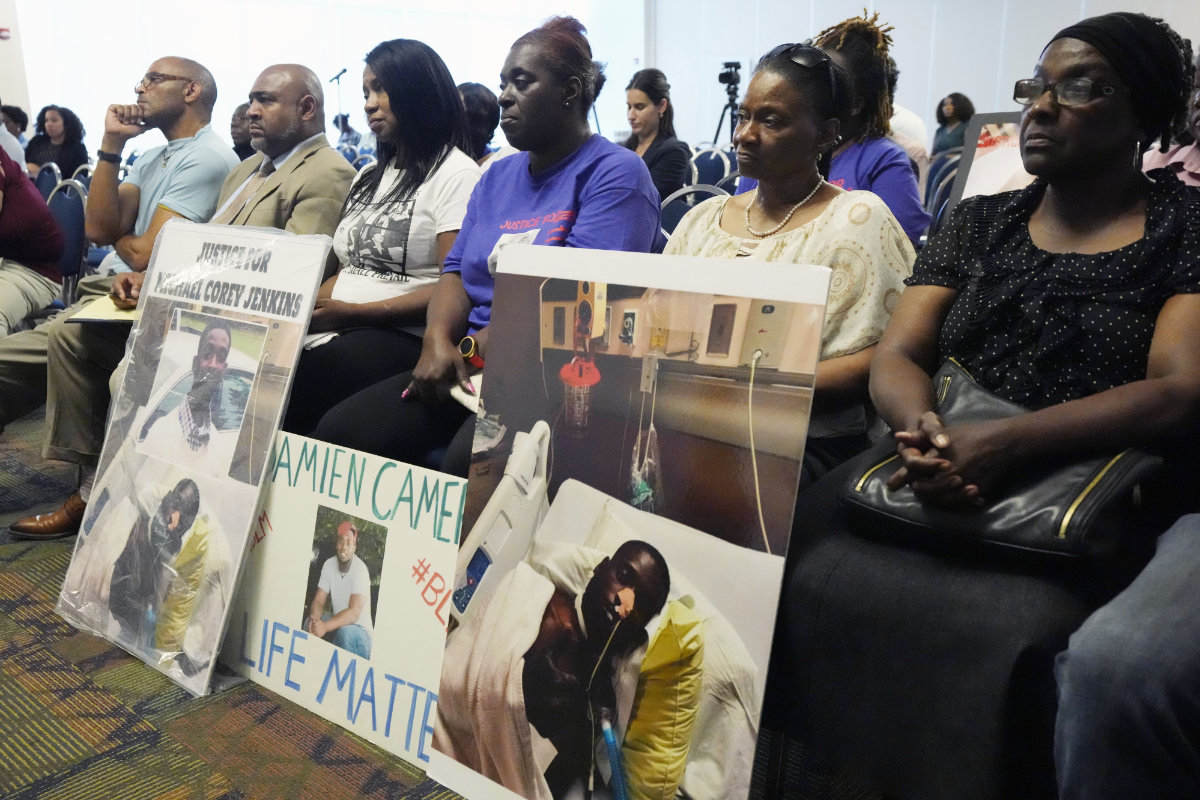
The families of Michael Corey Jenkins and Damien Cameron sit together during the Justice Department's Civil Rights Division tour Thursday, June 1, 2023, in during a Jackson, Mississippi. (AP)
They also hit one man multiple times with a metal sword and a wooden kitchen implement, the DoJ said.
Deputy Hunter Elward, 31, removed a bullet from the chamber of his gun and forced his weapon into one man’s mouth before pulling the trigger.
“Elward racked the slide, intending to dry-fire a second time. When Elward pulled the trigger, the gun discharged. The bullet lacerated (the victim’s) tongue, broke his jaw and exited out of his neck,” the DoJ said.
As their critically injured victim lay bleeding, the men set about planting evidence to justify their actions.
“Remarkably, the victim survived the shooting even though these defendants left him lying on the floor gushing blood for a considerable amount of time... because they were too busy developing a false story to try and cover up their misconduct,” prosecutor Kristen Clarke told reporters.
“The actions of these defendants not only caused significant physical, emotional and psychological harm to the victims, but also caused harm to the entire community, who feel they cannot trust the police officers who are supposed to serve them and leaving other police officers to try to mend the communal wounds inflicted by these defendants,” said Clarke.
“This trauma is magnified because the misconduct was fueled by racial bias and hatred.”
Elward, Brett McAlpin, 52, Christian Dedmon, 28, Jeffrey Middleton, 46, Daniel Opdyke, 27 and Joshua Hartfield, 31, pleaded guilty to all charges against them.
Dedmon, Elward, and Opdyke also pleaded guilty to three other felony charges stemming from another episode of brutality against a white man in December.
All six are due to be sentenced November 14.
Horrifying episodes of police abuses against minorities in the United States burst into the public consciousness with unwelcome frequency, with victims like George Floyd and Breonna Taylor symbols of what critics say is wrong with the US model of law enforcement.