

A shared vision for Qiddiya, a future global entertainment hub

1 / 4
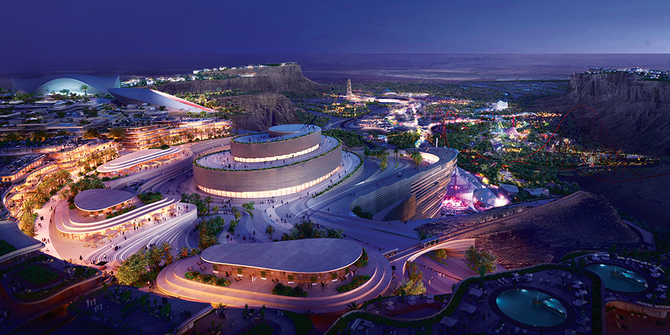
Qiddiya is one of the biggest investments in the future of entertainment in the Middle East. (Supplied: QIC)
2 / 4
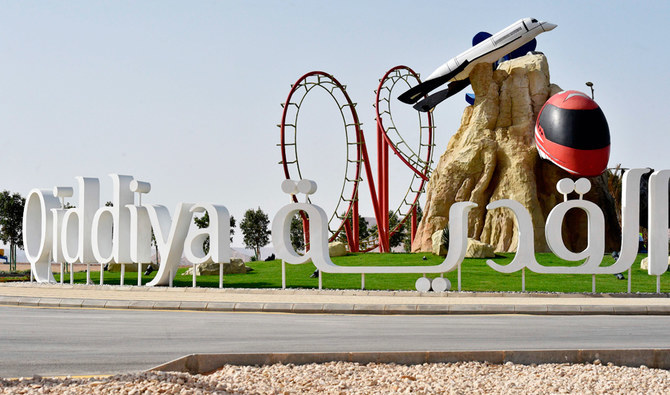
A picture taken on April 25, 2019, shows the entrance to the city of Qiddiya, south of the capital Riyadh. (AFP/File Photo)
3 / 4
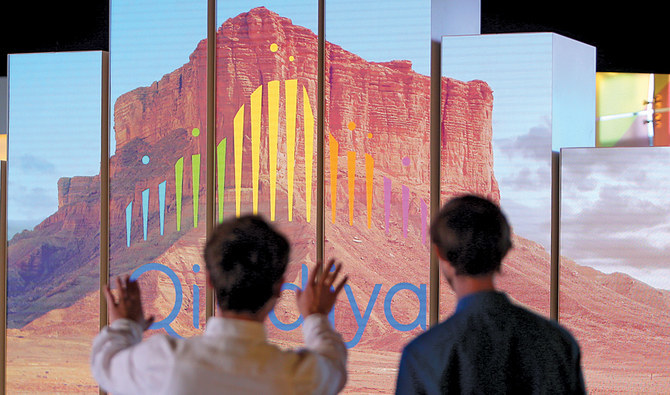
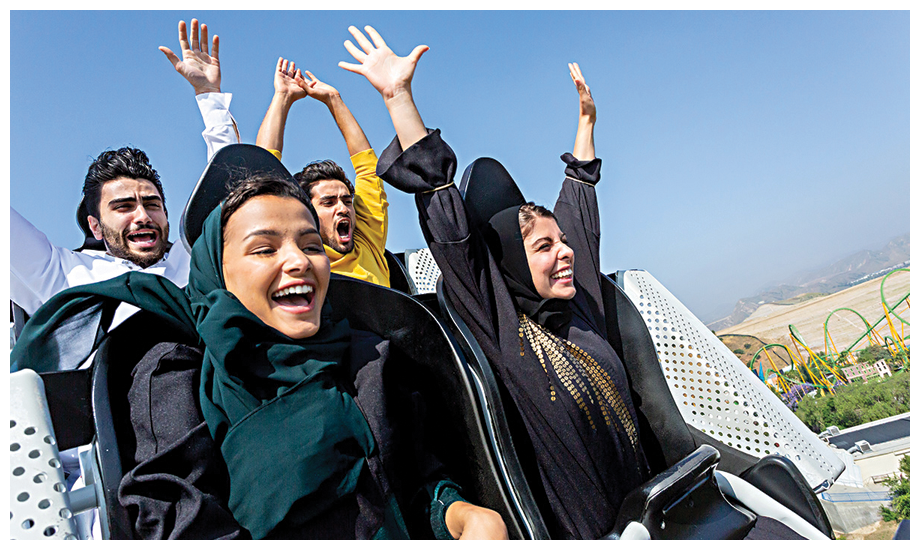
One of the aims of the Qiddiya project is to create a hub to generate job opportunities ​​through the provision of entertainment, sports and arts facilities. (AN Photo/Khaled Al-Khamees/File Photo)
4 / 4
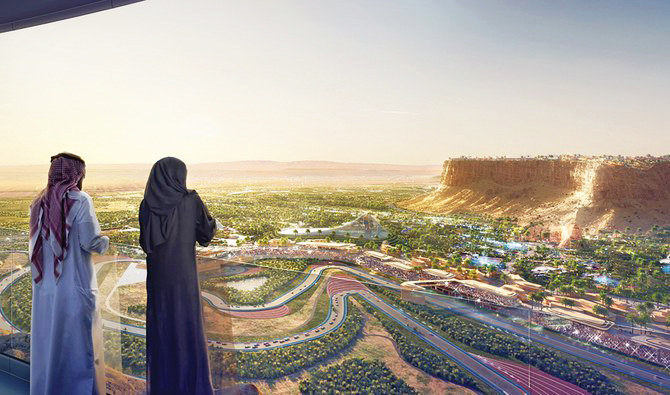
The city — which will cover over 366 square kilometers of land — will host a Formula 1 racing track, a Six Flags theme park, a water park, sports facilities such as football stadiums and development infrastructure for young Saudi athletes, and an extensive range of cultural, creative and artistic activities. (Supplied: Qiddiya)
Short Url
Updated 31 January 2021
Follow

A shared vision for Qiddiya, a future global entertainment hub

  • Qiddiya will host theme parks, Formula 1 racing, sports stadiums and a plethora of cultural and artistic activities
  • Former Disney executive said he wanted to head the Qiddiya project to play his part in the Kingdom’s Vision 2030

RIYADH: One of the key advantages that the team behind Saudi Arabia’s ambitious drive to create a global hub of entertainment have is the shared vision for the project held by all those involved, the CEO of the Qiddiya Investment Company has told Arab News’ sister news organization Asharq news.

“The beauty of a project like the Qiddiya project is that you don’t have to spend too much time to explain to people what they are here for — they know,” Phillipe Gas said.

QIDDIYAFACTS

334 km2 total area

103km2 planned developed area

“They come to the site, they see this beautiful cliff, and they know what it will take. So there’s a pride in everybody that you don’t have to force yourself to explain — they have it. That’s a strength we have,” Gas explained.

Qiddiya is one of the biggest investments in the future of entertainment in the Middle East. 

Aimed at becoming a regional and global hub of entertainment, culture and sport, Qiddiya, Gas said, promises to be a place like no other.
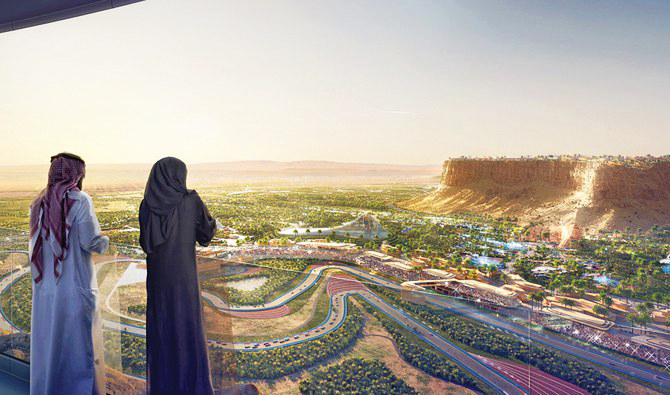


The city — which will cover over 366 square kilometers of land — will host a Formula 1 racing track, a Six Flags theme park, a water park, sports facilities such as football stadiums and development infrastructure for young Saudi athletes, and an extensive range of cultural, creative and artistic activities. (Supplied: Qiddiya)

“The ambition for Qiddiya,” he said, “is to become the world capital of entertainment, sports and the arts.”

The city — which will cover over 366 square kilometers of land — will host a Formula 1 racing track, a Six Flags theme park, a water park, sports facilities such as football stadiums and development infrastructure for young Saudi athletes, and an extensive range of cultural, creative and artistic activities.

But for Gas, who has spent most of his career at the helm of the company behind the iconic Disneyland Paris theme park, Qiddiya’s alignment with Saudi Arabia’s Vision 2030 was what drew him to it in the first place — he wanted to be part of the Kingdom’s story.
“The main reason (to work on Qiddiya) has been actually how connected the project is to Vision 2030 and the overall transformation of the Kingdom of Saudi Arabia,” he said.

Spearheaded by Crown Prince Mohammad bin Salman, Saudi Vision 2030 is an ambitious national strategy to ensure that the Kingdom is a vibrant, progressive society, with a thriving economy, by the end of the decade.


One of the aims of the Qiddiya project is to create a hub to generate job opportunities ​​through the provision of entertainment, sports and arts facilities. (AN Photo/Khaled Al-Khamees/File Photo)

Qiddiya, with its promise of an unparalleled touristic experience, is one of a number of “giga-projects” that constitute a core part of the Kingdom’s economic transition away from its current emphasis on oil.

“You don’t have that many opportunities in your life, in your professional life, to influence such an amazing project. This is what was most appealing to me,” Gas said.

He said that the importance of entertainment, and the human connection it facilitates, is increasingly being understood and emphasized globally, and this is why Qiddiya is such an important part of Vision 2030.
“Entertainment is something that has grown in terms of importance everywhere. We have this growing realisation in the world that time passes very fast and people need to enjoy time together, and do things together — not just work, go to bed and go back to work.”

He continued: “We have seen the importance around the world of preserving time with friends, as a family and as couples — to get to know each other better, to connect with one another.

“This is why entertainment as a sector is growing in importance, and you see this, actually, with Vision 2030 in Saudi Arabia.”

The strategy, he told Asharq news, emphasizes “the wellness of the people, bringing more happiness into the lives of families, and to do this you need to share time together and enjoy the moments you have.”


A picture taken on April 25, 2019, shows the entrance to the city of Qiddiya, south of the capital Riyadh. (AFP/File Photo)

Technology, and its capacity to create immersive experiences, will be a core tool used to create these shared moments between visitors to Qiddiya.

“People want less and less to be a spectator of an activity; they want to be part of it. This is where technology comes into the picture,” Gas said. 

“Augmented reality, virtual reality, and a lot of the effects we can play with and use, will draw people into the experience, they will become an actor in the experience. People want to live the experiences.”

This revolution in entertainment, Gas continued, is what makes the Qiddiya project so exciting not just for the people of Saudi Arabia, but the world.

“Qiddiya is absolutely unique. I have been working in the entertainment industry for many years now, and I have never seen such a proposition, that is integrating elements such as entertainment, sports, arts, performance, but also creativity.”

Qiddiya, he added, “is something that has not been proposed — ever — and this is what makes this place so unique.”

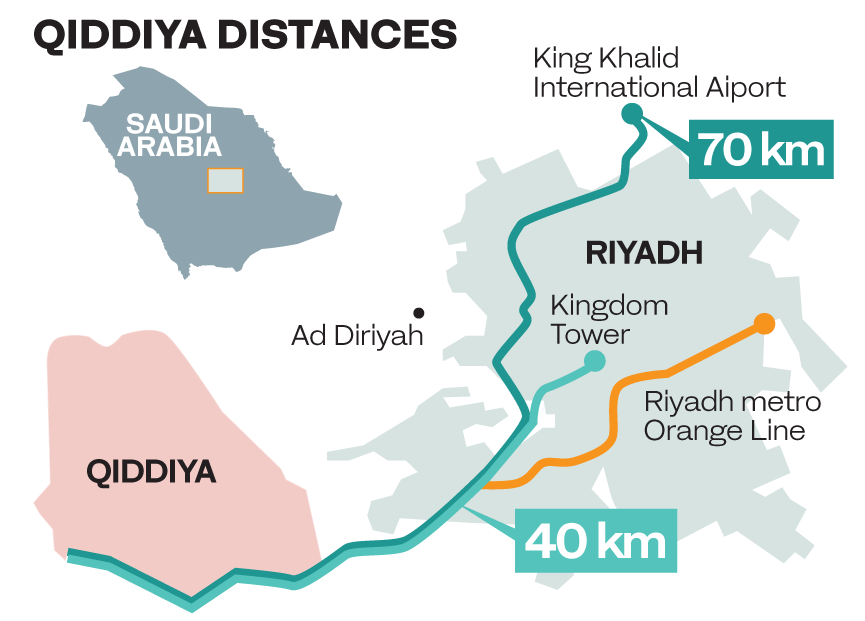
Construction has already begun on Qiddiya, which is located just 40 minutes from Riyadh, and the site will first open for activities in 2023.


Red Sea’s oxygen balance under strain, experts warn

Updated 13 February 2026
Follow

Red Sea’s oxygen balance under strain, experts warn

  • Scientists say warming waters, nutrient runoff and coastal development could quietly erode coral resilience

RIYADH: The Red Sea may not have dead zones, but its fragile ecosystem is vulnerable to oxygen depletion — a quiet decline that can undermine coral health and disrupt marine life.

Sea dead zones are hypoxic or low-oxygen pockets that form most often when nutrient pollution — especially nitrogen and phosphorus from farm runoff and wastewater — fuels blooms that ultimately strip oxygen from the water.

Experts say the risk is not inevitable, but it depends on earlier detection and tighter control of the conditions that drain oxygen from coastal waters.

A sea that relies on its own “breathing” is also a sea shaped by geography.

FASTFACT

DID YOU KNOW?

  • The Red Sea is naturally low in oxygen because of its warm waters and high salinity — making it especially vulnerable to further oxygen decline.
  • The Red Sea’s narrow Bab Al-Mandab strait limits deepwater exchange, meaning the basin largely depends on its own internal circulation to ‘replenish’ oxygen.
  • Saudi Arabia’s coastline features steep underwater drop-offs, allowing deep, oxygen-poor water to move closer to coral reefs near shore.

Matheus Paiva, a senior oceanographer, told Arab News that “the Red Sea’s shallow Bab Al-Mandab choke point limits deepwater exchange,” meaning oxygen replenishment depends heavily on internal overturning circulation.

He said this circulation is driven as surface waters flow north, cool, become denser and sink, helping ventilate deeper layers through vertical mixing.

Paiva said the Saudi coastline’s underwater topography makes the risk more immediate close to shore.

Coral reefs along Saudi Arabia’s Red Sea coast, where scientists say warm, salty waters and limited deep-water exchange can leave ecosystems vulnerable to low-oxygen stress. (Unsplash.com)

“Unlike regions with wide, gradual shelves, our coast features narrow fringing reefs that drop sharply into deep water via steep underwater cliffs and canyons,” he said.

“This ‘step-and-drop’ topography brings deep oxygen-poor water close to shore.”

Paiva said warming at the surface can intensify stratification and reduce vertical mixing. He said that can allow low-oxygen water to creep upslope and affect shallower reef zones.

How oxygen gets consumed faster than it’s replaced is where human pressure can tip the balance.

Carlos Duarte, executive director or the Coral Research and Development Accelerator Program at KAUST, told Arab News that the Red Sea’s baseline conditions create vulnerability. “Because of its warm waters and high salinity, the Red Sea is inherently low in oxygen and, therefore, vulnerable to processes that decline oxygen further.”

He said algal blooms and heat waves raise biological oxygen demand, linking low oxygen to coral mortality.

Duarte said human-driven nutrient and organic inputs can intensify these declines.

He said poorly managed urban development and aquaculture operations can contribute nutrient and organic loads that fuel algal blooms.

Coral reefs along Saudi Arabia’s Red Sea coast, where scientists say warm, salty waters and limited deep-water exchange can leave ecosystems vulnerable to low-oxygen stress. (Unsplash.com)

Duarte said that as bloom material decomposes, it strips oxygen from the water and can lead to hypoxia.

The Red Sea’s celebrated clarity reflects a naturally nutrient-poor system. “The risk is amplified because the Red Sea is naturally oligotrophic. It is nutrient-poor and crystal clear,” Paiva said.

He added that wastewater releases and heavy rain events that trigger flash floods can push large nutrient loads into coastal waters in a short time.

In turn, those pulses can threaten biodiversity and the marine environment that underpins tourism investments along the Kingdom’s Red Sea coast.

Seeing low oxygen coming — rather than reacting after the fact — is the promise of new monitoring and analytics.

Paiva said high-accuracy oxygen data still relies on direct measurements collected during vessel surveys.

Carlos Duarte, executive director or the Coral Research and Development Accelerator Program at KAUST.

“We still depend heavily on classic vessel surveys,” he said. Teams deploy multiparameter sondes to profile the water column and collect water samples to establish a baseline.

“This ‘water-truthing’ remains the industry standard for high-accuracy data,” he said.

Saeed Al-Zahrani, general manager for Saudi Arabia at NetApp, said continuous data can help teams intervene earlier. “Oxygen depletion is rarely sudden; it tends to build over time when conditions line up,” he said.

Al-Zahrani said AI can flag anomalies, learn what “normal” looks like in specific locations, and generate short-horizon risk forecasts.

He added that it creates a decision window — guidance on when to increase sampling, where to focus response efforts, and when to tighten controls around discharges.

Coastal development that reduces oxygen risk starts, Duarte said, with what never reaches the sea.

Duarte said Saudi Arabia’s west coast investments have an advantage compared with older coastal destinations: the opportunity to design sustainability into projects from the outset rather than trying to retrofit after degradation becomes evident.

Duarte said nutrient control is a direct lever to reduce oxygen-depletion risk. “Achieve circular economies where organic products and nutrients are recycled and reused in the system to avoid discharging nutrients to the marine environment,” he said.

Al-Zahrani said wastewater and environmental systems produce huge volumes of information, but fragmentation can slow decisions.

He said connecting data in near real time can help detect problems earlier and anticipate load spikes tied to rainfall, tourism peaks, or industrial activity.

Reef resilience depends on reducing stress before heat and low oxygen overlap.

Duarte told Arab News: “Coral reefs are extremely vulnerable to oxygen depletion.” He added that it can contribute to bleaching and mortality in a warmer ocean.

He said marine heat waves can worsen oxygen stress by reducing oxygen solubility and limiting ventilation of subsurface waters, while increasing oxygen demands of organisms.

Duarte said reducing nutrient inputs and managing reefs to avoid excessive growth of seaweed can build resistance.

He also said models that account for how waves and currents interact with reef topography — work he said is being developed at KAUST — can help guide restoration toward sites more likely to remain oxygenated during heat stress.