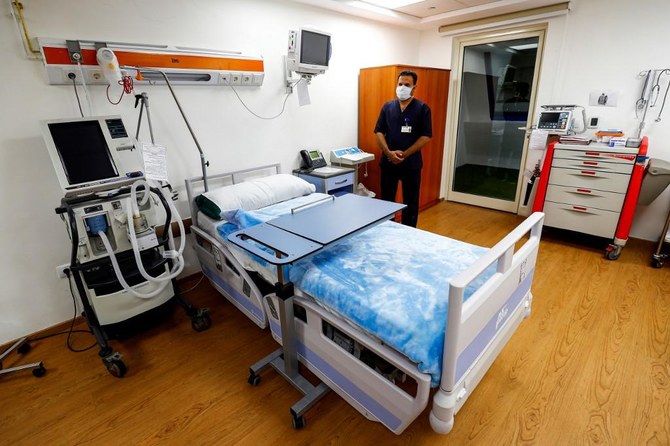
CAIRO: The Egyptian Cabinet has announced that 500 hospitals have been allocated to treating coronavirus patients.
Prime Minister Mostafa Madbouly also confirmed that daily oxygen availability monitoring is happening in all hospitals nationwide and that there is sufficient reserve in all governorates.
He stressed the importance of wearing face masks in public and crowded places, adding that the Ministry of the Interior issued more than 21,000 immediate fines for those violating the precautions.
Minister of Health Hala Zayed announced the launch of a presidential initiative to follow up on coronavirus patients isolated at home.
Starting from Wednesday, the initiative will measure patients’ temperature and oxygen blood saturation, while also checking for any symptom developments.
Zayed said that the program would be carried out through 5,400 health units and medical centers, in addition to allocating medical teams to visit homes equipped with tablets to record all of the data.
The minister added that 800 medical car convoys have been stationed in areas with high coronavirus infection rates, using the Ministry of Health’s surveillance system.
Patients in these locations are monitored periodically and in the event of any complications, they are quickly transferred to a hospital.
The minister affirmed that the infection rate curve had remained stable during the last eight days.


![]()

Egypt allocates 500 hospitals to treat coronavirus patients
Short Url
https://arab.news/697hw
Egypt allocates 500 hospitals to treat coronavirus patients
- Madbouly confirmed that daily oxygen availability monitoring is happening in all hospitals nationwide
- Health minister announced the launch of an initiative to follow up on coronavirus patients isolated at home


Latest updates


© 2026 SAUDI RESEARCH & PUBLISHING COMPANY, All Rights Reserved And subject to Terms of Use Agreement.