


JEDDAH: Social media in the Gulf region has been flooded with celebratory joy since news broke that Saudi Arabia had reopened its airspace and land and sea borders with Qatar as part of a deal to end a three-year diplomatic crisis. For many, the story is deeply personal.
On Tuesday Saudi Arabia’s Crown Prince Mohammed bin Salman told the GCC Summit in AlUla that the agreement to mend ties with Qatar underscored the importance of solidarity and security among Gulf, Arab and Muslim states.
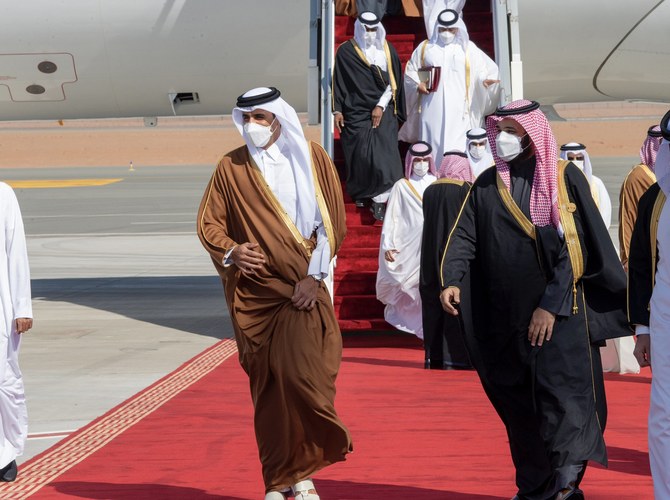
A public embrace earlier in the day between the Crown Prince and Qatar’s Emir Sheikh Tamim bin Hamad Al-Thani at AlUla airport capped the Qatari ruler’s arrival on Saudi soil for the first time since 2017.
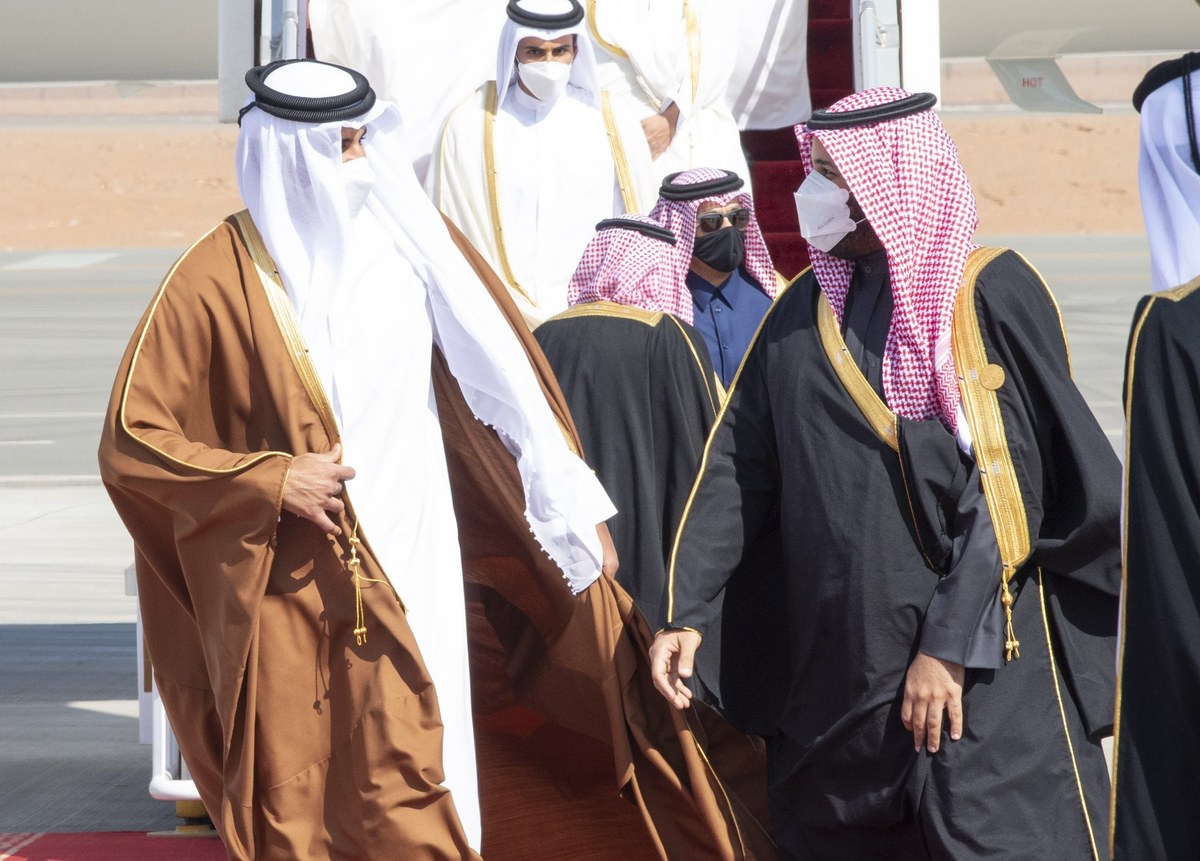
audi Crown Prince Mohammed bin Salman held a meeting with Qatar’s Emir Sheikh Tamim bin Hamad Al-Thani at the Maraya Hall in the historic city of Al-Ula on Tuesday. (Bandar Algaloud/Courtesy of Saudi Royal Court)
For hundreds of separated families, the significance of the reopening of borders and resumption of travel between Saudi Arabia and Qatar cannot be overstated, given the unique social fabric of the Gulf region, with its cross-border ties of marriage and blood.
Videos surfaced on social media showing men, women and children dancing and rejoicing at the easing of the crisis. Many said they were looking forward to reunions in the near future with their loved ones on the other side of the border.
In one video, a Qatari boy could be seen jumping with excitement as he spoke with his father over the phone, exchanging promises of a reunion amid laughter, tears of joy visible on the boy’s face. “Yalla (come on), let’s go” the boy said and the father replied something to the effect: Get ready soon, my son.
Equally euphoric were the sentiments of Ismail Mohammed @soom3a70, a forward for Qatar’s Al-Duhail FC football club. Born and raised in Makkah, the city where his mother still resides, he took to the social-media platform to express his delight with the latest developments. “Good news mom, our get-together is near,” he wrote.
Opinion
This section contains relevant reference points, placed in (Opinion field)
Similar scenes were probably playing out among members of many other families separated since 2017. Sara Abdulhakeem Abdullah, a 22-year-old Saudi who married her Qatari husband in 2018, can now freely travel to the Kingdom.
“I was awakened by my husband late last night with the news of the reopening of borders,” she told Arab News. “Words fail me. It is so hard to put my feelings into words. I had been trying for a long time to find an easy way to go back to Jeddah where my parental family resides.”
Despite the restrictions on air travel within the GCC countries on account of the coronavirus pandemic, last month Abdullah was able to briefly visit her loved ones in Jeddah with the support of her Qatari family. But the journey was circuitous and tiring both for her and her daughter, now a year old.
“Moving from one airport to another, waiting in transit for hours, is not the easiest thing,” she said. “The journey was worth it in the end as I had not seen my father or siblings since getting married.”
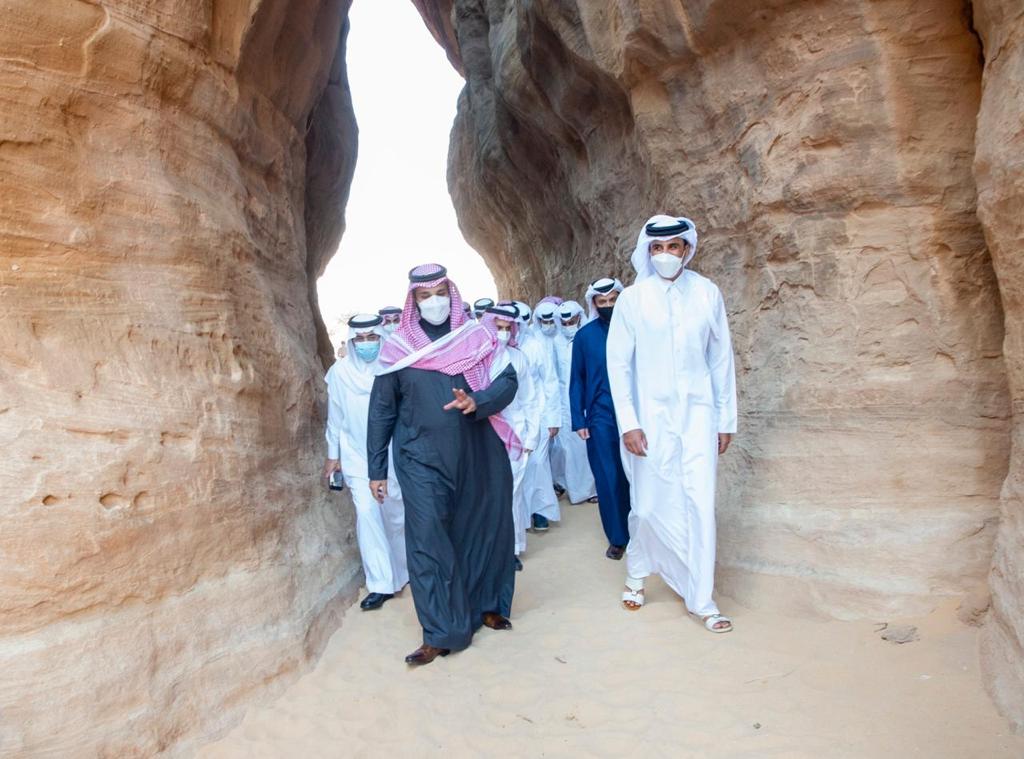
Saudi Crown Prince Mohammed bin Salman gives Qatar’s Emir Sheikh Tamim bin Hamad Al-Thani a tour around the historic city of AlUla on Tuesday. (Supplied)
As a newlywed who had to adjust to a new life abroad for the first time in her life, Sara said it was not easy being unable to meet up with her parental family. The pain of the separation was even more pronounced during her pregnancy, when she was not sure when her parents and siblings would be able to meet the first granddaughter of the family.
Shortly before her due date, she was united with her mother and youngest sister but the reunion was still short of three family members. Although she was relieved to have them by her side, her joy was short-lived as the two visitors had to return to Saudi Arabia within a month.
“It was the most difficult thing one can ever imagine, a feeling I wouldn’t want anyone to experience. Those first few months of marriage were one thing, but not having my mother around when I needed her was the most difficult,” she said. “But it’s all old news now. The good times are soon to come.”
--------------
Twitter: @Rawanradwan8


