UAE’s ADNOC Distribution plans $10m deal for 15 Saudi service stations

ADNOC Distribution opened its first service station in Saudi Arabia in December 2018, located on the Riyadh-Dammam highway around 40 kilometres from the capital. It was followed shortly after by the second in the city of Hofuf within Al Ahsa Governate. Upon completion of this transaction, the new locations will bring the company’s total network to 17 across the Kingdom. (WAM)
Short Url
Updated 31 December 2020
Follow

UAE’s ADNOC Distribution plans $10m deal for 15 Saudi service stations

  • The deal is valued at 36.7 million dirhams ($10 million) and is subject to regulatory approval

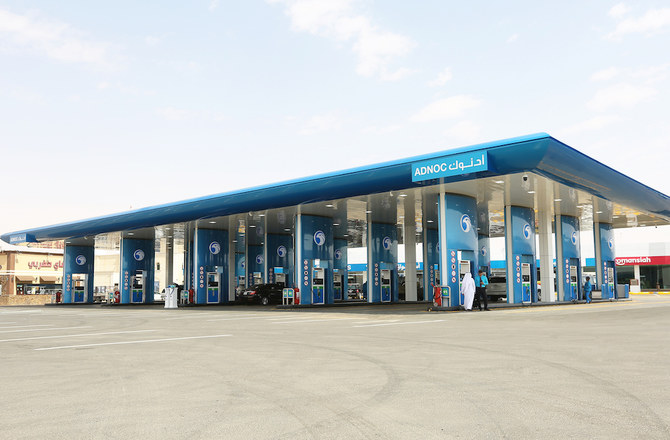
DUBAI: Abu Dhabi’s ADNOC Distribution announced on Thursday that it plans to acquire 15 service stations in the eastern region of Saudi Arabia.

The deal is valued at 36.7 million dirhams ($10 million) and is subject to regulatory approval, WAM, the UAE state news agency, said.

“Expanding our presence in Saudi Arabia is an important milestone for our company and part of our profitable growth strategy. We see this expansion as a natural progression and look forward to significantly increasing our presence in the coming years. This is the first announcement of many we intend to make, with Saudi being a key strategic market for us,” Ahmed Al-Shamsi, acting CEO of ADNOC Distribution, was quoted as saying.

ADNOC Distribution opened its first service station in Saudi Arabia in December 2018, on the Riyadh-Dammam highway. It was followed shortly after by another in the city of Hofuf.

“Saudi Arabia is the largest market in the GCC and there is huge potential for experienced fuel operators like us to consolidate the market and capture further growth,” Al-Shamsi added. “We are currently in discussions on a range of opportunities to further build on our network in the country.”


Saudi POS spending jumps 28% in final week of Jan: SAMA

Updated 06 February 2026
Follow

Saudi POS spending jumps 28% in final week of Jan: SAMA

RIYADH: Saudi Arabia’s point-of-sale spending climbed sharply in the final week of January, rising nearly 28 percent from the previous week as consumer outlays increased across almost all sectors. 

POS transactions reached SR16 billion ($4.27 billion) in the week ending Jan. 31, up 27.8 percent week on week, according to the Saudi Central Bank. Transaction volumes rose 16.5 percent to 248.8 million, reflecting stronger retail and service activity. 

Spending on jewelry saw the biggest uptick at 55.5 percent to SR613.69 million, followed by laundry services which saw a 44.4 percent increase to SR62.83 million. 

Expenditure on personal care rose 29.1 percent, while outlays on books and stationery increased 5.1 percent. Hotel spending climbed 7.4 percent to SR377.1 million. 

Further gains were recorded across other categories. Spending in pharmacies and medical supplies rose 33.4 percent to SR259.19 million, while medical services increased 13.7 percent to SR515.44 million. 

Food and beverage spending surged 38.6 percent to SR2.6 billion, accounting for the largest share of total POS value. Restaurants and cafes followed with a 20.4 percent increase to SR1.81 billion. Apparel and clothing spending rose 35.4 percent to SR1.33 billion, representing the third-largest share during the week. 

The Kingdom’s key urban centers mirrored the national surge. Riyadh, which accounted for the largest share of total POS spending, saw a 22 percent rise to SR5.44 billion from SR4.46 billion the previous week. The number of transactions in the capital reached 78.6 million, up 13.8 percent week on week. 

In Jeddah, transaction values increased 23.7 percent to SR2.16 billion, while Dammam reported a 22.2 percent rise to SR783.06 million. 

POS data, tracked weekly by SAMA, provides an indicator of consumer spending trends and the ongoing growth of digital payments in Saudi Arabia.  

The data also highlights the expanding reach of POS infrastructure, extending beyond major retail hubs to smaller cities and service sectors, supporting broader digital inclusion initiatives.  

The growth of digital payment technologies aligns with Saudi Arabia’s Vision 2030 objectives, promoting electronic transactions and contributing to the Kingdom’s broader digital economy.