

Prominent activist accuses Iran of delaying COVID-19 vaccine purchase

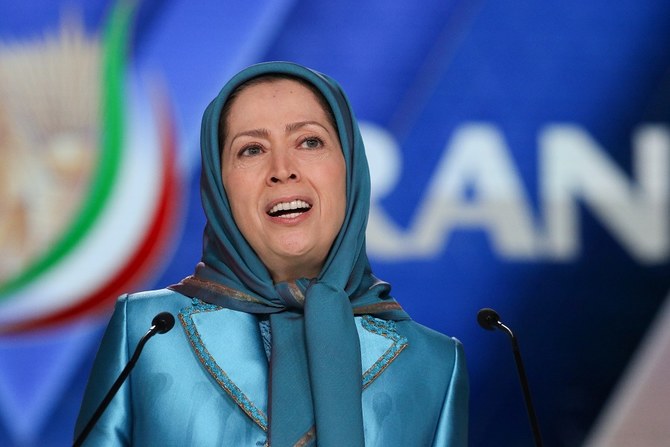
Maryam is Rajavi is the leader of the opposition group People’s Mujahedin of Iran. (File/AFP)
Short Url
Updated 27 December 2020
Follow

Prominent activist accuses Iran of delaying COVID-19 vaccine purchase

  • She said Iran was “evading buying the vaccine, promising to produce their own domestic vaccine”

DUBAI: Iranian activist Maryam Rajavi said the regime has been delaying the purchase of the COVID-19 vaccine, describing it a “criminal policy” against its citizens.

Rajavi, who leads the opposition group People’s Mujahedin of Iran, said President Hassan Rouhani and Supreme Leader Ali Khamenei have been “evading buying the vaccine, promising to produce their own domestic vaccine.”

The activist said the local vaccine was being produced by the HQ Implementing the Orders of Khomenei, which she described as “one of Khamenei’s plunderous and extortionist foundations.”

Even if the laboratory sample has been approved, Rajavi said experts estimate a long time for the domestic vaccine to be available to the public.


Iraq: Ankara agrees to take back Turkish citizens among Daesh detainees transferred from Syria

Updated 4 sec ago
Follow

Iraq: Ankara agrees to take back Turkish citizens among Daesh detainees transferred from Syria

Iraq’s foreign minister said on Monday Turkiye had agreed to take back Turkish citizens from among thousands of ​Islamic State detainees transferred to Iraq from Syria when camps and prisons there were shut in recent weeks.
Iraq took in the detainees in an operation arranged with the United States after Kurdish forces retreated and shut down camps and prisons which had housed Islamic ‌State suspects ‌for nearly a decade.
Baghdad has ​said ‌it ⁠will ​try suspects ⁠on terrorism charges in its own legal system, but it has also repeatedly called on other countries to take back their citizens from among the detainees.
Foreign Minister Fuad Hussein told US envoy Tom Barrack in a meeting that Iraq ⁠was in talks with other countries on ‌the repatriation of ‌their nationals, and had reached ​an agreement with Turkiye.
In ‌a separate statement to the UN Human ‌Rights Council, Hussein said: “We would call the states across the world to recover their citizens who’ve been involved in terrorist acts so that they be tried ‌in their countries of origin.”
The fate of the suspected Islamic State fighters, ⁠as well ⁠as thousands of women and children associated with the group, has become an urgent issue since the Kurdish force guarding them collapsed in the face of a Syrian government offensive.
At the height of its power from 2014-2017, Islamic State held swathes of Syria and Iraq in a self-proclaimed caliphate, ruling over millions of people and attracting fighters from other countries. ​Its rule collapsed ​after military campaigns by regional governments and a US-led coalition.