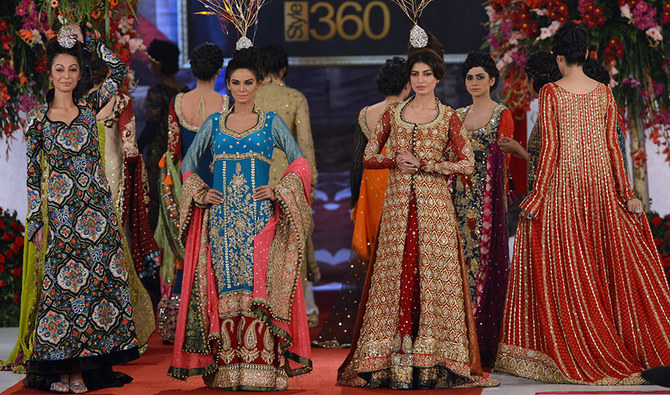

RAWALPINDI: For many Pakistani women, a wedding dress from a top designer is something they can admire in the pages of fashion magazines or on the frames of their favorite celebrities photographed at high-end events.
Often in the range of $5,000 and above, these dresses are unaffordable for most women in Pakistan.
But now, thanks to Rent It, a new haute couture-for-borrow company, many women can get the dress of their dreams on their big day — and often at less than one tenth what it would cost to buy it.
Rent It is the brainchild of Fatin Gondal, Anush Amar and Adam Ghaznavi, three entrepreneurs from Lahore who aim to make high-end fashion more accessible and just as seamless as renting a movie on Netflix.
The service, which works through mail order as well as a brick-and-mortar warehouse, allows women to rent dresses from notable fashion designers like Kamiar Rokni, Khadija Shah, and Faraz Manan for anything between around a hundred to 750 dollars for a four-night loan.
“We are creating a market whereby people can afford luxury, while at the same time, the people who have bought the luxury can make some money on their investments,” Amar told Arab News in a Zoom interview.

Bridal dresses and formal wear by The House of Kamiar Rokni will feature in Rent It's inventory. Image shared by Kamiar Rokni on his Instagram on October 30, 2019. (Photo Courtesy Kamiar Rokni)
“The idea is that we can make money off our closets; you lend them [your clothes] on Rent It and the other person renting could be a bride who could only have dreamed of wearing a Bunto Kazmi or Faraz Manan look,” Gondal said, referring to two major designers from Pakistan. “It could also be a conscious shopper who does not want to spend 10 lakh rupees (approximately $6,000) on a bridal [dress] that will only be worn once.”
Rent It, whose warehouse is based in the city of Lahore, currently has 350 ensembles to rent out, which can be viewed and selected on a website and then delivered to a customer’s home. Clients can book an outfit for delivery through a website, or sign up for an appointment to try out dresses at the warehouse. For customers who reside outside of Lahore, the outfits arrive with a return flyer for easy mail back. Lenders receive 40% of the rental price and all transactions are anonymous.
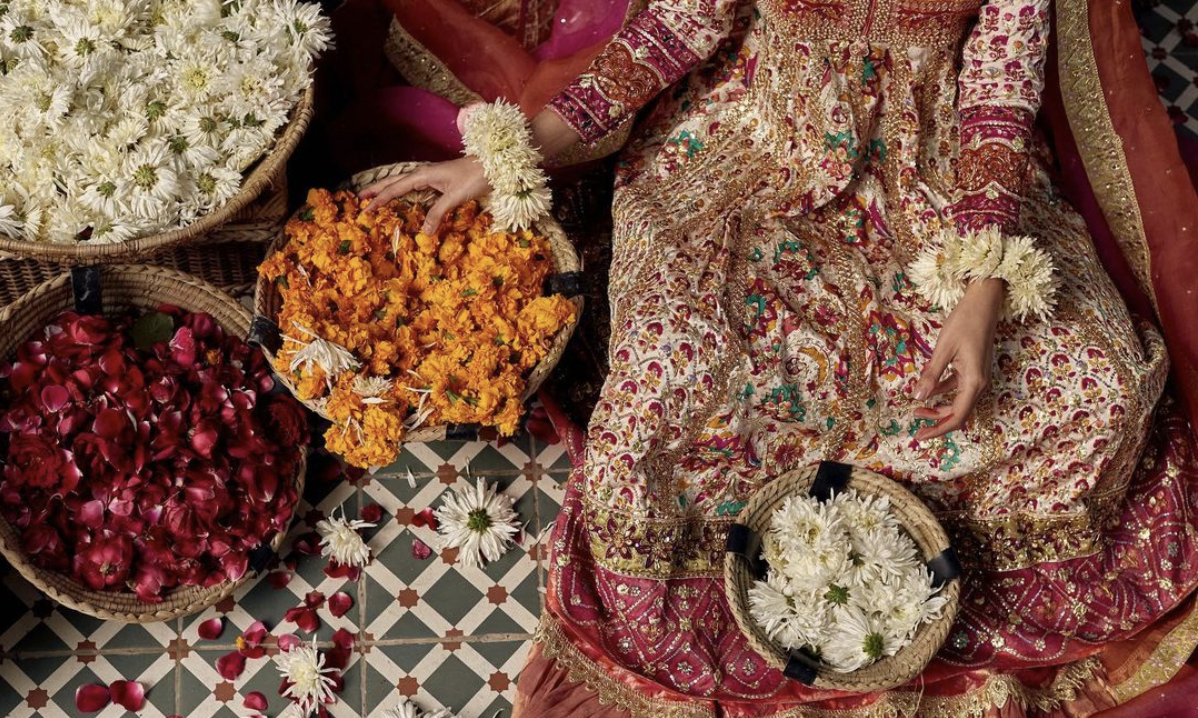
Photographer Aleena Naqvi shares a shot from Rent It's launch campaign in Lahore, Pakistan, on her Instagram page on December 14, 2020 (Photo Courtesy: Aleena Naqvi)
For reasons of hygiene and the safe handling of outfits, Rent It has partnered with a laundry and dry-cleaning company that specializes in cleaning heavily embellished ensembles like bridal gowns. Dry cleaning is included in the rental price.
But will haute couture-for-rent work in Pakistan as a model? Gondal and Amar said they aren’t worried.
“When Careem [ride-hailing app] first came to Pakistan, people thought we would never use it, and now it’s a way of life,” said Gondal. “Even e-commerce was laughed at but we continue to grow in that space as well.”
“Rent It will be like an extended sisterhood or borrowing from each other’s wardrobes,” Ama added, laughing. “Girls borrow clothes from each other all the time; we are simply expanding the wardrobe they can do that from.”
Amar and Gondal are clear that they don’t want to ‘disrupt’ the haute couture market — only find a new approach to it.
“We’re not breaking the market for people who are willing to keep buying this luxury in general, they’re going to keep doing that and that’s good for us,” Gondal said, “because then we’re going to have inventory.”
Anam Mansuri, the founder of the popular Instagram account Womanistan and CEO of content production house LIMU Studio, said she would be putting her wedding dress up for rent on Rent It.
“Wearing my favorite designers for my wedding was a privilege,” Mansuri told Arab News. “Every time I look back at pictures my heart fills with joy. That outfit was really something! Why shouldn’t someone else feel that same kind of joy simply because they don’t have access?”
Influencer Sophiya Salim Khan, who modeled for Rent It’s first campaign, said the concept would make fashion “more sustainable as well as available for more of the market.” She added: “It’s a step in the right direction.”
Rent It - Instagram: https://www.instagram.com/letsrentit/