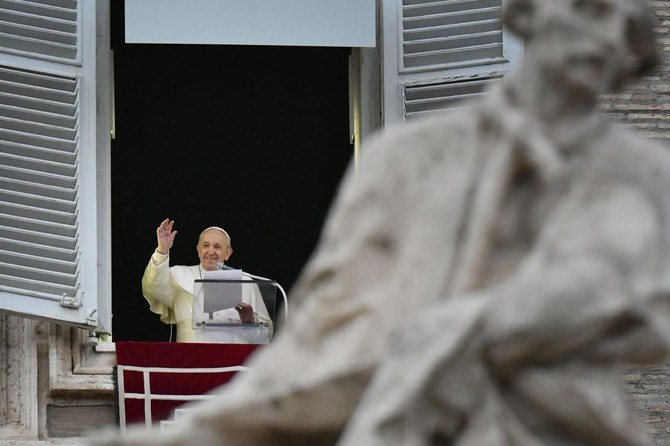
JEDDAH: Pope Francis will bring a “message of peace” on a four-day visit to Iraq in March, the first by a Roman Catholic pontiff.
The papal itinerary will include Baghdad, Irbil, Mosul and Qaraqosh in the plain of Nineveh. He will also visit the ancient city of Ur, said to be the birthplace of the Muslim, Christian and Jewish patriarch Ibrahim.
It will be the pope’s first overseas trip since November 2019, when he traveled to Thailand and Japan. Visits planned for this year were canceled because of the COVID-19 pandemic.
It will also be Francis’s first trip to the Middle East since February 2019, when he visited the UAE and celebrated mass in front of 180,000 people at the Zayed Sports City stadium in Abu Dhabi.
The trip to Iraq, at the invitation of the Iraqi government and the local Catholic Church, is planned for March 5-8.
“The program of the journey will be made known in due course, and will take into consideration the evolution of the worldwide health emergency,” Vatican spokesman Matteo Bruni said on Monday.
Iraqi President Barham Salih said the papal visit would be “a message of peace to Iraqis of all religions, and serve to affirm our common values of justice and dignity.”
A Vatican source said one of the aims of the trip was to comfort Christians who have been forced to flee conflict in Iraq and other Middle Eastern countries.
Iraq’s Christian communities have been devastated by the sectarian warfare that followed the 2003 US-led invasion and the Daesh sweep through a third of the country in 2014. The visit to Mosul will be particularly significant, as it was a Daesh stronghold.
In June 2019, Francis said he had the “constant thought” of visiting Iraq. He had hoped to do so this year but plans were thwarted by security concerns and then by
the pandemic.


![]()

Pope Francis to make historic Iraq visit in March
Short Url
https://arab.news/8js4y
Pope Francis to make historic Iraq visit in March
- Pope will travel to former Daesh stronghold Mosul and Erbil
- Iraq has welcomed Pope Francis 2021 visit as ‘message of peace’


Latest updates



Recommended


© 2026 SAUDI RESEARCH & PUBLISHING COMPANY, All Rights Reserved And subject to Terms of Use Agreement.