

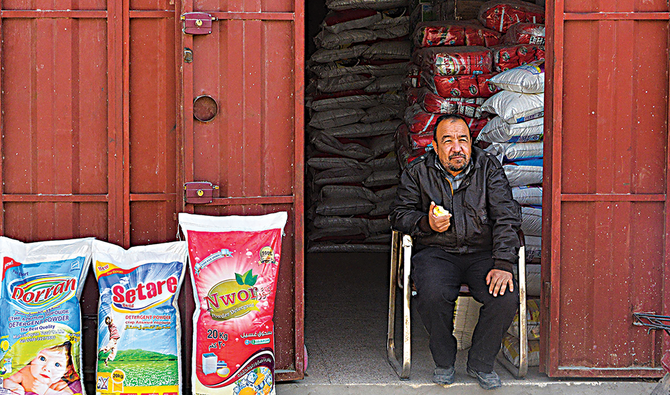

MOSUL: Mountains of kitchen supplies, back-to-back butchers: the historic wholesale market in Iraq’s Mosul is battling the odds — from extremists to epidemic — to revive the city’s reputation as a trading hub.
The northern city was a commercial hub for centuries, strategically located along transport routes linking Baghdad to the south, Syria to the west, Turkey further north and Iran in the east.
Thirty years ago, Mosul opened a bulk market known as “Al-Bursa,” whose shops sold food, homeware and other goods directly to consumers as well as to smaller shops.
“The market raked in around $12 million every month,” said economist Mohammad Naef, a native of Mosul.
But those golden days came to a screeching halt in 2014, when the Daesh group began a brutal reign over Mosul that ended in 2017 after months of fierce fighting.
West Mosul, where Al-Bursa lies, was left in ruins — but its entrepreneurial residents have worked hard to revive it.
The first to return was young Abdallah Mahmud, 27, who sells cleaning supplies and is proud of Al-Bursa’s heritage. “The Bursa opened in 1990 and as the years went by, these simple little shops became the most important market in the whole province,” he said.
Of the 500 shops there in 2014, around 300 have already reopened with individual financing, he said.
The level of trade has made an impressive recovery but has yet to reach previous levels.
“Today, Al-Bursa’s monthly transactions cap at between 8 to 10 million, as many businessmen fled and never came back,” said Naef.
Mosul and the broader Nineveh province saw the highest rates of displacement during the war against Daesh.
Even after the guns fell silent, many families hesitated to return as large parts of the city still lacked key services including water, electricity or schools.
Al-Bursa represents a return to normalcy.
“Residents started to return, and it helped bring life back to the whole area,” said Obeida Al-Aysha, another 27-year-old trader who frequents the market.
On any given morning, shoppers flood Al-Bursa on foot, in cars or by motorcycle to pick up everything from children’s toys to coffee or freshly ground spices.
Customers say it is a one-stop-shop for all their needs, but wholesalers find it convenient, too.
“It saves me crazy amounts of time and tons of energy. Before, I had to go sell at each of the little markets in the towns outside of Mosul,” said farmer Khalaf Oweid.
“Now, I come here early in the morning and the owners of the little shops all come to me to stock their own stalls. I don’t have to put myself out like before.”
Yunes Abed, 50, shops at Al-Bursa to stock his food store in the city’s west.
“I can find everything here, but some shop-owners still haven’t returned,” Abed said, adding they were hoping to be compensated for assets lost in the war.
Mosul’s residents have applied for compensation from the government for homes, cars and storefronts destroyed in fighting, but few have been reimbursed in three years. Indeed, some 200 of Al-Bursa’s original shops remain abandoned, their metal doors still blown off and pockmarked walls tagged with graffiti.
“Why this destruction?” reads one message scrawled in black on a collapsed concrete beam near Al-Bursa.
Shopkeepers are also struggling to compete with cheaper, mass-produced imports from Iraq’s neighbors, including Turkey.
Daesh’s takeover of Mosul and surrounding farmland in 2014 cut off farmers and local producers from the Iraqi market, creating a gap that Turkish goods swiftly filled.
“About 90 percent of the products available now at Al-Bursa are imported,” estimated one of the district’s businessmen, 42-year-old Ahmad Al-Shammary.
And, of course, there is the economic slowdown caused by the novel coronavirus and the collapse in oil prices, which slashed the state’s monthly revenues.
With government coffers drained, Iraq’s 4 million public sector workers have seen wages delayed by weeks at a time.


