MOSCOW: When Yekaterina Kobzeva, a nurse at a preschool in Russia’s Ural Mountains, began having trouble breathing, she called an ambulance. It was four days before she managed to find a free hospital bed.
The ambulance first took her to get a scan – which showed damage from pneumonia to 50 percent of her lungs, an indication she had coronavirus. The paramedics then drove her around the city of Perm and its surroundings for hours as seven hospitals, one by one, turned her down, saying they didn’t have any beds available. At dawn, she went home.
The journey took her through “circles of hell,” Kobzeva, 60, said by phone from a hospital, where doctors confirmed she had the virus. She was only admitted there days after her first attempt – and after her story made local headlines.
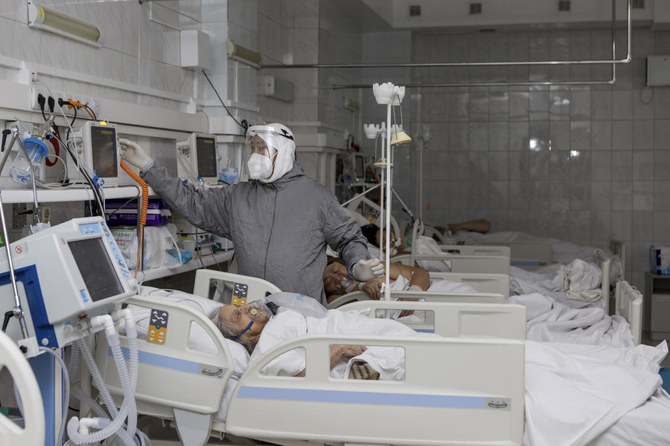
Russia’s health care system, vast yet underfunded, has been under significant strains in recent weeks, as the pandemic surges again and daily infections and virus death regularly break records.
Across the country, 81 percent of hospital beds that have been set aside for coronavirus patients were full as of Wednesday. Three times last week, the Russian government reported a record number of daily deaths, and the number of daily new infections per 100,000 people has more than doubled since Oct. 1, from 6 to over 15. Overall, Russia has recorded over 2 million cases and over 35,000 deaths, but experts say all numbers worldwide understate the true toll of the pandemic.
Reports in Russian media have painted a bleak picture in recent weeks. Hospital corridors are filled with patients on gurneys and even the floor. Bodies in black plastic bags were seen piling up on the floors of a morgue. Long lines of ambulances wait at hospitals while pharmacies put up signs listing the drugs they no longer have in stock.
Russian authorities have acknowledged problems in the health system. President Vladimir Putin even urged regional officials not to paper over the situation, saying that “feigning the impression that everything is perfectly normal is absolutely unacceptable.”
Yet Russian authorities continue to insist there’s no need for a nationwide lockdown or widespread closures of businesses, instead urging people to observe the measures ordered by regional governments.
But in most regions, those measures don’t go beyond mask mandates, limiting the hours of bars and restaurants, ordering the elderly to self-isolate, forbidding mass public events and requiring employers to have some staff work from home. Health experts say the moves are clearly not enough.
A partial six-week coronavirus lockdown in March only added to long-brewing public frustrations over Russia’s already weakened economy. Soon after that, Putin delegated the powers to impose virus-related restrictions to regional governors. Critics saw the move as an effort to inoculate himself from any more fallout over the pandemic.
During the fall resurgence of the virus, the Kremlin has consistently pointed fingers at regional governors.
“Colleagues, you have received broad powers for implementing anti-pandemic measures. And nobody has relieved you of personal responsibility for the adopted measures – I really do hope that they were adopted on time,” Putin reminded the governors last week.
But just like the Kremlin, governments in the vast majority of Russian regions have been loath to shut businesses or impose lockdowns. The only exception has been the Siberian republic of Buryatia, where last week the region’s governor ordered cafes, restaurants, bars, malls, cinemas, beauty parlors and saunas to shut down for two weeks.
Regional governors find themselves in an impossible position, explained political analyst Abbas Gallyamov. They face public frustration if they don’t impose tough restrictions and the outbreak continues to rage, and they face it if they do because they don’t have the funds to ease the pain of closures.
“All the finances have been long centralized, and the regions don’t have spare money,” Gallyamov said. “So de jure, a governor’s hands are untied, but de facto they’re still tied because they don’t have the money to impose a lockdown and compensate people for their financial losses.”


![]()

Russia’s health system under strain as coronavirus surges back
Short Url
https://arab.news/rt73k
Russia’s health system under strain as coronavirus surges back
- Russian authorities have acknowledged problems in the health system
- During the resurgence of the virus, the Kremlin has consistently pointed fingers at regional governors


Latest updates


© 2026 SAUDI RESEARCH & PUBLISHING COMPANY, All Rights Reserved And subject to Terms of Use Agreement.