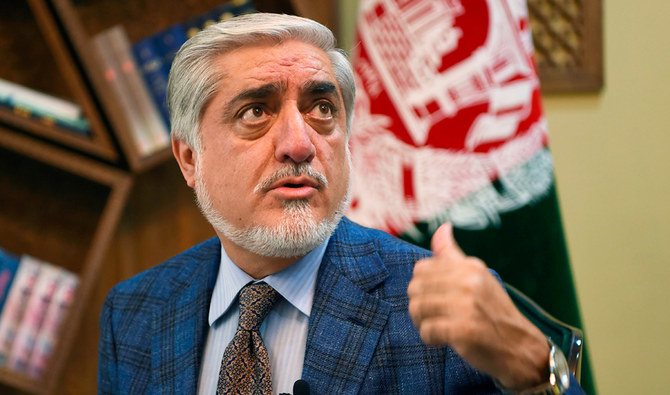

KABUL: The head of Afghanistan’s High Council for National Reconciliation on Friday questioned the purpose of intra-Afghan talks when the Taliban were making “no effort” to reduce violence and reach a peace agreement with the government.
Taliban offensives in various parts of Afghanistan have escalated in recent weeks even as negotiators began meeting in Doha, Qatar, on Sept. 12, hoping to agree on a cease-fire and a power-sharing deal to bring an end to the protracted conflict.
Speaking at an international security conference in Herat, western Afghanistan, the country’s chief negotiator, Abdullah Abdullah, said: “Given there is violence in the country, what is the need for the presence of the delegation in Doha while there has been no reduction in violence? Continuation of violence is not the solution.”
He added that “there is need for the people to decide” whether the government team should continue negotiations with the Taliban or should be recalled.
“We are endeavoring for peace and we have proposed various ways for a solution, but the Taliban are making no effort for reaching an agreement,” Abdullah said.
While government leaders have on various occasions accused the Taliban of continuing violence to gain concessions at the negotiation table in Doha, it was the first time the country’s top negotiator has questioned the ongoing talks.
The Taliban could not be reached for comment but have on several occasions accused Afghan President Ashraf Ghani’s government of stepping up attacks since the start of the US-facilitated negotiations.
The Doha talks are part of an historic deal between Washington and the Taliban signed nine months ago. Withdrawal of US troops by next spring was one of the main points of the accord, which did not involve Ghani’s government.
Leaders in Kabul have been alarmed that the American military pullout may happen earlier after US President Donald Trump, in accordance with his campaign promise, recently vowed to speed up the process in time for Christmas.
The victory of Joe Biden in last week’s US presidential election has raised hopes among Afghan leaders that the American administration may cancel the deal with the Taliban and the troops would remain on Afghan soil.
“Abdullah’s comments today possibly are indicative of his frustration and disappointment about the Doha talks,” analyst Taj Mohammed told Arab News.
“He may also have used the change of leadership in the US in the future as an opportunity to talk about his frustration, thinking Biden will not be keen on a troops pullout and may even annul the deal with the Taliban.”