

REVIEW: US remake of ‘Utopia’ comes up short

The cast of 'Utopia' (Amazon)
Short Url
Updated 22 October 2020
Follow

REVIEW: US remake of ‘Utopia’ comes up short

  • Lavish conspiracy drama misses the spark of the UK original

LONDON: Adapting a UK show for US (and, thanks to the reach of streaming platforms, international) audiences is a risky proposition. There have been far more misses than hits, with the British style of programming often proving difficult to recreate with anything other than the original cast, setting and tone.

It’s even more of a surprise that a US remake of “Utopia” was green-lit when you consider that the original 2013 UK run, though now regarded as something of a cult hit, was a divisive mix of graphic violence, head-spinning conspiratorial doublespeak and terrifyingly brilliant dystopian foreshadowing. Indeed, the original incarnation of the show was cancelled after just 12 episodes.

So how does the US version stack up? The premise is largely the same. A group of online friends, obsessed with the idea that a mysterious comic book has been predicting the world’s catastrophes, meet in real life when word leaks out of a newly discovered second volume. The misfits, each with their own distinctive foibles, find themselves on the run from a sinister organization that is hellbent on getting the book back. The only person they can turn to is the enigmatic Jessica Hyde, the ‘star’ of the comic book’s first volume.

In many ways, the US version simply transplants the action, characters and plot from the original, albeit it with the high-gloss buffing of modern TV production dollars. Sadly, in most cases, the 2020 version doesn’t fare well – Sasha Lane’s Jessica Hyde and Christopher Denham’s Arby, for example, lack the charisma of Fiona O’Shaughnessy or the horrifying blankness of Neil Maskell from the UK show.
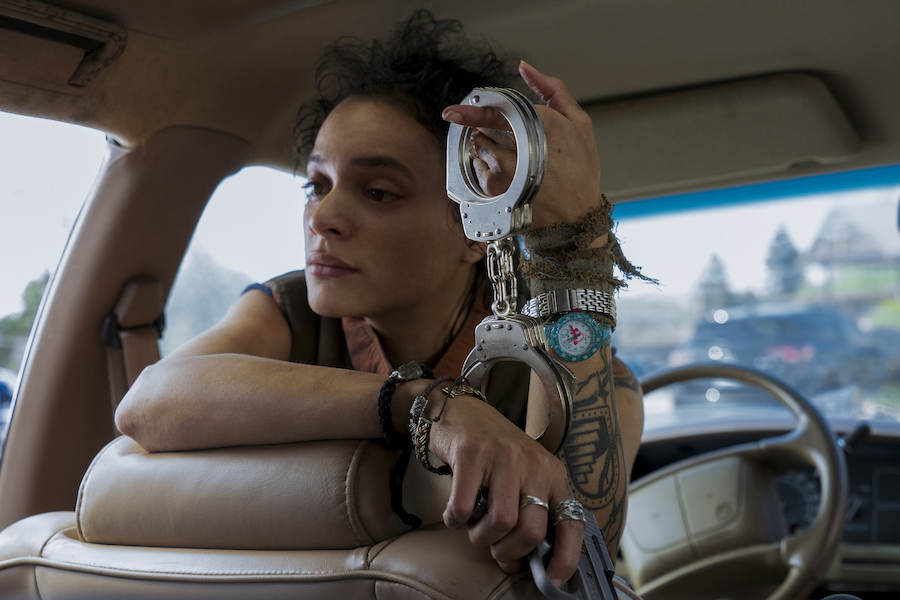


Sasha Lane as Jessica Hyde in 'Utopia.' (Amazon)

There are some nice nods to the more modern setting – not to mention horribly unfortunate relevance, given the current global pandemic – and some big names making up the supporting cast (John Cusack and Rainn Wilson), but more often that not, the 2020 show lacks the claustrophobic menace that pervaded the UK original.

“Utopia” is still an enjoyably uncomfortable watch, and is (at times) still chillingly sinister. Those who missed the UK original might find something here, but those who caught the show first time round may feel a little underwhelmed.


Yataghan boutique in Jeddah celebrates Saudi heritage

Updated 20 December 2025
Follow

Yataghan boutique in Jeddah celebrates Saudi heritage

JEDDAH: Yataghan, the contemporary Saudi jewelry house founded in 2008 by designer and entrepreneur Sarah Abudawood, has announced an expansion with its Riyadh debut at Kingdom Centre, alongside the relocation of its headquarters and flagship store to a street-front location on Jeddah’s Thalia Street.

The brand, known for blending Arabian heritage with modern minimalism, unveiled two boutiques designed as immersive experiences rather than mere retail spaces.

Every detail of the new Jeddah location has been carefully curated; brass accents inspired by the Yataghan blade evoke precision and luxury, while striped, gray onyx symbolizes continuity and progress, according to the brand’s founder. Vast windows, softened by Yataghan’s signature hexagonal motif, a symbol of harmony, order, and strength, flood the boutiques with natural light, creating an inviting environment for visitors.

Inspired by the Yataghan sword, with its distinctive, single-edged blade, the brand’s collections fuse minimalist design with Arabic calligraphy and tribal motifs.

“The name Yataghan draws its meaning from the two swords on the Saudi flag — a symbol that has always fascinated me for what it represents: conviction, protection, truth, and above all, balance,” Abudawood told Arab News.

“The Yataghan sword, known for its graceful curve and exquisite craftsmanship, embodies purpose and precision. It is drawn to defend what matters and to guard what is sacred. It sets boundaries and restores equilibrium, reminding us that strength is not only about force, but about knowing when to advance and when to stand still.

“That balance is reflected in every piece we create. Because, like the sword, Yataghan is more than an ornament; it is a statement of purpose, and identity.”

Abudawood explained the cultural inspiration behind the brand, highlighting pieces connected to Saudi identity. “This branch carries designs that are deeply connected to Saudi identity and cultural memory. Some pieces are exclusive, inspired by symbols, rhythms, and forms rooted in our heritage, interpreted through a modern lens … Jeddah, in particular, has a unique spirit: fluid, expressive, open, and layered with history. That essence subtly informs the designs you’ll find here.” 

The founder also spoke of the brand’s philosophy of minimalism and meaningful design.

“It comes from my belief that simplicity creates space for meaning. I have always been drawn to architecture and the principle that form must follow function. I design with intention; nothing is accidental. Every line has a purpose, every curve holds a story. Minimalism, for me, is not about removing emotion; it is about distilling it. I want each piece to feel timeless, personal, and quietly powerful.”

The label has been flaunted by high-profile clients — including Jennifer Lopez, Lady Gaga and Lama Akeel — but Abudawood emphasized the brand’s focus on connection over visibility. “Whether someone is a public figure or not, what moves me is when they feel seen by the jewelry. Yataghan has always been about resonance, about creating pieces that speak to identity, strength, and personal stories,” she said.

Looking ahead, 2026 will mark new chapters for Yataghan, including local and international expansion, innovative collections, and a stronger focus on storytelling and community collaborations. “Growth has never been about reach alone; it’s about depth, integrity, and lasting impact,” Abudawood added.

“Ultimately, what drives me is purpose. I’m motivated by the desire to create work that matters, to offer women something that reflects who they are, not who they’re expected to be. Design, for me, is a form of dialogue, a way to translate emotion into form. As long as I’m creating with honesty, intention, and heart, I know I’m exactly where I’m meant to be.”