

How art helps Yazidi genocide survivors to heal

Tryptch of Yazidi women, survivors of ISIS captivity. Supplied
Short Url
Updated 08 October 2020
Follow

How art helps Yazidi genocide survivors to heal

  • UK artist Hannah Rose Thomas explains how art workshops have helped those traumatized by genocide in Iraqi Kurdistan

DUBAI: “Health and art can overlap powerfully and we firmly believe that through the power of art we can support healing, community solace and hope for the future.”

This view was expressed by Fady Jameel, president of Community Jameel International, when he chaired a special UN75 discussion on the healing power of art after trauma and conflict last month. The webinar was convened by Community Jameel and The Future is Unwritten with a special focus on a case study relating to the Yazidi people of Iraqi Kurdistan, who were the victims of Daesh’s genocide in 2014, which effectively led to the exile of surviving Yazidis.

Dr Maher Nawaf, director of Yazda UK and board member for Yazda Global, described some of the work being done to help the Yazidi people. “Thousands of Yazidi children who had been recruited to (Daesh) training camps and brainwashed have been treated and re-educated in Yazidi heritage, language and history,” he said. “Involving them in artistic activities significantly improved their mental state and behavior.”
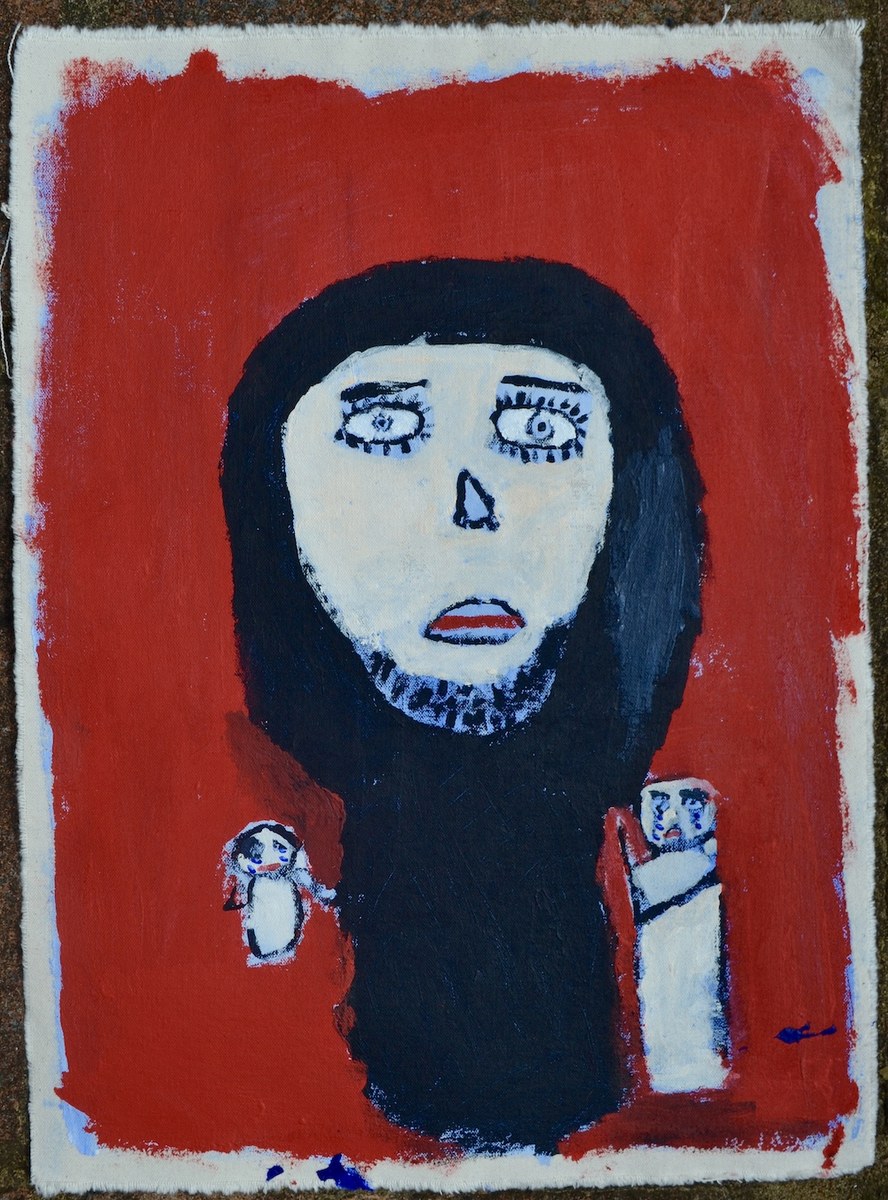


Involving Yazidi genocide survivors in artistic activities significantly improved their mental state and behavior. Supplied

English artist Hannah Rose Thomas has seen first-hand how art can help traumatized people to express their suffering in a way not always possible through words. She spoke to Arab News after the webinar to discuss her work with Yazidi women.

“Survivors of violence need to be able to feel like a person again and have a voice (after experiencing) such a profound sense of powerlessness,” Thomas told Arab News. “Art was a way for me to heal and emerge from my own experience of PTSD and sexual assault. It was such a key part of my own journey that it made me want to do these kind of projects to help other women and to give them a voice. My own experience is nothing compared to what (the Yazidi) women have been through but it does help me to have some sense of understanding of the emotional impact (such experiences) have on you.”

In 2017 Thomas travelled to Dohuk in Northern Iraq with clinical psychologist Sarah Whittaker-Howe for an art project with Yazidi women who had escaped Daesh captivity.
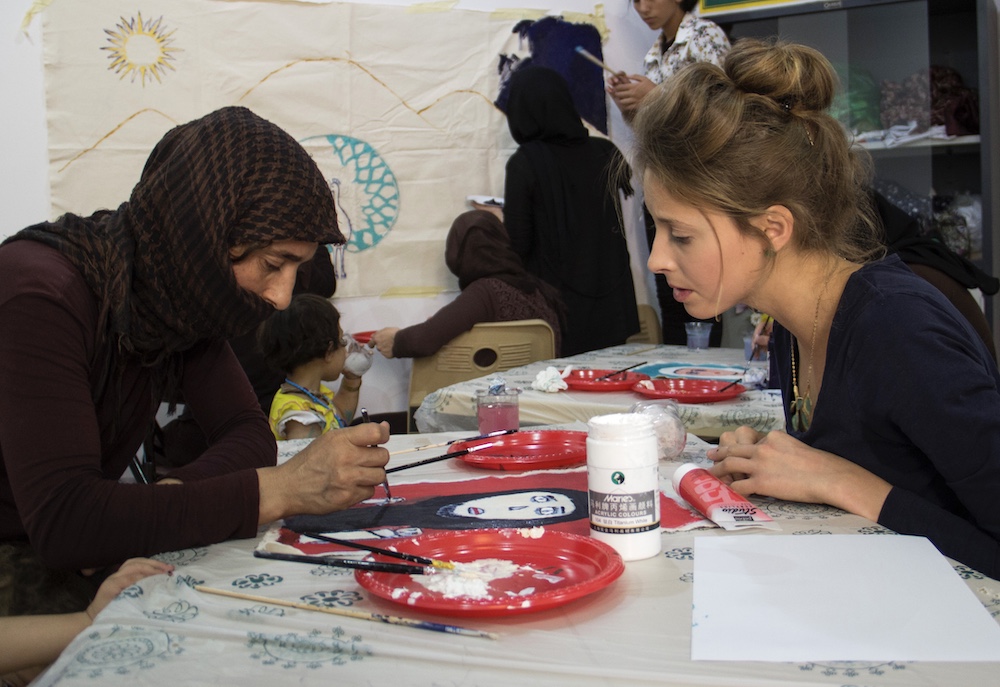


In 2017 Thomas travelled to Dohuk with a clinical psychologist  for an art project with Yazidi women who had escaped Daesh captivity. Supplied

With the aim of using art as a tool for advocacy, Thomas painted portraits of some of the women she met there, which have since been exhibited in the UK. “I decided to paint the women in the style of icon paintings. The gold leaf is to convey their sacred value in spite of all they have suffered at (Daesh’s) hands. In the Western media the dominant narrative has been about sex slaves and I wanted to put across the stories that the women wanted to communicate through a different lens. When we see these women as mothers and daughters, we can connect more with their stories. I wanted to show them in the paintings as survivors — not victims. I was blown away by the resilience and determination to survive of these women and how they care for and support one another. The power of the human spirit to overcome such horrendous experiences keeps me filled with hope.”

Thomas also gave the women art classes. Their self-portraits were shown alongside her own paintings of them. Thomas recalled how one Yazidi woman called Basse described her self-portrait, set at the time of Daesh separating her from her six-year-old daughter.

Basse told Thomas: “They took her hands out of my hands, and put her into the hands of the enemy…. every day and night I imagine what Daesh are doing to her.” Basse escaped but her daughter did not.

Thomas heard many such tragic stories during her time in Dohuk. “The unimaginable experience of a mother being separated from her daughter — the agony of not knowing whether they will ever see their children again. or what is happening to them at the hands of Daesh, those nightmares keep them awake,” she said.

“The process of painting together was a way to build up trust. The idea was to create a safe space for the women to share their stories. For survivors of human-rights violations, everyday verbal language is inadequate to convey the extent of the trauma and depth of emotions they have experienced,” she explained. “The arts can give them a new form of communication to address the violence and unspeakable behavior which is too terrible to utter aloud.”


OPINION: Saudi Arabia’s cultural continuum: from heritage to contemporary AlUla

Updated 12 February 2026
Follow

OPINION: Saudi Arabia’s cultural continuum: from heritage to contemporary AlUla

  • The director of arts & creative industries at the Royal Commission for AlUla writes about the Kingdom’s cultural growth

AlUla: Saudi Arabia’s relationship with culture isa long and rich. It doesn’t begin with modern museums or contemporary installations, but in the woven textiles of nomadic encampments, traditional jewellery and ceramics, and of course palm‑frond weaving traditions. For centuries, Saudi artisans have worked with materials drawn directly from their environment creating objects that are functional, but also expressions of identity and artistry.

Many of these traditions have been recognised internationally, with crafts such as Al-Sadu weaving inscribed on UNESCO’s Intangible Cultural Heritage list.

Sadu weaving. (Getty Images)

This grounding in landscapes, resources, and collective history means Saudi Arabia’s current cultural momentum is not sudden, but the natural result of decades — even centuries — of groundwork. From the preservation of heritage sites and, areas, some of which have been transformed into world-renowned art districts, to, the creation of institutions devoted to craft, the stage has been set for a moment where contemporary creativity can move forward with confidence, because it is deeply rooted.

AlUla, with its 7,000 years of human history, offers one of the clearest views into this continuum. Millennia-old inscriptions at Dadan and Jabal Ikmah stand alongside restored mudbrick homes in Old Town and UNESCO-listed Hegra. In the present, initiatives like Madrasat Addeera carry forward AlUla’s craft traditions through design residencies and material research. And, each winter, the AlUla Arts Festival knots these threads together, creating a season in which heritage and contemporary practice meet.

Hamad Alhomiedan, the director of arts & creative industries at the Royal Commission for AlUla. (Supplied)

This year, that dialogue began in the open desert with Desert X AlUla 2026. Now in its fourth edition, the exhibition feels like the pinnacle of the current moment where contemporary art, heritage, and forward-thinking meet without boundaries. The theme of Desert X AlUla 2026 was “Space Without Measure,” inspired by the work of Lebanese-American artist and writer Kahlil Gibran[HA1] [MJ2] . The theme invited artists to respond to the horizons of AlUla’s landscape and interpret its wonder through their perspective.

Works by Saudi and international figures converse directly with nature: Mohammed Al-Saleem’s modernist sculptures bring in celestial-inspired geometry; Maria Magdalena Campos-Pons translates the colour of AlUla’s sunsets; Agnes Denes “Living Pyramid” turns the oasis into a vertical landscape of indigenous plants, . The 11 artists of this year’s edition were able to capture AlUla’s essence while creating monumental works that speak directly to our relationship with the environment. 

Artist Performance at Desert X AlUla 2026 by Maria Magdelena Compos Pons and Kamaal Malak. (Courtesy of Arts AlUla and AlUla Moments)

In AlJadidah Arts District, “Material Witness: Celebrating Design From Within,” features heritage craft and material research from Madrasat Addeera alongside work by regional and international designers, showing how they translate heritage materials into contemporary forms.[HA3] [MJ4] 

Music adds another element of vitality, filling the streets of AlJadidah Arts District, with performances supported by AlUla Music Hub, featuring local musicians.

The opening of “Arduna,” the first exhibition presented byof the AlUla Contemporary Art Museum, co-curated with France’s Centre Pompidou, adds another layer to this conversation. Featuring Saudi, regional, and international artists, from Picasso and Kandinsky to Etel Adnan, Ayman Zedani and Manal AlDowayan, the [HA5] [MJ6] exhibition signals the emergence of a global institution rooted in the heritage and environment of AlUla, placing local voices in context with world masters.

Each activation in this year’s AlUla Arts Festival is part of the same Saudi cultural continuum, . This is why the Kingdom’s cultural rise feels different from rapid developments elsewhere. The scale of cultural infrastructure investment is extraordinary, but its deeper strength lies in how that investment connects to living traditions and landscapes.

The journey is only accelerating. Rooted in heritage yet open to the world, the Kingdom’s cultural future is being shaped not by sudden inspiration, but by our traditions and history meeting the imagination and creative voices of our present.