

G20 tourism ministers discuss post-pandemic revival plan for tourism sector

1 / 3
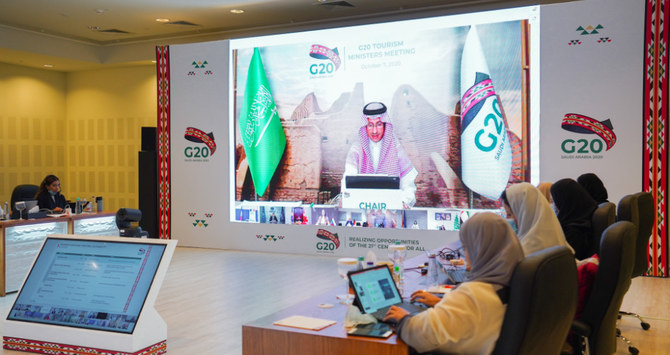
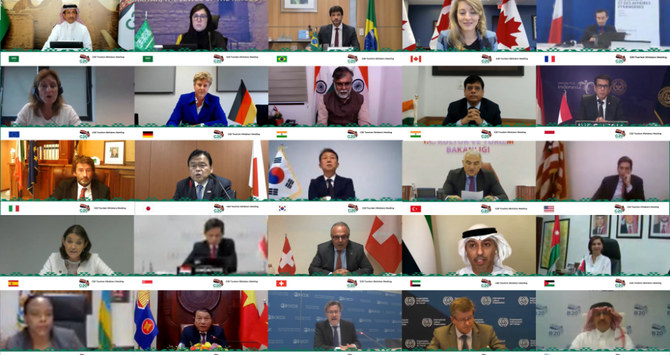
The participants agreed that support for policies that promote sustainable authentic experiences, rural development and community empowerment not only benefits local communities but also promotes a welcoming experience for tourists. (SPA)
2 / 3
The participants agreed that support for policies that promote sustainable authentic experiences, rural development and community empowerment not only benefits local communities but also promotes a welcoming experience for tourists. (SPA)
3 / 3
The participants agreed that support for policies that promote sustainable authentic experiences, rural development and community empowerment not only benefits local communities but also promotes a welcoming experience for tourists. (SPA)
Short Url
Updated 08 October 2020
Follow

G20 tourism ministers discuss post-pandemic revival plan for tourism sector

  • Pledge to work together to help those worst affected by the health crisis, including small businesses and developing economies

RIYADH: The tourism ministers of G20 countries met on Wednesday to discuss ways of reviving the tourism sector, which has been severely affected by the effects of the coronavirus crisis.

They highlighted the crucial role of tourism as a means of achieving sustainable socioeconomic development, and talked about the challenges the sector is facing as a result of the pandemic.

The ministers pledged to work together to “support those most impacted by the crisis within the sector, including micro, small and medium-sized enterprises, and developing economies that rely on travel and tourism, especially in Africa and small island states.”

They vowed to help the ailing sector rebound and prosper by strengthening international cooperation, rebuilding trust and confidence in tourism, and sharing knowledge and good practices between countries.

The participants agreed that support for policies that promote sustainable authentic experiences, rural development and community empowerment not only benefits local communities but also promotes a welcoming experience for tourists.

The meeting was chaired by Saudi Arabia, which holds the presidency of the G20 this year. The ministers welcomed the progress that has been made in tourism initiatives during the Kingdom’s tenure, “including global commitments made in response to the COVID-19 pandemic, the progression of inclusive community development through tourism, and the advancement of safe travel.”

The travel and tourism sector contributed 10.3 percent of global gross domestic product in 2019 and provided 330 million jobs. It suffered severe setbacks, however, after many countries banned international travel or imposed other restrictions in response to the coronavirus pandemic and the threats it poses.


‘Cake not hate’ campaign becomes ‘Dates not hate’ in Madinah

“The Joshie-Man” and his father Dan Harris in the courtyard of the Prophet’s Mosque in Madinah. (Supplied)
Updated 02 February 2026
Follow

‘Cake not hate’ campaign becomes ‘Dates not hate’ in Madinah

  • Dan said he was very impressed by Saudi hospitality and that his family was warmly welcomed
  • He said being in Madinah exposed him to the true diversity of Islam

LONDON: A British autistic and non-verbal boy who has been visiting UK mosques and distributing cakes to promote solidarity amid an increase in far-right support in the country has taken his message of love to Madinah.

Joshua Harris, or “The Joshie-Man” as the 12-year-old is known to his social media fans, has handed out hundreds of his baked goods to worshipers at mosques in major British cities over the last few months.

The “Cake not hate” campaign came about after an Islamophobic attack on a mosque in his home city of Peterborough in October 2025.

Harris and his father visited Masjid Darassalaam, the mosque that was targeted, with cakes that the boy had baked and distributed them to the congregation soon after the attack. Since then, Harris has visited dozens of mosques in the UK.

On a recent trip to the Middle East, he and his father visited Madinah. In a local twist that pays tribute to the holy city’s famous date varieties including ajwa and ambar, Harris handed out dates to people in the courtyard of the Prophet’s Mosque. The “Cake not hate” campaign became “Dates not hate” for Saudi Arabia.

“He was greeted really, really warmly. There were some really touching moments where people were kissing his hands and his head. It was really lovely,” his father, Dan Harris, said.

Dan, the founder of global charity Neurodiversity in Business, said being in Madinah exposed him to the true diversity of Islam.

“We met people from all around the world. It was amazing. It’s like the United Nations there, you get people from different countries and it just goes to show you that the Muslim community, or the Ummah more generally, is not a homogeneous group,” he said.

“We saw people from Tajikistan and Uzbekistan and it was really interesting for us.”

Dan said his visit to Madinah, considered the second holiest city in Islam after Makkah for Muslims, was “profound and life-changing.”

He added: “I would say it’s my favourite city in the world due to the peace and tranquillity I felt there.”

Dan added that he was very impressed by Saudi hospitality: “Everywhere we went, people were taking down my number and insisting that we come for dinner, insisting they pick us up from the location. They were extremely attentive to Joshie as well, making sure his needs were met. We felt a great sense of welcome, something Saudi Arabia is known for.”