

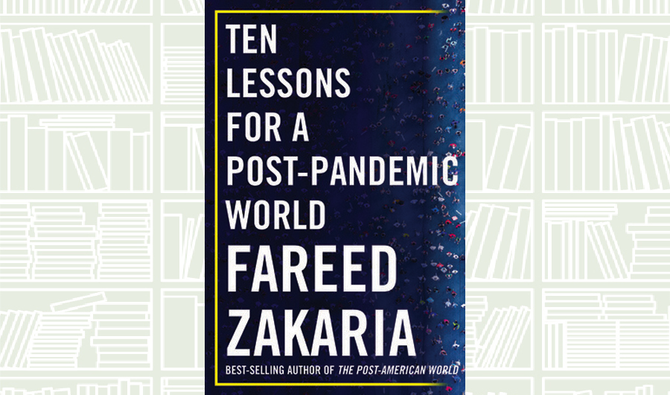

CNN host and author Fareed Zakaria helps readers to understand the nature of a post-pandemic world: The political, social, technological, and economic impacts that may take years to unfold.
In the form of 10 straightforward “lessons,” covering topics from globalization and threat-preparedness to inequality and technological advancement, Zakaria creates a structure for readers to begin thinking beyond the immediate impacts of COVID-19.
Ten Lessons for a Post-Pandemic World speaks to past, present, and future, and, while urgent and timely, is sure to become an enduring staple, said a recent review.
In the book’s strongest sections, Zakaria argues that America needs a less fragmented and gridlocked government bureaucracy to cope with health threats, and he calls for more honesty and empathy from scientists, and foresees accelerated migration of work and life onto the internet.
He anthropomorphizes COVID-19 as “nature’s revenge” for overpopulation and human environmental encroachments, and suggests that “promoting healthier diets” will help to prevent the next pandemic.
He is the author of several books, including The Future of Freedom, which was a New York Times bestseller and has been translated into 20 languages.
His new book, The Post American World, was published in May 2008 and became an instant best-seller.


