NEW DELHI: India’s president on Sunday approved three controversial agricultural bills amid nationwide protests by farmers who say the new laws will stunt their bargaining power and instead allow large retailers to have control over pricing.
Farmers’ organizations say one of the three laws could lead to the government stopping buying grain at guaranteed prices, a move that would disrupt wholesale markets which have so far ensured fair and timely payments to farmers.
President Ram Nath Kovind’s approval is likely to further stir protests, leading farmers’ organizations said.
Prime Minister Narendra Modi has already lost a key political ally from the northern Indian state of Punjab, one of India’s two bread basket states, where farmers form an influential voting bloc.
The country’s main opposition Congress party has also backed the protests.
Under the Farmers’ Produce Trade and Commerce (Promotion and Facilitation) Bill — one of the laws already approved by parliament — growers can directly sell their produce to institutional buyers such as big traders and retailers.
Nearly 85% of India’s poor farmers own less than 2 hectares (5 acres) of land and they find it difficult to directly negotiate with large buyers.
Modi’s administration has clarified that the wholesale markets will operate as usual, and the government only aims to empower farmers to sell directly to buyers.

India’s controversial farm bills become law despite protests

https://arab.news/pfbn8
India’s controversial farm bills become law despite protests
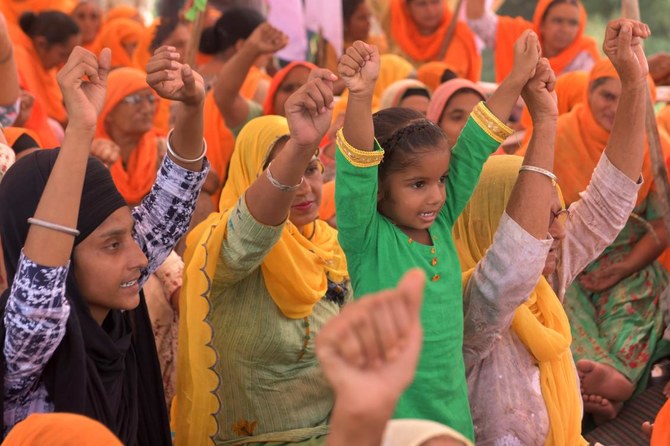
- Farmers’ organizations say one of the three laws could lead to the government stopping buying grain at guaranteed prices
- Nearly 85% of India’s poor farmers own less than 2 hectares of land
Indonesia reaffirms Yemen’s territorial integrity, backs stability efforts amid tensions
- Statement comes after Saudi Arabia bombed a UAE weapons shipment at Yemeni port city
- Jakarta last week said it ‘appreciates’ Riyadh ‘working together’ with Yemen to restore stability
JAKARTA: Indonesia has called for respect for Yemen’s territorial integrity and commended efforts to maintain stability in the region, a day after Saudi Arabia bombed a weapons shipment from the UAE at a Yemeni port city that Riyadh said was intended for separatist forces.
Saudi Arabia carried out a “limited airstrike” at Yemen’s port city of Al-Mukalla in the southern province of Hadramout on Tuesday, following the arrival of an Emirati shipment that came amid heightened tensions linked to advances by the UAE-backed Southern Transitional Council in the war-torn country.
In a statement issued late on Wednesday, the Indonesian Ministry of Foreign Affairs said it “appreciates further efforts by concerned parties to maintain stability and security,” particularly in the provinces of Hadramout and Al-Mahara.
“Indonesia reaffirms the importance of peaceful settlement through an inclusive and comprehensive political dialogue under the coordination of the United Nations and respecting Yemen’s legitimate government and territorial integrity,” Indonesia’s foreign affairs ministry said.
The latest statement comes after Jakarta said last week that it “appreciates the efforts of the Kingdom of Saudi Arabia, as well as other relevant countries, working together with Yemeni stakeholders to de-escalate tensions and restore stability.”
Saudi Arabia leads the Coalition to Restore Legitimacy in Yemen, which includes the UAE and was established in 2015 to combat the Houthi rebels, who control most of northern Yemen.
Riyadh has been calling on the STC, which initially supported Yemen’s internationally recognized government against the Houthi rebels, to withdraw after it launched an offensive against the Saudi-backed government troops last month, seeking an independent state in the south.
Indonesia has also urged for “all parties to exercise restraint and avoid unilateral action that could impact security conditions,” and has previously said that the rising tensions in Yemen could “further deteriorate the security situation and exacerbate the suffering” of the Yemeni people.
Indonesia, the world’s biggest Muslim-majority country, maintains close ties with both Saudi Arabia and the UAE, which are its main trade and investment partners in the Middle East.