KIEV: More than 1,000 Jewish pilgrims who massed for several days along Ukraine’s border gave up hope of entering the country on Friday after being turned back due to coronavirus restrictions.
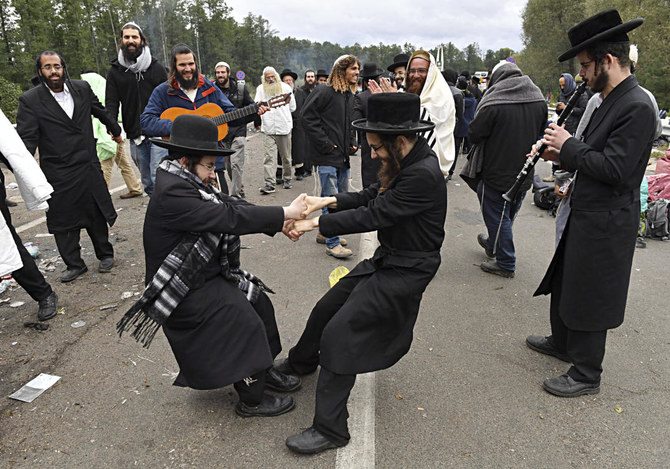
The Orthodox-Jewish believers including hundreds of children camped out this week in no-man’s land between the Ukrainian and Belarusian border crossings ahead of Jewish New Year celebrations this weekend.
Tens of thousands of Hasidic Jews travel to the central Ukrainian city of Uman every Jewish New Year to visit the tomb of Rabbi Nahman, the founder of the Breslov Hasidic movement.
The standoff between pilgrims and armed Ukrainian security services sparked tensions at the Novi Yarylovychi border crossing and inflamed a diplomatic row between Minsk and Kiev.
Ukrainian border guard spokesman Andriy Demchenko told AFP Friday that most pilgrims had returned to Belarus and only “a few pilgrims” hoping to enter Ukraine remained at the crossing point.
Belarus, which earlier said the pilgrims should be allowed to visit holy sites in Ukraine, confirmed that fewer than a dozen people were attempting to cross.
Belarus’s Border Committee representative Anton Bychkovskiy said pilgrims were “leaving the border en masse” and traveling onwards to nearby cities by bus and taxi.
Ukrainian President Volodymyr Zelensky on Friday wished Jews a happy New Year and acknowledged the country had been “forced to limit mass events” over safety concerns.
The believers — mainly Israeli, but also American and French — departed for Uman this year even though both the Ukrainian and Israeli governments last month urged them not to travel because of the pandemic.
An Israeli minister on Thursday called on those camping out on the border to return home and uphold quarantine rules on arrival in Israel.
Kiev closed its borders for most of the month of September citing a growing number of coronavirus infections, but the pilgrims attempted to bypass the restrictions by traveling through Belarus.
Ukrainian border guards announced Friday they had arrested several pilgrims, including Israeli and US citizens, trying to enter the country illegally from Hungary, Poland and Romania.
Kiev has reported more than 169,000 cases of coronavirus and 3,468 fatalities. On Thursday, officials registered a record one-day increase in infections.
The standoff on the border aggravated strained ties between Kiev and Minsk, which have traded barbs over disputed presidential elections in Belarus last month.
Belarus strongman Alexander Lukashenko earlier instructed officials to negotiate a travel corridor with Ukraine and offered to provide buses to transport religious believers to holy sites in Ukraine.
Kiev in turn accused Belarusian authorities of giving false hope to the Hasidic pilgrims that they would be allowed to travel to Uman.
Both Ukraine and Israel are keen to avoid a spike in coronavirus infections.
Israel imposed a second nationwide lockdown on Friday to tackle one of the world’s highest coronavirus infection rates, despite public protests over the new blow to the economy.
The three-week shutdown starts just hours before Rosh Hashana, the Jewish New Year.
Meanwhile, up to 3,000 Hasidic Jews have arrived in Uman for the celebrations entering Ukraine before the ban, police said.
Law enforcement has tightened security near Rabbi Nahman’s tomb where pilgrims have congregated.


![]()

Jewish pilgrims quit Ukraine border campout over virus entry ban
Short Url
https://arab.news/2ffpr
Jewish pilgrims quit Ukraine border campout over virus entry ban
- The standoff between pilgrims and armed Ukrainian security services sparked tensions at the Novi Yarylovychi border crossing and inflamed a diplomatic row between Minsk and Kiev
- Ukrainian border guard spokesman Andriy Demchenko said that most pilgrims had returned to Belarus and only “a few pilgrims” hoping to enter Ukraine remained at the crossing point


Latest updates


© 2026 SAUDI RESEARCH & PUBLISHING COMPANY, All Rights Reserved And subject to Terms of Use Agreement.