

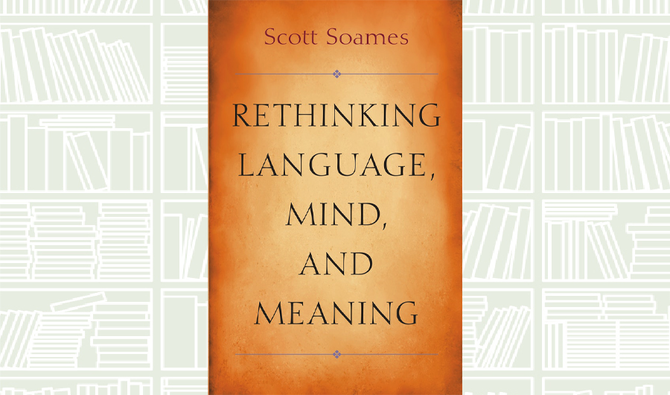

In this book, Scott Soames argues that the revolution in the study of language and mind that has taken place since the late 19th century must be rethought. The central insight in the reigning tradition is that propositions are representational. To know the meaning of a sentence or the content of a belief requires knowing which things it represents as being which ways, and therefore knowing what the world must be like if it is to conform to how the sentence or belief represents it.
These are truth conditions of the sentence or belief. But meanings and representational contents are not truth conditions, and there is more to propositions than representational content. In addition to imposing conditions the world must satisfy if it is to be true, a proposition may also impose conditions on minds that entertain it. The study of mind and language cannot advance further without a conception of propositions that allows them to have contents of both of these sorts. Soames provides it.
He does so by arguing that propositions are repeatable, purely representational cognitive acts or operations that represent the world as being a certain way, while requiring minds that perform them to satisfy certain cognitive conditions.
Because they have these two types of content—one facing the world and one facing the mind—pairs of propositions can be representationally identical but cognitively distinct. Using this breakthrough, Soames offers new solutions to several of the most perplexing problems in the philosophy of language and mind.


