

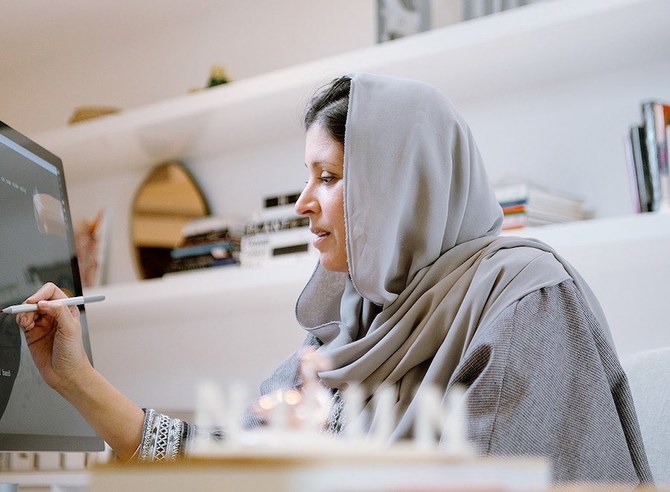
Saudi designer Princess Nourah Al-Faisal details discrimination by French newspaper

Nourah Al-Faisal is the founder of Nuun Jewels. File/Instagram
Short Url
Updated 15 September 2020
Follow

Saudi designer Princess Nourah Al-Faisal details discrimination by French newspaper

RIYADH/DUBAI: Princess Nourah Al-Faisal, Saudi founder of Paris-based fine jewelry label Nuun Jewels, took to social media this week to share an exchange between her team and French newspaper Les Echos, who, according to the designer, refused to run a portrait of her because she was wearing a hijab in the image.

“As a Saudi female jewelry designer working in Europe there have been times when I have come up against all kinds of discrimination,” she wrote in a lengthy Instagram post shared on her personal account. “Something happened today that I feel I cannot let pass,” she added.

The designer went on to detail the incident, stating that the professional headshots she provided to illustrate an interview set to run in the magazine were the subject of much furor.  


As a Saudi female jewelry designer working in Europe there have been times when I have come up against all kinds of discrimination. I have found that the best policy is to work hard and let my success speak for itself. For the most part this has served me well, however, something happened today that I feel I cannot let pass. Let me start by saying that in no way do I believe that the behavior I described represents French culture. over the years I have come to consider my friends and the people I work with in France as family. I have also found support in the French media who have accepted me as one of their own. NUUN was approached by Les Echos, and asked to submit images of some of my work for an article on jewelers. They also requested an image of me which we supplied. , they then came back to us with a request for more images, so we gave them access to the file that contained several of my professional headshots. This morning we were sent a message through the coordinating PR agency explaining that the images shared did not CONFORM to the images of the other designers and that unless we were prepared to share an image without a HIJAB, they would not be using NUUN JEWELS in their article. I am not surprised that this sort of overt discrimination exists in the world, but from a supposedly liberal media outlet it is shocking. As a Muslim woman I am proud of my religion and my culture , i have always tried to represent my culture to the best of my ability. Discrimination is insidious and ingrained in many institutions all over the world and we must expose it wherever we find it. Today I found it in LES ECHOS. On a final note, I would like to just say that what I have found most disturbing is the ease with which this request was made with no thought of right or wrong. Would they have requested that a Hasidic woman to remove her wig because no one else is wearing one? What then is the difference? Why is one culture and religion valued while another is dismissed? Why do they think this behavior acceptable and why do they not fear ramifications? This tells me that this is acceptable behavior in their world, but I am here to say it is not nor will it ever be

A post shared by Nourah Alfaisal (@itsanuworld) on

According to the designer’s Instagram post, “we were sent a message through the coordinating PR agency explaining that the images shared did not conform to the images of the other designers and that unless we were prepared to share an image without a hijab, they would not be using Nuun Jewels in their article.”

The designer spoke to Arab News to share her disappointment.

“I highlighted this incident because we can’t fight these behaviors by keeping quiet and silent. Rasicm and discrimination is everywhere around the world. It’s something we must address… as a society, we have to keep talking about it.”
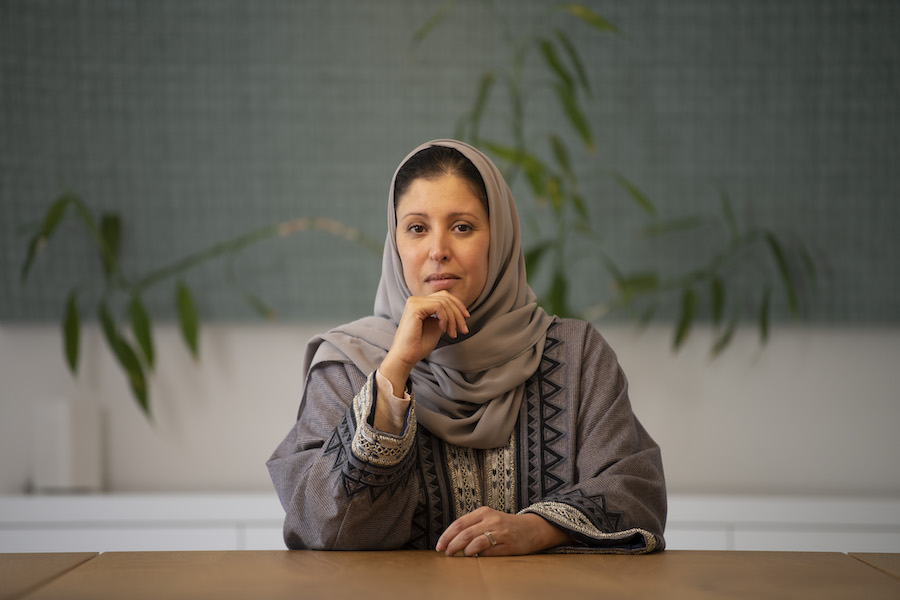


According to the designer, the newspaper refused to run a portrait of her because she was wearing a hijab in the image. Supplied

Even though the incident occurred with a French publication, the designer wants to stress that it is in no way a representation of French people or the country, making sure to point out, “My French friends and coworkers have all sent me messages saying this is not acceptable.”

Indeed, many users took to Al-Faisal’s comment section to write heartfelt messages of support and denounce Islamophobia and discrimination. 
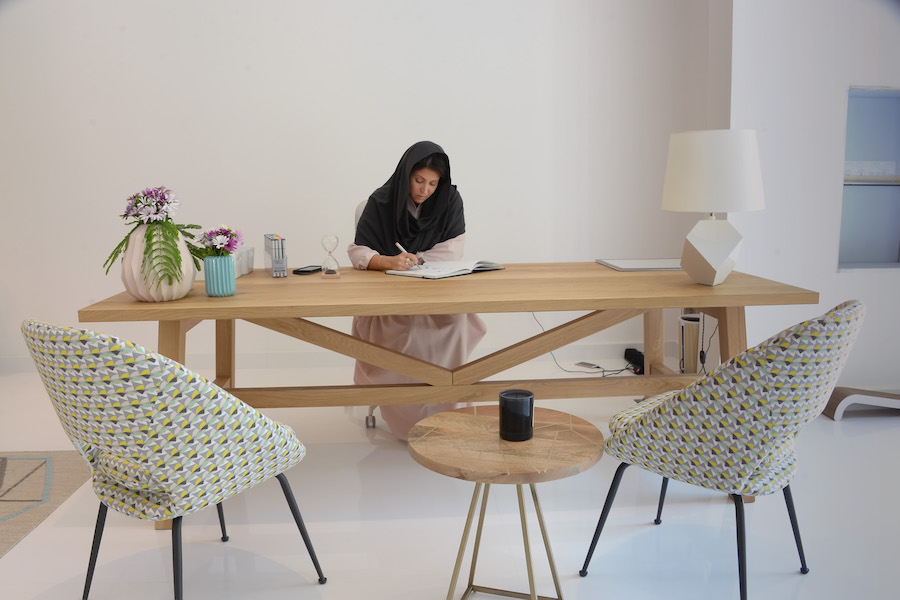


She has  received much support from people all over the world following the incident. Supplied

She has also received much support from people all over the world following the incident, and remains hopeful despite her experience with discrimination as a hijab-wearing woman.  “I’m an internal optimist,” she mused. “I fully believe that humanity is wondrous at its core.” 

“When it comes to my work I’ve always wanted to be judged by my craft. Look at the work, judge me on that and if you don’t like it, it’s fine. But don’t dismiss my work for a presumption,” she said.

Can such behavior be abolished? Al-Faisal believes so. “Racism is a taught behavior,” she stated. “You can unteach it."


Riyadh to install 25 new public artworks after conclusion of Tuwaiq Sculpture symposium

Updated 09 March 2026
Follow

Riyadh to install 25 new public artworks after conclusion of Tuwaiq Sculpture symposium

  • Move will extend the impact of the annual art event beyond its conclusion, bringing large-scale contemporary artworks into the city’s streets and parks
  • Artworks produced during the symposium will now become part of Riyadh Art’s permanent collection

RIYADH: Some 25 sculptures created during the seventh edition of the Tuwaiq Sculpture symposium and exhibition will soon be installed across public spaces in Riyadh.

The move will extend the impact of the annual art event beyond its conclusion, organizers said, bringing large-scale contemporary artworks into the city’s streets and parks.

Organized by the Royal Commission for Riyadh City through the Riyadh Art Program, the 2026 edition has ended after nearly two months of live sculpting, exhibitions and public programming.

The artworks produced during the symposium will now become part of Riyadh Art’s permanent collection and will appear across the capital as part of a broader effort to integrate art into everyday urban life.

This year’s symposium began in January and took place along Prince Mohammed bin Abdulaziz Road, widely known as Tahlia Street.

The site was transformed into an open-air studio in which visitors could observe artists carving, welding and assembling sculptures.

The live sculpting phase, which was held between Jan. 10 and Feb. 5, brought together leading Saudi and international artists to produce 25 large-scale works.

The sculptures were created using locally sourced granite and reclaimed metal, highlighting both the region’s natural materials and the creative reuse of industrial elements.

Visitors were able to follow the process of each artwork’s development, from raw materials to finished sculptures, while also interacting with the artists and learning about their techniques and concepts.

The event also featured a wide-ranging community engagement program designed to deepen public understanding of contemporary art.

The program included 10 panel discussions, 105 training workshops and 15 masterclasses exploring sculptural techniques, materials and the role of public art in cities.

Educational outreach formed another key component of the symposium. Organizers hosted 25 educational visits for more than 600 students, while daily guided tours enabled visitors to explore the artworks and gain insight into the creative processes behind them.

After the live sculpting phase, the completed sculptures remained on-site until March 8, giving visitors the opportunity to experience the works in their original setting before their distribution across Riyadh.

The symposium was curated by Lulwah Al-Homoud, Sarah Staton, and Rut Blees Luxemburg, who guided the artistic direction around the theme “Traces of What Will Be,” exploring how sculpture can reflect future possibilities while responding to the city’s evolving identity.