

Flash flood turns Pakistan’s northernmost town into a sea of mud

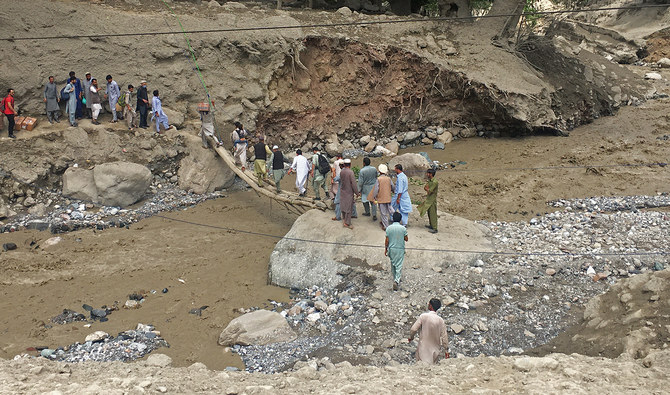
Villagers are waiting for their turn to cross the Chitral River through a makeshift span on Saturday, Aug. 29, 2020, after flash floods destroyed the sole bridge in Reshun, Upper Chitral district, Khyber Pakhtunkhwa. (AN photo)
Short Url
Updated 30 August 2020
Follow

Flash flood turns Pakistan’s northernmost town into a sea of mud

  • Some 2,000 people have been cut off from the rest of the town as its sole bridge was wiped out by the flood
  • Sports festival in Broghil, the first mass event since the reopening of tourism, has been postponed due to destruction in Reshun

RESHUN: Residents of Reshun in Pakistan’s northernmost Upper Chitral district, have lost their homes, crops and access to the outside world as hours of downpours from Thursday night until Friday made the Chitral River overflow, causing flash floods with huge rocks and mud.
Inhabited by around 4,000 people, Reshun, in Khyber Pakhtunkhwa province, is surrounded by four big glaciers. Their melting in recent year, residents say, has aggravated the spell of floods which many regions in Pakistan struggle to cope with during the monsoon season which runs from July through September. 
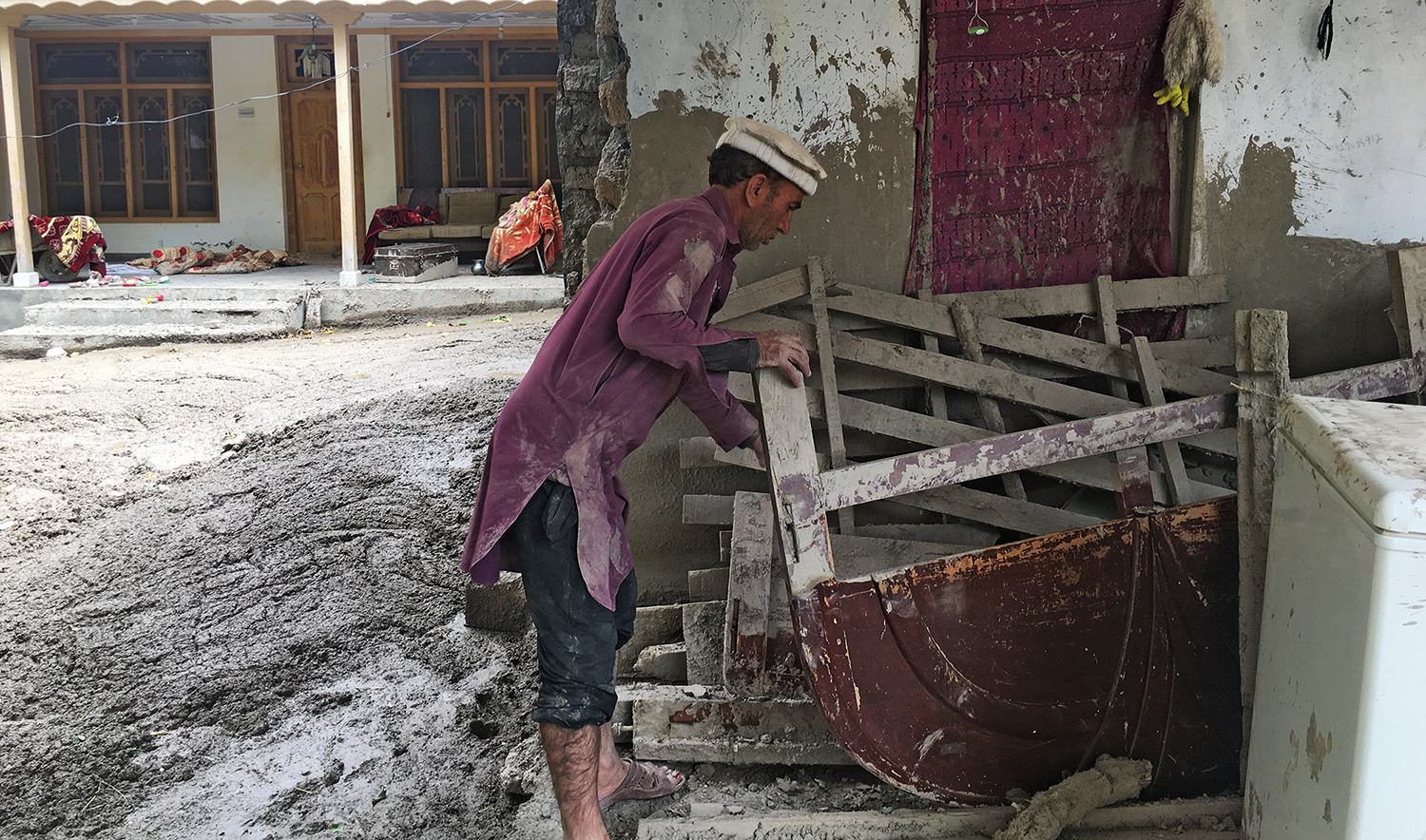


A man is collecting his belongings on Saturday, Aug. 29, 2020, after his house in Reshun was destroyed by a mud flood. (AN photo)

“It was very scary night, sound of water and rolling stones was a nightmare. Father had spent lifetime savings on our house, but now we are in tent, looking to others for assistance,” Shafi-u-Nabi, 23, told Arab News as he describe how families at night rushed toward the mountains to save themselves from deluge.
“The water vanished maize and paddy crops on which everyone depends for year food” another resident, Farzana Bibi said. “So far none of the government representatives visited us. Local NGOs are trying their best, but the damage is huge.”
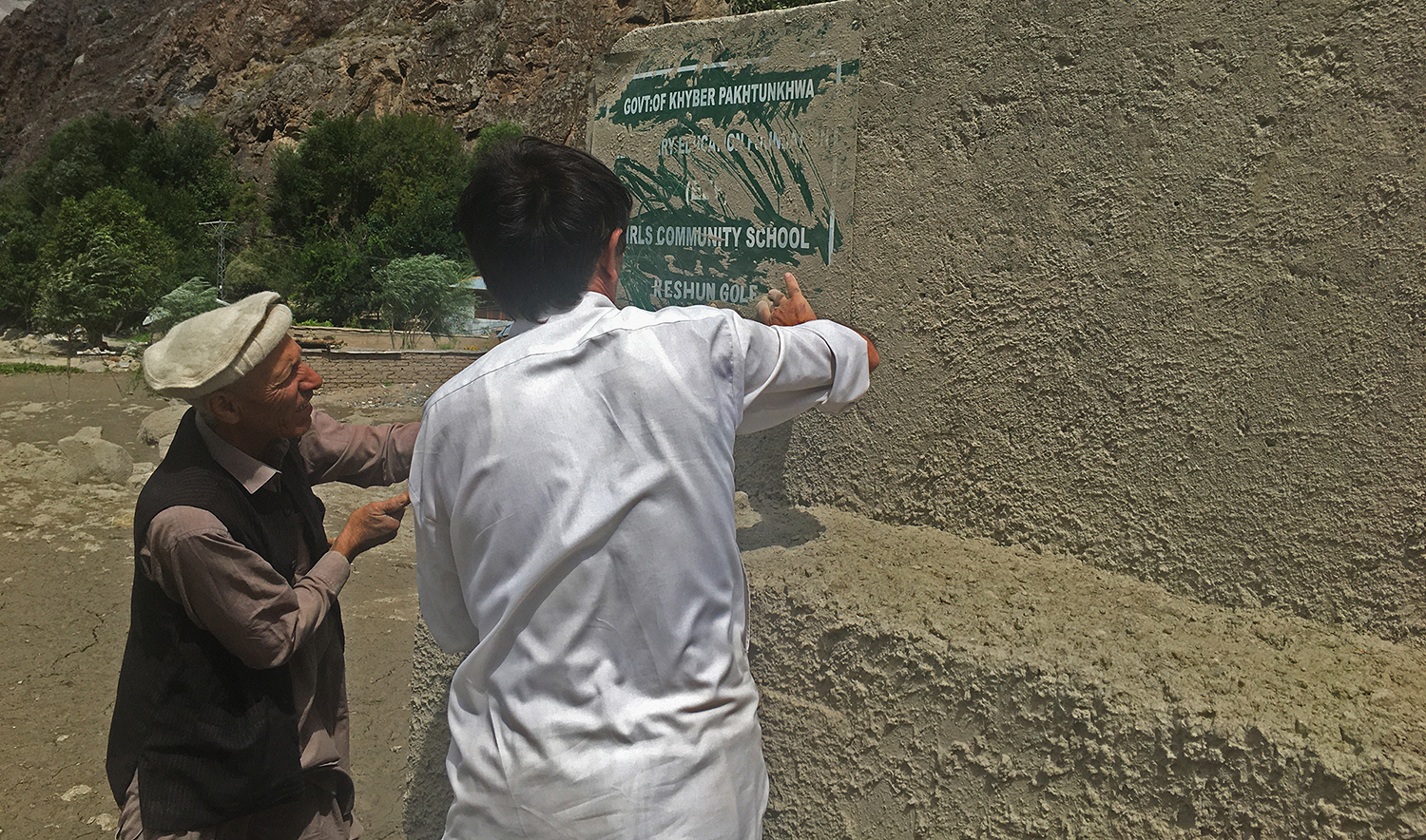


Reshun residents on Saturday, Aug. 29, 2020 are cleaning a school board to show the height of flood waves that hit the town on Thursday night, Aug. 27, 2020. (AN photo)

On Saturday, residents were seen busy cleaning the remaining buildings from mud. They said no help was arriving from the provincial authorities and their own means were limited without heavy machinery to remove debris and restore access to clean water.
“We don’t have clean drinking water and now we are dependent on flood dirty river water,” resident Shahbaz Jan said.
“The main mosque, shops and 25 houses were destroyed while another 75 were severely damaged,” social worker Sibghat Baig said, adding that about 2,000 people have been cut off from the rest of the town as the sole bridge was wiped out by the flood.
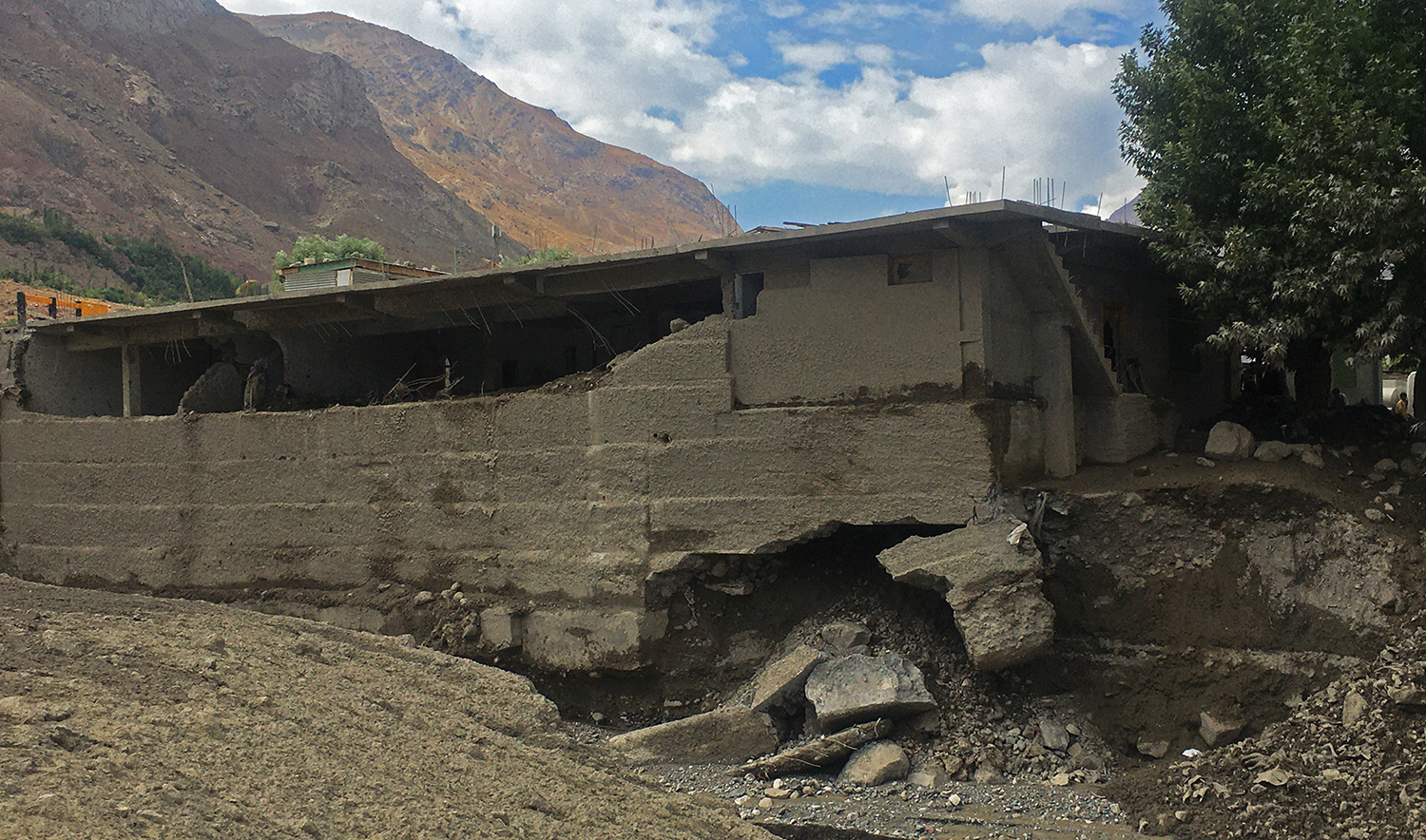


Reshun's main mosque is seen on Saturday, Aug. 29, 2020, after flash floods badly damaged its building. (AN photo)

The Reshun bridge linked Upper Chitral district to Lower Chitral. NGO Al-Khidmat Foundation has connected the two banks of the Chitral River with wooden logs, but not everyone is able to walk through the makeshift span.
The bridge was the only passage to Broghil National Park, where next week Khyber Pakhtunkhwa was going to host its first sports festival since the reopening of the tourism sector in the province after a months-long standstill due to the coronavirus outbreak. The festival has been postponed due to the flooding and destruction. 


Pakistan says $50 million meat export deal with Tajikistan nearing finalization

Updated 09 December 2025
Follow

Pakistan says $50 million meat export deal with Tajikistan nearing finalization

  • Islamabad expects to finalize agreement soon after Dushanbe signals demand for 100,000 tons
  • Pakistan is seeking to expand agricultural trade beyond rice, citrus and mango exports

ISLAMABAD: Tajikistan has expressed interest in importing 100,000 tons of Pakistani meat worth more than $50 million, with both governments expected to finalize a supply agreement soon, Pakistan’s food security ministry said on Tuesday.

Pakistan is trying to grow agriculture-based exports as it seeks regional markets for livestock and food commodities, while Tajikistan, a landlocked Central Asian state, has been expanding food imports to support domestic demand. Pakistan currently exports rice, citrus and mangoes to Dushanbe, though volumes remain small compared to national production, according to official figures.

The development came during a meeting in Islamabad between Pakistan’s Federal Minister for National Food Security and Research Rana Tanveer Hussain and Ambassador of Tajikistan Yusuf Sharifzoda, where agricultural trade, livestock supply and food-security cooperation were discussed.

“Tajikistan intends to purchase 100,000 tons of meat from Pakistan, an import valued at over USD 50 million,” the ambassador said, according to the ministry’s statement, assuring full facilitation and that Islamabad was prepared to meet the demand.

The statement said the two sides agreed to expand cooperation in meat and livestock, fresh fruit, vegetables, staple crops, agricultural research, pest management and standards compliance. Pakistan also proposed strengthening coordination on phytosanitary rules and establishing pest-free production zones to support long-term exports.

Pakistan and Tajikistan have long maintained political ties but bilateral food trade remains below potential: Pakistan produces 1.8 million tons of mangoes annually but exported just 0.7 metric tons to Tajikistan in 2024, while rice exports amounted to only 240 metric tons in 2022 out of national output of 9.3 million tons. Pakistan imports mainly ginned cotton from Tajikistan.