KABUL, Afghanistan: Heavy flooding has killed at least 100 people and injured scores of others as heavy seasonal rains drenched northern and eastern Afghanistan, officials said Wednesday.
Annual heavy rains, compounded by mudslides, often threaten remote areas of Afghanistan, where infrastructure is poor. Summer often brings heavy rainfall in northern and eastern parts of the country, leading to floods that leave hundreds dead every year.
State minister for disaster management Ghulam Bahawudin Jilani said that in northern Parwan province, water inundated the central city of Charikar, where the health ministry said the local hospital was partially destroyed and many of the injured were being transferred to the capital, Kabul.
The provincial spokeswoman, Wahida Shahkar, said the number of casualties may rise as people and rescue teams were still working to locate people buried under destroyed houses. The head of the provincial hospital, Abdul Qasim Sangin, said several children were among the dead and some of the injured are in critical condition.
Shahkar said the flooding started in the central part of the province overnight, following heavy rains and destroying many homes. She called on the government to deliver aid and provide immediate support for workers digging through mud to reach those who were trapped.
Afghan President Ashraf Ghani in a statement ordered aid be delivered to Parwan and other provinces while expressing his condolences to the victims’ families.
Ahmad Tameem Azimi, spokesman of the Disaster Management Ministry, said flooding blocked highways to eastern and northern provinces. “Along with rescuing people we are working to open the highways back to traffic,” he said.
Azimi said at least 300 houses were destroyed in Parwan and over 1,000 people were displaced. He said ground and air support sent to help those trapped by the flooding had reached the provinces. The ministry warned residents of possible flooding in the region with a social media alert late Tuesday, he added.
The flooding waters and rushing mud in the mountainous Parwan province carried thousands of large rocks that caused major injuries and destroyed entire homes, burying people under the rubble. Several excavators had reached the area and were digging for those stuck beneath the rubble.
“Nobody could run,” said Shah Arian, 22 one of the victims. He said it all started around midnight, when people were asleep.
“Fifteen people from our two neighborhoods died,” he said, appealing for government help. “Everything I had is under the mud.”
Azimi, the spokesman, said hundred of acres of agricultural land have been destroyed, with the heavy rain wiping out all the corps in eastern Nuristan province. Houses and roads were destroyed in northern Kapisa, Panjshir and eastern Paktia provinces, Azimi said.
In eastern Maidan Wardak province two people died and five were injured when flooding destroyed several houses, he added.
The office of the Nangarhar governor said in a statement that two members of a family died and four others were injured Wednesday morning when the wall of their house collapsed in flooding.


Floods in north, east Afghanistan leave at least 100 dead

https://arab.news/5mhfu
Floods in north, east Afghanistan leave at least 100 dead

- In northern Parwan province, water inundated the city of Charikar, where the local hospital was partially destroyed and many of the injured were being transferred to Kabul
- The number of casualties may rise as people and rescue teams are still working to locate people buried under destroyed houses


26 Doctors without Borders workers remain unaccounted for in South Sudan a month after attacks
- A hospital in the town of Lankien was bombed by government forces, MSF said
- “We have lost contact with them amid ongoing insecurity”
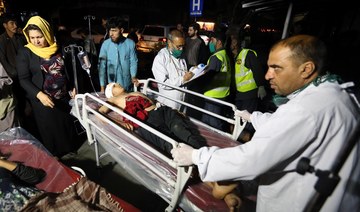
NAIROBI: More than two dozen Doctors Without Borders workers remain unaccounted for a month after attacks in South Sudan, the medical charity said.
Two facilities belonging to the group, known by French acronym MSF, were attacked on Feb. 3 in Jonglei State, northeast of the capital, Juba, where violence has displaced an estimated 280,000 people since December.
A hospital in the town of Lankien was bombed by government forces, MSF said, while another medical facility in the town of Pieri was raided by “unknown assailants.” Both were located in opposition-held areas.
Staff working at the two facilities fled alongside much of the local population into deeply rural areas where armed clashes and aerial bombardments were ongoing.
MSF said in a statement on Monday that “26 of 291 of our colleagues working in Lankien and Pieri remain unaccounted for.
“We have lost contact with them amid ongoing insecurity,” it said.
The lack of communication with its staff could be linked to the limited network connectivity in much of the state. Staff members who had been contacted described “destruction, violence and extreme hardships.”
Fighting escalated sharply in December, when opposition forces captured a string of government outposts in north central Jonglei. In January, the government responded with a counteroffensive that recaptured most of the area it had lost.
Displaced people in Akobo, an opposition-held town near the Ethiopian border, described horrific violence by government fighters. Many described not being able to find food or water as they walked for days to reach safety.
The attacks on MSF facilities in Lankien and Pieri are part of an uptick in violence on humanitarian staff, supplies and infrastructure, aid groups say. MSF facilities have been attacked 10 times in the last 12 months.
“This violence has taken an unbearable toll not only on health care services, but on the very people who kept them running,” said Yashovardhan, MSF head of mission in South Sudan, who only uses one name.
“Medical workers must never be targets,” he said. “We are deeply concerned about what has happened to our colleagues and the communities we serve.”