

Madonna raises funds for victims of Beirut explosion

The proceeds from the sales will go to the non-profit organization Impact Lebanon. (AFP)
Short Url
Updated 11 August 2020
Follow

Madonna raises funds for victims of Beirut explosion

DUBAI: American singer and songwriter Madonna announced on Monday that she and her two children, David Banda and Mercy James, are hosting an art sale to support victims of the massive explosion that ripped through Beirut on Aug. 4, killing over 200 and injuring thousands.
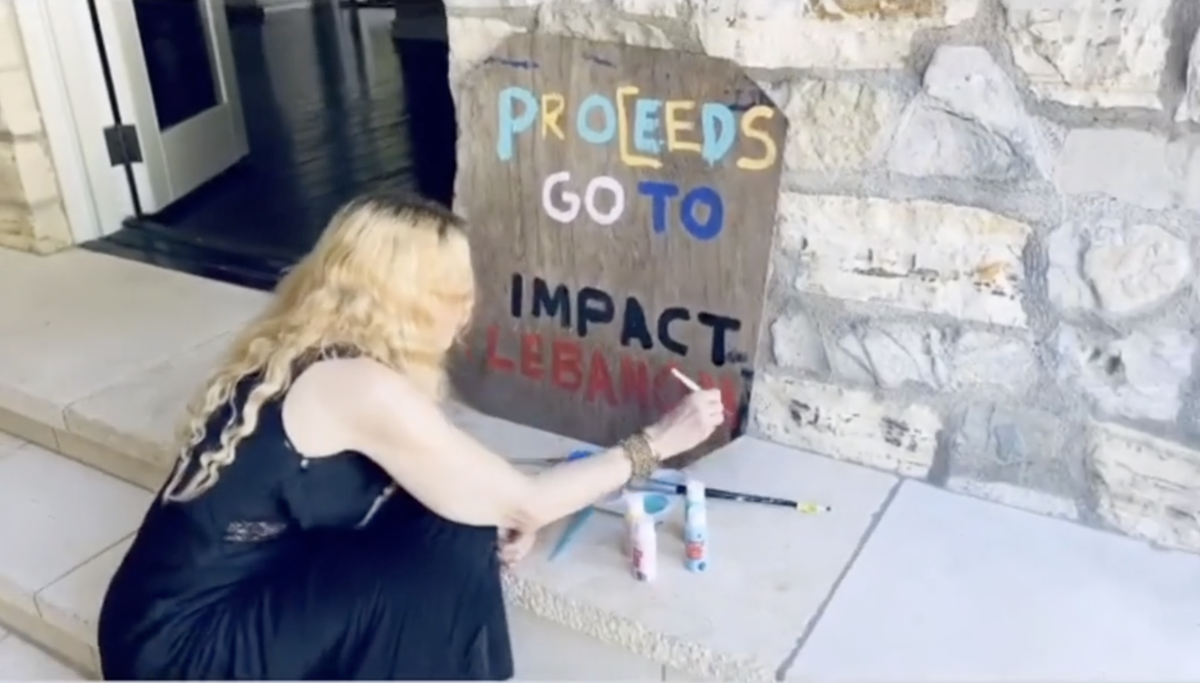


In a video posted to the 61-year-old star’s Instagram account, Madonna can be seen sitting on the ground painting a sign that read “Proceeds go to Impact Lebanon.” (Instagram)

The proceeds from the sales will go to the non-profit organization Impact Lebanon, which has been helping the hundreds of thousands left homeless after the deadly blast. 


Mercy James helped the singer during the sale. (Instagram)

In a video posted to the 61-year-old star’s Instagram account, Madonna can be seen sitting on the ground painting a sign that read “Proceeds go to Impact Lebanon.”
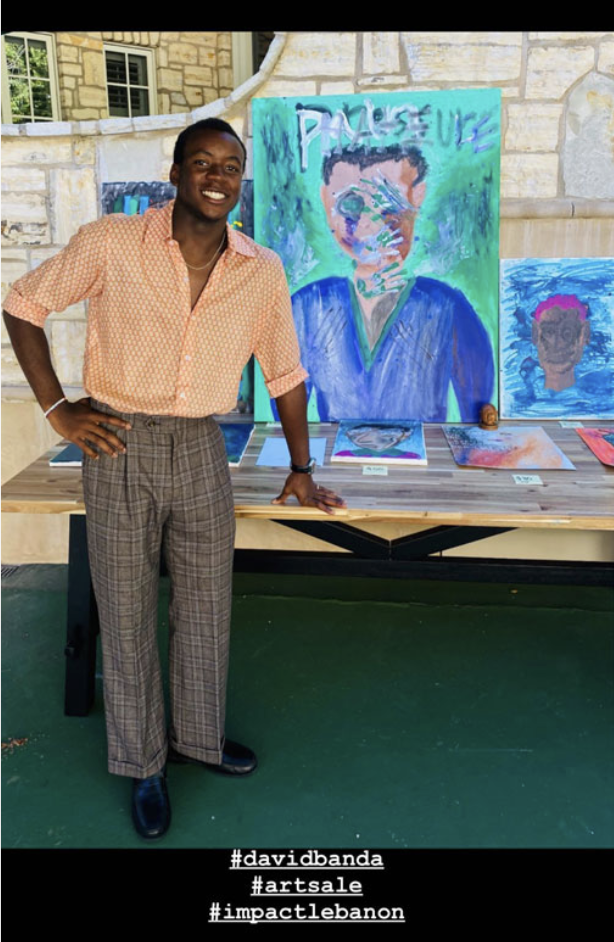


David Banda helped the singer during the sale. (Instagram)

Other celebrities such as Bella Hadid, Kylie Jenner, DJ Khaled and Dua Lipa, have been taking to social media to show solidarity for the victims, and online influencers around the world have been urging their followers to make donations towards rescue and recovery work.

American actor George Clooney and his wife, Lebanese-British human rights lawyer Amal Clooney, also revealed earlier this week they are donating $100,000 to Lebanese charities.


Lebanese filmmaker turns archival footage into a love letter to Beirut

Updated 28 February 2026
Follow

Lebanese filmmaker turns archival footage into a love letter to Beirut

LONDON: Lebanese filmmaker Lana Daher’s debut feature “Do You Love Me” is a love letter of sorts to Beirut, composed entirely of archival material spanning seven decades across film, television, home videos and photography.

The film premiered at the 82nd Venice International Film Festival in September and has since traveled to several regional and international festivals.

Pink Smoke (2020) by Ben Hubbard. (Supplied)

With minimal dialogue, the film relies heavily on image and sound to reconstruct Lebanon’s fragmented history.

“By resisting voiceover and autobiography, I feel like I had to trust the image and the shared emotional landscape of these archives to carry the meaning,” Daher said.

A Suspended Life (Ghazal el-Banat) (1985) by Jocelyne Saab. (Supplied)

She explained that in a city like Beirut “where trauma is rarely private,” the socio-political context becomes the atmosphere of the film, with personal memory expanding into a collective experience — “a shared terrain of emotional history.”

Daher said: “By using the accumulated visual representations of Beirut, I was, in a way, rewriting my own representation of home through images that already existed."

Whispers (1980) by Maroun Bagdadi. (Supplied)

Daher, with editor Qutaiba Barhamji, steered clear of long sequences, preferring individual shots that allowed them to “reassemble meaning” while maintaining the integrity of their own work and respecting the original material, she explained.

The film does not feature a voice-over, an intentional decision that influenced the use of sound, music, and silence.

The Boombox (1995) by Fouad Elkoury. (Supplied)

“By resisting the urge to fill every space with dialogue or score, we created room for discomfort,” Daher said, adding that silence allows the audience to sit with the image and enter its emotional space rather than being guided too explicitly.

 The film was a labor of love, challenging Daher personally and professionally.

“When you draw from personal memory, you’re not just directing scenes, you’re revisiting parts of yourself and your childhood,” she said. “There’s vulnerability in that.”