Pakistani fashion brand gives mask-making lifeline to Afghan refugee women

Hand embroidered masks by refugee women at an embroidery studio set up by FnkAsia in Karachi, Pakistan, on July 15, 2020. (Huma Adnan)
Short Url
Updated 11 August 2020
Follow

Pakistani fashion brand gives mask-making lifeline to Afghan refugee women

  • Pakistani designer Huma Adnan has been working with refugee women in Karachi for the last two years
  • From making jewellery and accessories at Adnan’s FnkAsia studio, refugee women have switched to embroidering and making masks

RAWALPINDI: Pakistani designer Huma Adnan, whose brand FnkAsia has been working with Afghan refugee women in Karachi for the last two years, has now offered the women space at her studio to create and embroider face masks that protect against the coronavirus. 
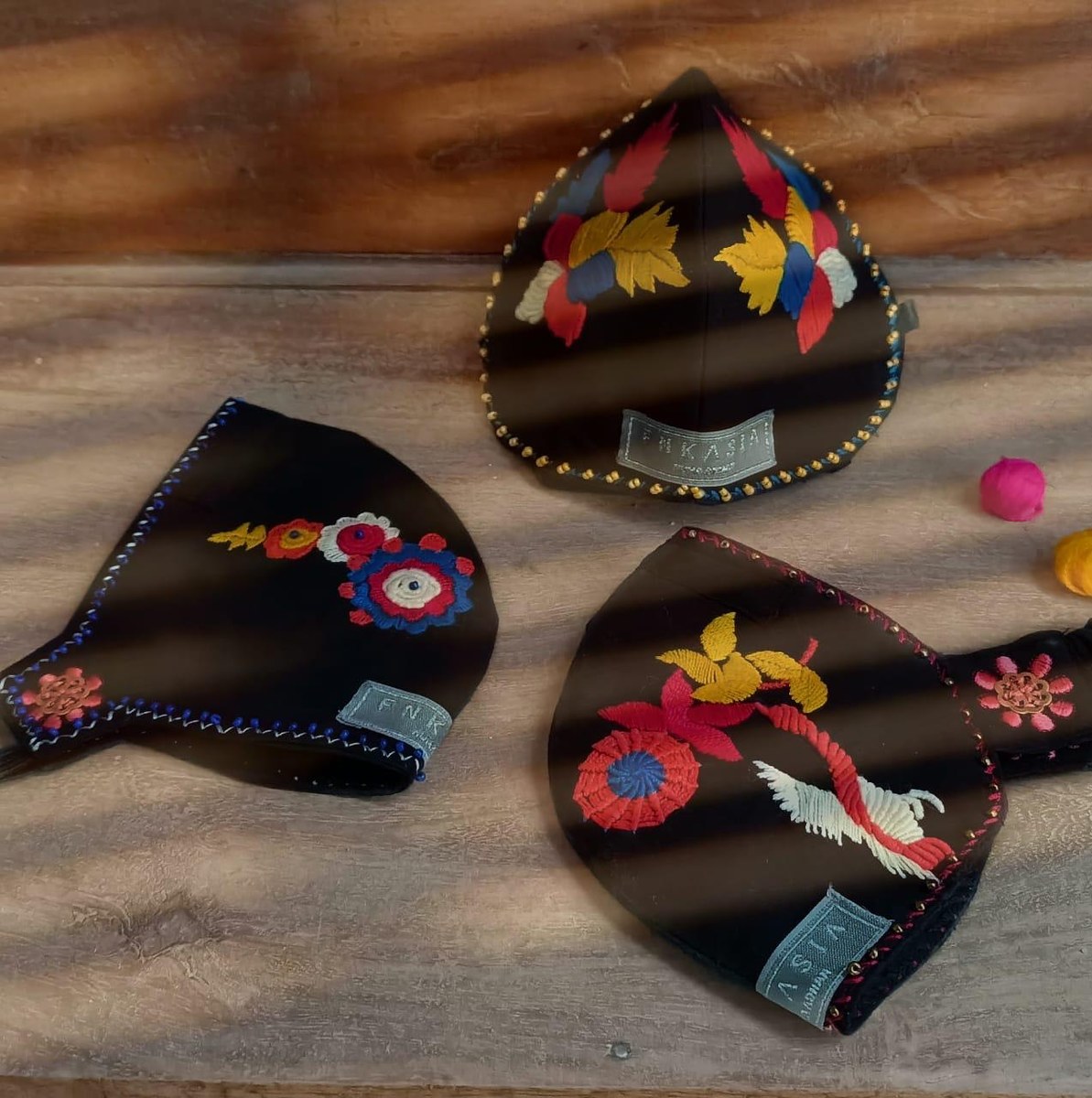


Hand embroidered masks by refugee women at an embroidery studio set up by FnkAsia in Karachi, Pakistan, on July 15, 2020. (Huma Adnan)

As more and more countries advise or require their citizens to wear facial coverings to curb the spread of COVID-19, refugee tailors and artisans from around the world are stepping up to help. In Pakistan, too, lockdowns introduced to contain the spread of the coronavirus have had a dramatic impact on refugees’ livelihoods, turning tailoring businesses into mask-making ones that have provided a lifeline.
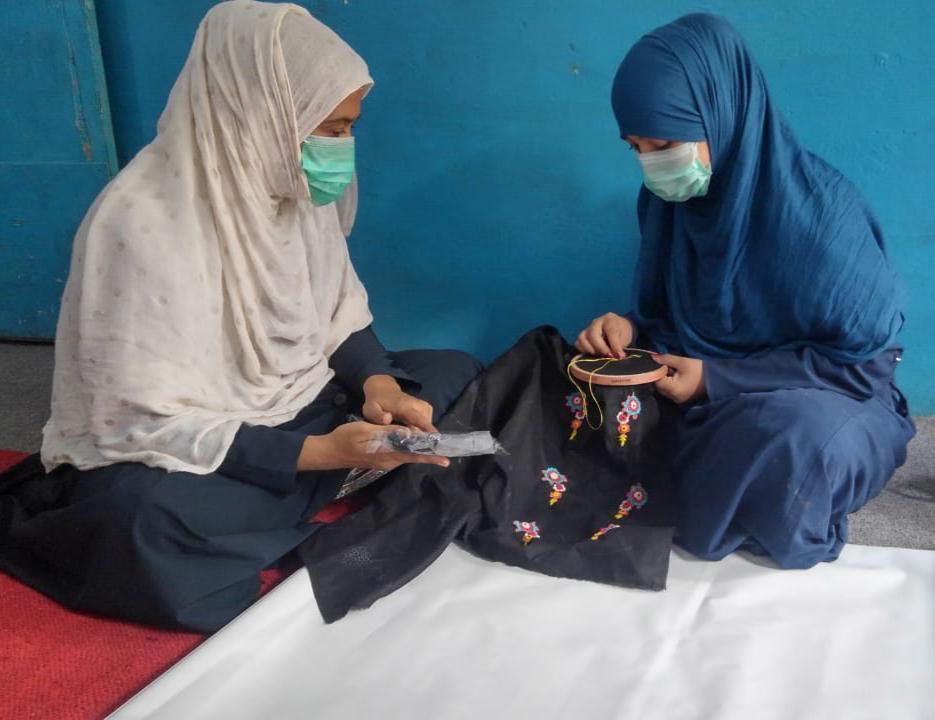


Women practice embroidery in Karachi, Pakistan, on July 30, 2020. (Huma Adnan)

According to UNHCR, Pakistan hosts more than 1.4 million registered Afghans who have been forced to flee violence and persecution at home in Afghanistan. Refugees around the world have been first to feel the economic impact of the coronavirus pandemic because they often work in the informal economy. 


A completed mask available for order on FnkAsia online. (Huma Adnan)

"We are strong women, all working to protect our community and Pakistan from the spread of any virus,” said 19-year-old Sonia Azimi, who works at the FnkAsia studio and hails from the northeastern Tahar province of Afghanistan. “I am proud of the embroideries we do and that they are now being used in a protective measure.”


Women embroider masks at a studio in Karachi, Pakistan, on July 27, 2020. (Huma Adnan)

Azimi is one of many women who have been part of Adnan’s training program and learnt how to embroider and produce jewelry and accessories. She and four others now also dozens of other women, mostly from Karachi’s refugee community. 
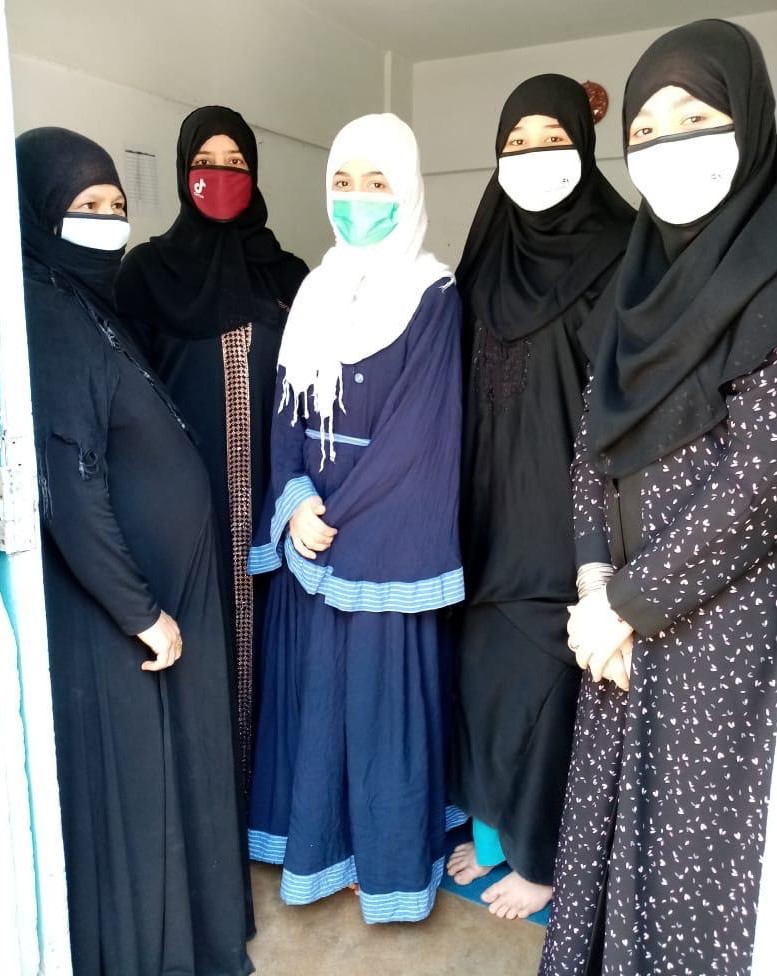


Refugee women, primarily from Afghanistan, don masks while working in Karachi, Pakistan, on July 15, 2020. (Huma Adnan)

“We all know the refugee crisis is a world crisis and it’s increasing in number by the day,” Adnan said. “I knew there is a huge community of refugees living in Karachi, I knew all these vendors that I used to see in the market, I knew they had families, they had wives. So I was always very inquisitive to know who are these people living in Karachi? What do they do?”
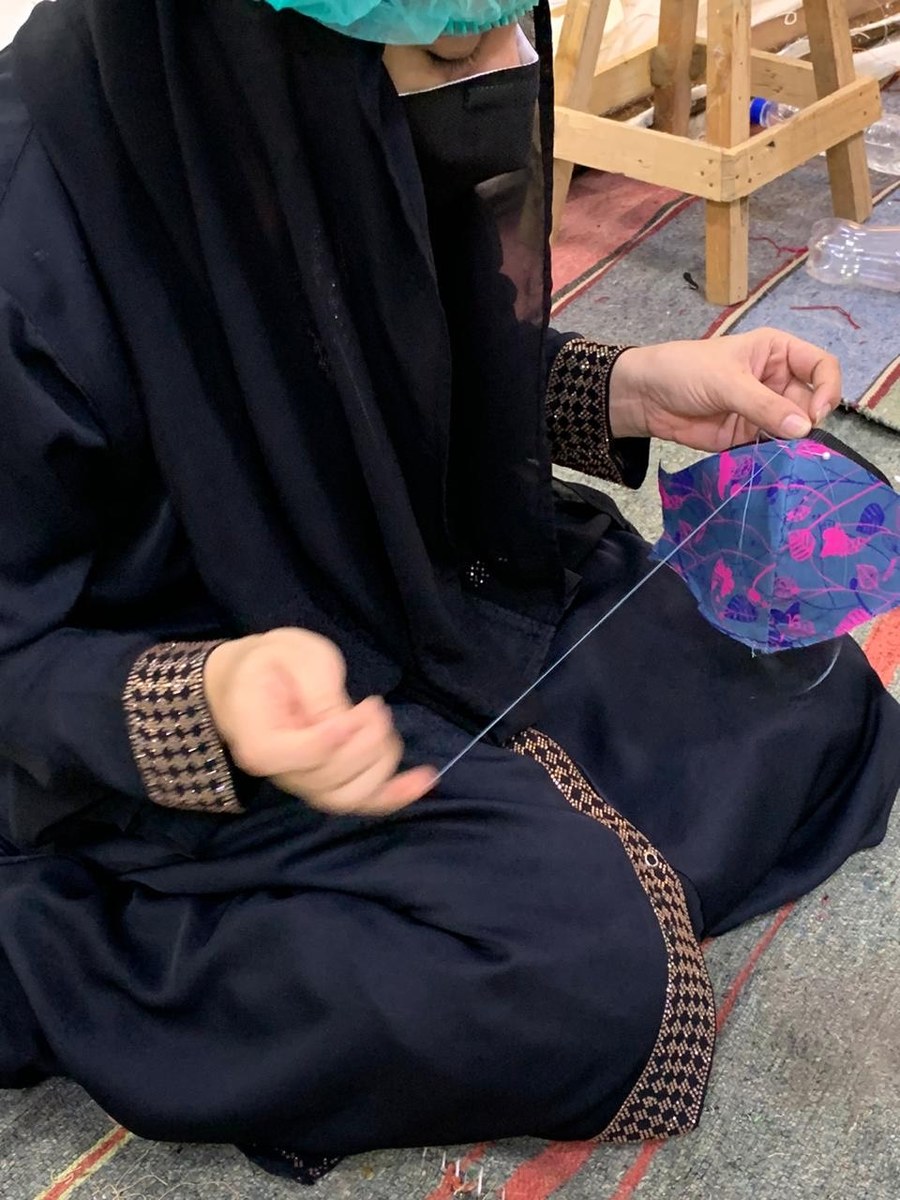


A woman embroiders a mask in Karachi, Pakistan, on July 22, 2020. (Huma Adnan)

“I am taking little steps but if the government and [international] organizations look towards them, it will be helpful because they are very, very talented women. Their craft is unmatched,” said Adnan adding that she hoped organizations like UN Women could help promote the work of the women. 

“They are capable of making orders worth, you know, 500 pieces a day, maybe a thousand a day,” Adnan said. “Because they are so motivated and they are so ready for the world, to take over. It’s just a matter of time that they get recognized.”


Pakistan, Iran leaders highlight mutual support after both engaged in short wars this year

Updated 5 sec ago
Follow

Pakistan, Iran leaders highlight mutual support after both engaged in short wars this year

  • Prime Minister Sharif met Iranian President Pezeshkian in Ashgabat on the sidelines of an international forum
  • Pakistani PM also had an informal interaction with President Putin, discussed regional issue with President Erdogan

ISLAMABAD: Prime Minister Shehbaz Sharif and Iranian President Masoud Pezeshkian on Friday praised the support their countries offered one another during episodes of external aggression this year, according to the state media, as they met on the sidelines of an international peace forum in Turkmenistan.

Pakistan fought a four-day war with India in May, when New Delhi fired missiles at its cities and Islamabad responded with retaliatory strikes. Nearly a month after the conflict, Iran waged its own war with Israel after Tel Aviv carried out attacks inside Iranian territory, prompting Tehran to launch a series of missile and drone barrages in response.

The meeting in Turkmenistan came as Pakistan and Iran seek to steady ties after a period of strained security relations, while also attempting to expand economic cooperation and strengthen border management. The two leaders reviewed regional developments, including Pakistan’s concerns over militant attacks it says originate from Afghanistan, and ongoing diplomatic efforts related to Gaza.

“Both leaders appreciated the strong support that their countries had provided to each other when they had faced external aggression earlier this year,” the state-owned Associated Press of Pakistan (APP) said.

Sharif highlighted the outcome of the 22nd Pakistan–Iran Joint Economic Commission held this year and urged closer coordination to increase bilateral trade, operationalize border markets, reinforce border security and revive transport links, including the Islamabad-Tehran-Istanbul rail network.

Pezeshkian, according to the report, said Iran wished to further strengthen ties and thanked Sharif for a “useful and timely exchange of views.”

Sharif also pressed for “meaningful action” from the Afghan Taliban administration to address Pakistan’s security concerns, APP added.

Separately, the Pakistani prime minister met other global leaders attending the forum marking the International Year of Peace and Trust 2025 and Turkmenistan’s Neutrality Day.

He held informal interactions with Russian President Vladimir Putin and discussed regional issues with Turkish President Tayyip Erdogan, Tajik President Emomali Rahmon and Kyrgyz President Sadyr Zhaparov.