Water to become ‘flashpoint’ between Pakistan, India without World Bank mediation — official

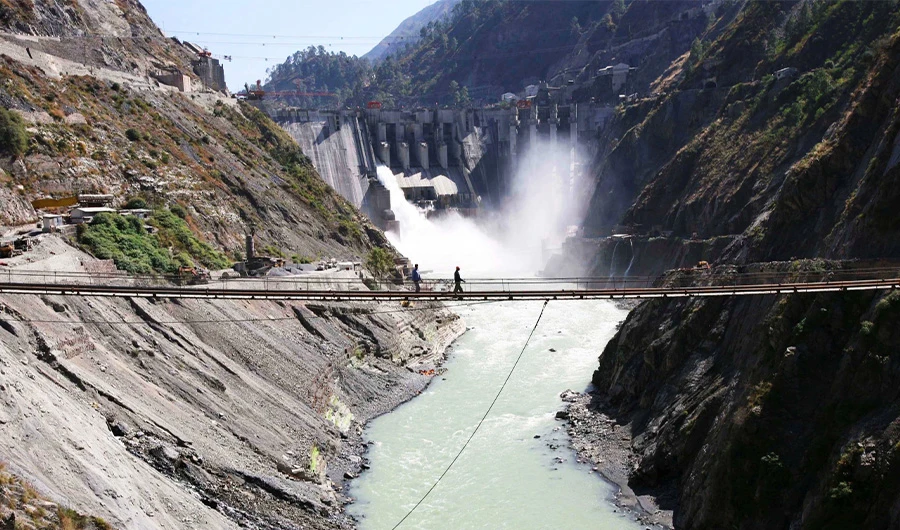
Labourers walk on a bridge near the newly inaugurated 450-megawatt hydropower project located at Baglihar Dam on the Chenab river which flows from Indian Kashmir into Pakistan, at Chanderkote, about 145 km (90 miles) north of Jammu October 10, 2008. (REUTERS)
Short Url
Updated 10 August 2020
Follow

Water to become ‘flashpoint’ between Pakistan, India without World Bank mediation — official

  • Pakistan Indus commissioner urges World Bank to help resolve water disputes with India to keep 1960 Indus Water treaty intact 
  • Experts say the two nations should renegotiate the treaty to include groundwater resources, climate change concerns 

ISLAMABAD: Outstanding water disputes between nuclear-armed neighbor Pakistan and India have the potential to become a flashpoint if the World Bank fails to mediate and implement a water treaty to resolve them amicably, Pakistan Indus Water Commissioner Syed Mehr Ali Shah said on Monday. 
The Indus Waters Treaty between Pakistan and India was brokered by the World Bank and signed in Karachi in 1960. The treaty gives control over the waters of the three eastern rivers — the Beas, Ravi and Sutlej — to India, while control over the waters of the three western rivers — the Indus, Chenab and Jhelum — lies with Pakistan. 
Under the treaty, both the countries can approach the World Bank for arbitration in case of disputes over the use of water resources.
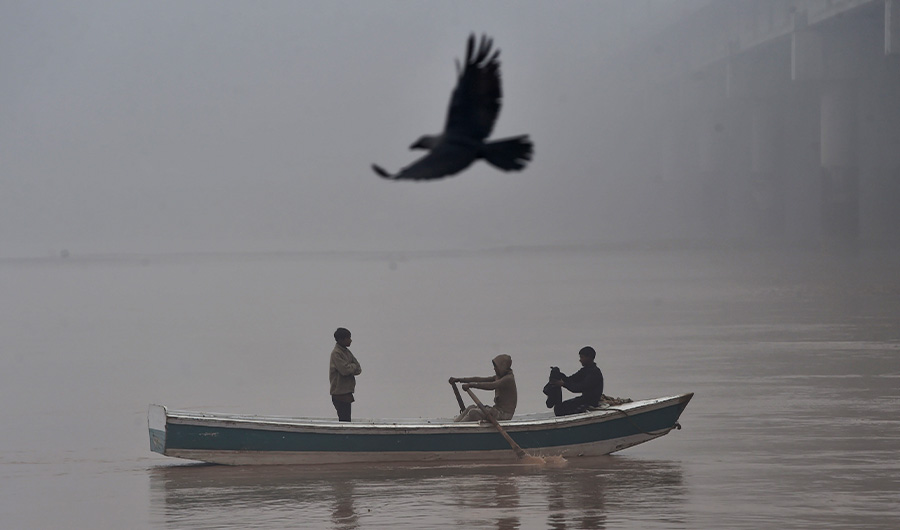


People ride a boat on the Ravi River in Lahore on December 16, 2019. (AFP/ File photo)

In August 2016, Pakistan approached the World Bank to constitute a court of arbitration over India’s two disputed projects: the 330 megawatts Kishanganga and 850 megawatts Ratle hydropower projects. 
The Bank has not yet set up the court as India has sought the appointment of a neutral expert to resolve the conflict. 
“Pakistan insists that the World Bank must constitute a court of arbitration on our request that is pending with it for the last four years,” Shah told Arab News in an interview. “If the World Bank shirks from its responsibility, water disputes are going to become another flashpoint [between India and Pakistan].” 
“The bank should have immediately constituted the court instead of dilly-dallying,” Shah added. 
He said two ongoing disputes with India – over the 1000MW Pakal Dul and 40MW Lower Kalnai – were at the Indus commissioners’ level, and Pakistan would take them to the World Bank for mediation if it failed to resolve them at the bilateral level. 
In recent years India has begun ambitious irrigation plans and construction of many upstream dams, saying its use of upstream water is strictly in line with the treaty.
Pakistan has opposed some of these projects saying they violate the World Bank-mediated treaty on the sharing of the Indus waters, upon which 80 percent of its irrigated agriculture depends.
Shah said that India had planned at least five future hydropower projects on the shared water, therefore the World Bank as a guarantor of the treaty “will have to play an effective role to keep this peace instrument between Pakistan and India intact.” 
Shortly after the partition of the sub-continent into Pakistan and India in August 1947, tensions soared over the water rights of the rivers flowing between them. Since the ratification of the treaty after nine years of negotiations, both the neighbors have not engaged in any water wars, despite waging full-scale wars over the Muslim majority Kashmir valley, which both claim in full and rule in part. 
Dr. Pervaiz Amir, water expert and regional member of the Global Water Partnership, said that Pakistan would face ‘existential threat’ in case India stopped its water and kept building hydropower projects in violation of the Indus Water Treaty. 
“Pakistan needs to enhance its technical capacity including engineering and legal to evaluate Indian hydropower projects, and can take them to international forums for settlement, other than the World Bank,” he told Arab News. 
He, however, said that both the countries should renegotiate the treaty to include subjects like groundwater resources, environmental flows like canals and climate change.
“Both Pakistan and India should cooperate with each other.” he said, “to make the best possible use of water resources instead of wasting time over arbitrations.”

Pakistan transporters call off five-day strike after successful talks with Punjab government

Updated 5 sec ago
Follow

Pakistan transporters call off five-day strike after successful talks with Punjab government

  • Transporters went on strike against heavy fines, penalties imposed by Punjab over traffic violations
  • Punjab government sets up committee to resolve transporters issues, confirms provincial minister

ISLAMABAD: Pakistani goods transporters called off their five-day-long nationwide strike on Friday after successful talks with the Punjab government, officials and transporters confirmed, as the business community warned of an impending economic crisis if the dispute stayed unresolved. 

Transporters went on a nationwide strike on Dec. 8 against stringent traffic rules and heavy fines imposed by the Punjab government over traffic violations. These penalties were included in the Motor Vehicle Ordinance 2025 last month. 

The ordinance details hefty fines ranging from Rs2000 [$7] to Rs50,000 [$178] and mentions prison sentences going up to six months for various offenses committed by drivers, such as driving on the wrong side of the road or driving in vehicles with tinted windows. 

“Yes, the strike has been called off after our meeting with Senior Minister of Punjab Marriyum Aurangzeb,” Nabeel Tariq, president of the All Pakistan Goods Transport Association (APGTA), told Arab News. 

Tariq said fines ranging from Rs1000 ($3.6) to Rs1500 ($5.4) for traffic violations have been increased to around Rs20,000 ($71.3) as per the new rules. 

He said the APGTA has agreed to accept a 100 percent or even 200 percent hike in fines. However, he said an increase of 2000 percent was not “logical.”

“Our urgent demands have been accepted and a committee has been formed to review the ordinance and come up with recommendations,” Tariq said. 

Speaking to Arab News, Aurangzeb confirmed the strike had been called off after talks with the Punjab government and that a committee has been formed to resolve the transporters’ issues. 

The committee will be headed by Aurangzeb and will include representatives of goods transporters, a statement issued by her office said. 

“The government wants to protect human lives and make things better for all citizens,” the statement said. “We will resolve the issues (with transporters) amicably.” 

‘UNPRECEDENTED CRISIS’

Pakistan’s business and industrial community, meanwhile, warned of an impending crisis if the disputed was not resolved. 

The All Pakistan Textile Mills Association (APTMA) and the Karachi Chamber of Commerce and Industry (KCCI) have both appealed for immediate government intervention.

Imdad Hussain Naqvi, president of the Grand Transport Alliance Pakistan (GTAP), told Arab News that over 400,000 goods carriers had been stranded across Pakistan due to the strike, affecting supplies to millions of consumers.

Earlier, in a letter to Punjab Chief Minister Maryam Nawaz, APTMA Chairman Kamran Arshad said the strike has “critically impacted import and export operations which are backbone of the country’s economy.”

He said hundreds of cargo vehicles remain stranded across Punjab, creating “abnormal delays” in goods movement and triggering heavy demurrage, detention charges, missed vessels and production shutdowns due to the non-availability of raw materials.

Arshad warned the disruption poses “a serious risk of order cancelation of export orders by international buyers, which would have far-reaching consequences for Pakistan’s foreign exchange earnings.”

Meanwhile in Pakistan’s commercial hub Karachi, KCCI President Rehan Hanif issued an even stronger warning, saying the nationwide strike threatens to paralyze Pakistan’s economic lifeline. 

“The complete suspension of cargo movement is pushing Pakistan toward an unprecedented trade and industrial crisis,” Hanif said in a statement. 

He added that import and export consignments are now stranded at the city’s ports, highways and industrial zones.