

UK pledges £20m aid for Beirut blast recovery

1 / 2
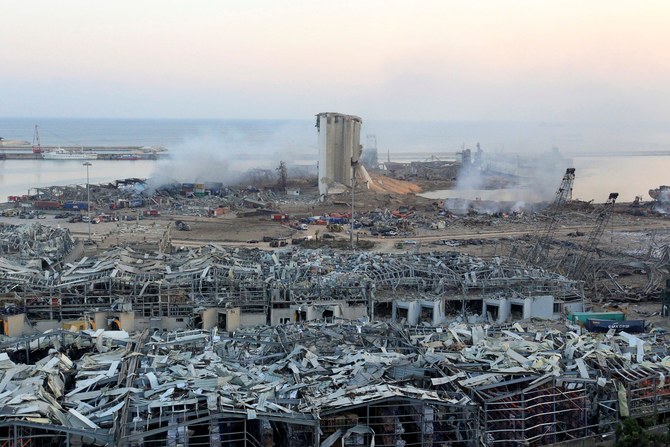
The blast in Beirut hit a grain silo in the port, exasperating Lebanon's already rising food insecurity. (File/Reuters)
2 / 2
French president Emmanuel Macron hosted the virtual aid summit. (Reuters)
Short Url
Updated 09 August 2020
Follow

UK pledges £20m aid for Beirut blast recovery

  • World leaders have joined a virtual summit to coordinate an effective humanitarian response to the Beirut blast.
  • French President promises aid will not go to "corrupt hands"

LONDON: The UK has pledged an additional £20 million ($26.09 million) in humanitarian aid to Lebanon in response to last week’s massive explosion in Beirut.

International Development Secretary Anne-Marie Trevelyan said the money would go to the UN’s World Food Programme to help Lebanon’s most vulnerable.

The figure was promised at a virtual summit held Sunday that was convened by French President Emmanuel Macron. World leaders met virtually to formulate a global response to the devastating explosion and ensuing humanitarian and economic crisis.

Trevelyan said: “The devastation we have seen in Lebanon this week has left people without homes, medical care and wondering how long it will be until the country’s food supplies run out. Today the world is coming together to stand by the Lebanese people, and as one of the biggest donors to this crisis so far, the UK is pledging more urgent support to help all those affected by this terrible disaster.”

The UK has already provided £5 million in assistance and paid for specialist medics to respond to health needs on the ground. It will also send a Royal Navy vessel to assist the recovery.

Other European countries have also promised to send humanitarian aid. Germany has pledged 10 million euros ($11.78 million) and the European Union has promised 30 million euros.

Despite the sizable donations, the price tag for rebuilding Beirut is likely to cost billions of dollars.

There is also widespread distrust among the Lebanese population about the government’s ability to effectively coordinate the blast response and to manage the huge influx of cash.

Macron, addressing this concern on his recent trip to Beirut, said: “I guarantee you, this (reconstruction) aid will not go to corrupt hands.”


Afghanistan quake causes no ‘serious’ damage, injuries: official

Updated 2 sec ago
Follow

Afghanistan quake causes no ‘serious’ damage, injuries: official

KABUL: A 5.8-magnitude earthquake that rocked eastern Afghanistan including the capital Kabul has resulted in only minor damage and one reported injury, a disaster official told AFP on Saturday.
The quake hit on Friday just as people in the Muslim-majority country were sitting down to break their Ramadan fast.
The epicenter was near several remote villages around 130 kilometers (80 miles) northeast of Kabul, the United States Geological Survey said.
“There aren’t any serious casualties or damages after yesterday’s earthquake,” said Mohammad Yousuf Hamad, spokesman for the National Disaster Management Authority.
He added that one person had sustained “a minor injury in Takhar,” in Afghanistan’s north, “and three houses had minor damage in Laghman” province.
Zilgay Talabi, a resident of Khenj district near the epicenter, said the tremor was “very strong, it went on for almost 30 seconds.”
Earthquakes are common in Afghanistan, particularly along the Hindu Kush mountain range, near where the Eurasian and Indian tectonic plates meet.
In August last year, a shallow 6.0-magnitude quake in the country’s east wiped out mountainside villages and killed more than 2,200 people.
Weeks later, a 6.3-magnitude quake in northern Afghanistan killed 27 people.
Large tremors in western Herat, near the Iranian border, in 2023, and in Nangarhar province in 2022, killed hundreds and destroyed thousands of homes.
Many homes in the predominantly rural country, which has been devastated by decades of war, are shoddily built.
Poor communication networks and infrastructure in mountainous Afghanistan have hampered disaster responses in the past, preventing authorities from reaching far-flung villages for hours or even days before they could assess the extent of the damage.