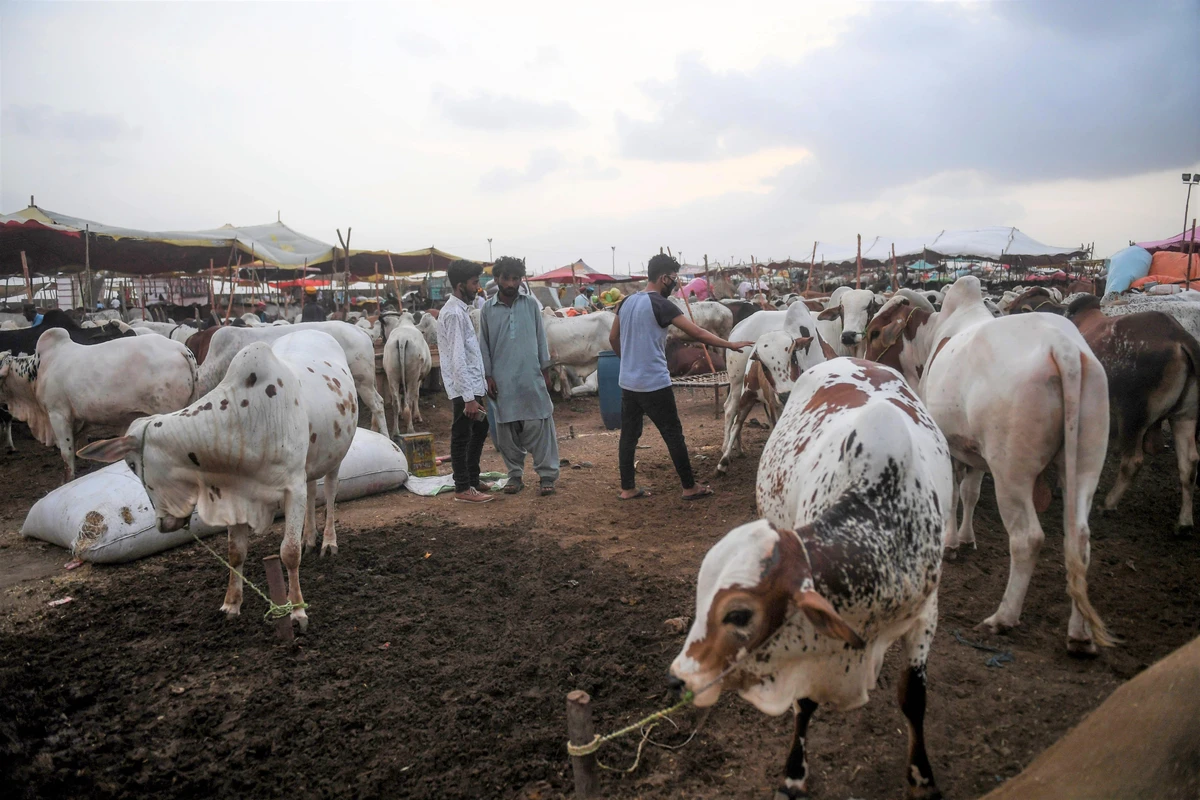
- 8.1 million animals were sacrificed last year, national tanners association says
- Coronavirus lockdowns, movement restrictions and weakening purchasing power have caused decline
KARACHI: Pakistanis sacrificed around 5.8 million animals worth $1 billion on the Muslim festival of Eid Al-Adha this year, 28 percent lower than last year, data from the Pakistan Tanners Association (PTA) shows, amid a coronavirus pandemic and economic contraction.
Pakistan this year banned open-air livestock markets inside cities for Eid Al-Adha, or the “Feast of Sacrifice,” to contain the spread of the coronavirus. Government social-distancing restrictions this year, including half-day closing, saw a drop in customers at the normally bustling markets which, like in other Muslim countries, are set up in urban centers ahead of one of Islam’s most important festivals.
Agha Saiddain, a senior PTA official, said 8.1 million animals were sacrificed last year, which dropped by 28 percent to 5.86 million animals, worth over Rs174 billion ($1 billion), this year.
“The reason of the decline in animal sacrifices are coronavirus related lockdowns, movement restrictions and weakening purchasing power of the people,” the PTA official said.
PTA data showed two million cows were sacrificed this year compared to three million last year and 3 million goats as compared to four million last year. Around 60,000 camels were slaughtered this year against 100,000 last year.
Eid businesses play an important role in the overall economy of Pakistan that has contracted by 0.4% for the first time in 68 years.
Tanners say despite the lower number of sacrifices, prices of skins and hides remained low this year because of lower export demand of finished products. The major export market for Pakistani leather products, including garments, is Europe while tanned leather is exported mainly to China.
“The European markets are closed after the outbreak of COVID-19,” said Gulzar Feroz, an ex-PTA chairman. “Majority of tanneries are shutdown or working at 50 percent of their capacity in the absence of demand from Europe.”
Skins and hides of sacrificed animals provide around 30 percent of the raw material for the country’s leather exporting industry which is also suffering from declining production and exports. This year the price of cow hide was around Rs 450-500 as compared to Rs 900-1200 last year, according to tanners and exporters.
“The raw material [skins and hides] purchased last year are not totally consumed; that is why the purchases were limited this year,” said Syed Shujaat Ali, chairman of the Pakistan Leather Garments Manufacturers and Exporters Association (PLEGMEA). “The facility which would stock 100,000 hides could buy only 5000. If the main buyers are not purchasing, how will the prices soar?”
The export of leather products has declined by 9.4 percent to $765 million during the outgoing fiscal year FY20, data shows. A major decline of 27 percent was seen in the export of tanned leather while leather garments’ exports declined only slightly by two 2 percent, according to the Pakistan Bureau of Statistics.