

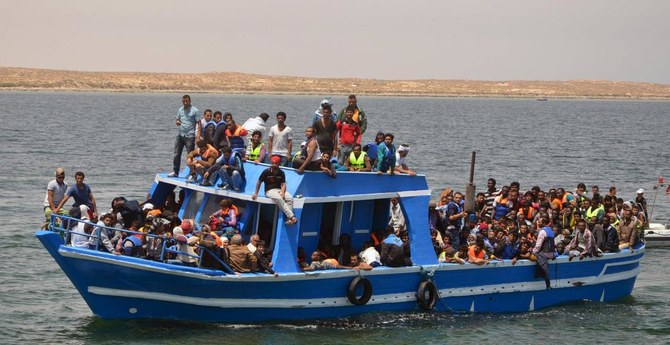

ROME: Italy is putting political pressure on Tunisia after a recent wave of migrants arrived on its southern shores and islands.
Italian authorities are struggling to manage migrant numbers on the island of Lampedusa, which is 100 miles from the Tunisian coast, transferring hundreds of migrants on ferries to the mainland daily.
They said the huge numbers arriving in packed dinghies and small boats across the channel of Sicily also carried a risk of COVID-19.
“We have at least 1,000 people every day staying there,” the mayor of Lampedusa Salvatore Martello told Arab News. “Those poor people live in terrible conditions, especially with the heatwave we had in the past few days.”
While in the past the main departure point from north Africa was Libya, most immigrants now reach Italy from Tunisia.
Italy’s Interior Minister Luciana Lamorgese, speaking to the Corriere della Sera newspaper, said the country now had “an uncontrolled flow” from Tunisia that was creating serious problems for the health system. It affected local communities living near hosting centers from where Tunisian migrants in particular tried to escape before the end of the mandatory quarantine period in place to contain the spread of coronavirus.
As of July 24, 5,237 out of the 11,191 migrants who landed in Italy in 2020 came from Tunisia, according to official data. They included nearly 4,000 Tunisian citizens.
“The difficult political situation in Tunisia has been encouraging people to flee from that country to reach Europe,” Marta Grande, chairman of the Foreign Committee of the Italian Chamber of Deputies, told Arab News. “Instability can boost emigration from that country and weaken controls by local authorities. It is a fact and we have to cope with that.”
Italian Foreign Minister Luigi Di Maio decided to postpone discussions on allocating funds of 6.5 million euros ($7.6 million) to Tunisia if it did not show a “real commitment” to preventing uncontrolled migratory flows.
"We are all perfectly conscious of the importance of cooperation for development toward some countries in order to prevent uncontrolled migratory flows, but in this phase we are asking Tunisia, a country which is considered as a ‘safe port’ for migrants, for clarification regarding an increase of arrivals to Italy,” Di Maio said in a press conference proposing an agreement on migrants to the Tunisian government. “It's good to have a 360-degree approach on the issue, it must be mainly focused on prevention of illegal emigration from that country. We must make sure that illegal migrants do not leave that country. Tunisia must increase patrols, especially in the area of Sfax, from where most of the boats leave. Italy cannot afford a new wave of migrants. We cannot lower the guard.”
Regional authorities in Sicily blame migrants for the recent increase of COVID-19 infection cases on the island and a ferry is going to be deployed off the coast of Lampedusa in the next few days to hold migrants in quarantine before they reach the mainland.


