

Iranian claims of COVID-19 cure raise skepticism

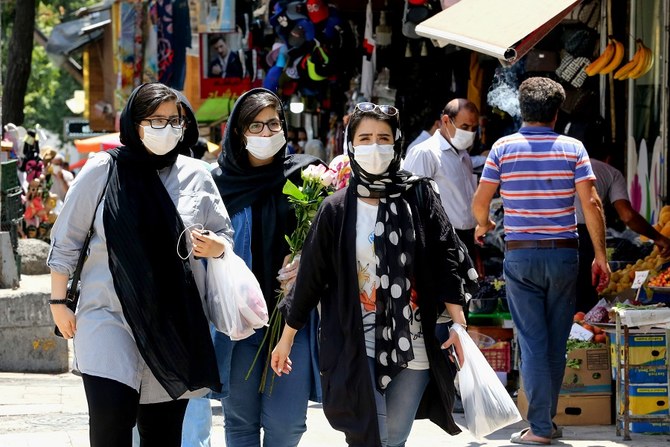
Iran ranks 10th globally for COVID-19 deaths. (FILE/AFP)
Short Url
Updated 27 July 2020
Follow

Iranian claims of COVID-19 cure raise skepticism

  • Simple search of WHO document reveals no reference to Iranian COVID-19 medicine
  • Iran still has the highest number of people infected by the coronavirus

DUBAI: Iranian state media have published claims that a medicine made in the cash-strapped country for coronavirus patients will be available on the local market in three weeks. The Iranian claims sparked controversy and lots of skepticism on social media.

The Iranian Students’ News Agency (ISNA) on Sunday quoted the country’s Vice President for Science and Technology, Sorena Sattari, as making the claims.

The Jerusalem Post later carried a version of the same story descrbing the alleged breakthrough as “an Iranian-made medicine designed to help combat the novel coronavirus.”

Sattari was quoted as saying Iranian companies at a science park in Iran’s Hamadan province had played a critical role in combatting the pandemic – particularly in fulfilling the country’s medical equipment needs.

There are billions of dollars in funding being offered to laboratories worldwide to find the cure for the coronavirus pandemic.

A simple search of the World Health Organisation’s document entitled “DRAFT landscape of COVID-19 candidate vaccines,” dated July 24, 2020 makes no mention of any Iranian laboratories - or other - making any headway into finding a medicine that would help, let alone cure the coronavirus.

Iran was slow to react to the initial outbreak and soon became the worst hit country in the Middle East - and remains so even now -  it has more than 293,600 infections, and over 15,000 fatalities.

Iran has the eleventh highest number of cases of COVID-19 in the world, according to the website worldometers.info, and ranks the tenth highest for fatalities. 

In March Iranian authorities issued an arrest warrant for a cleric, after video footage circulated showing him offering a COVID-19 patient perfume claiming it would cure the man's illness - the patient later died.


And in May Iran, derspite being the Middle East’s worst hit country for the disease, was still accepting pilgrims into the Shia holy city of Qom, while other religious sites around the world were closed, including Makkah's Grand Mosque.


Sudan now has highest number of people in need ‘anywhere in the world,’ UN warns

Updated 15 sec ago
Follow

Sudan now has highest number of people in need ‘anywhere in the world,’ UN warns

  • Spokesperson Stephane Dujarric presses states to provide urgent financial support to help meet humanitarian needs that have reached ‘extraordinary levels’
  • 34m people expected to need aid this year; UN response plan calls for $2.9bn of funding to provide food, nutrition, clean water, health and protection services, and education

NEW YORK CITY: The UN on Friday pressed member states to provide urgent financial support to help stave off further suffering in war-torn Sudan, where nearly 34 million people are now expected to need assistance this year — the highest number anywhere in the world.

Spokesperson Stephane Dujarric said that despite the “extraordinary humanitarian needs,” operations remain perilously underfunded and aid workers face mounting risks.

The UN’s 2026 Humanitarian Response Plan for Sudan calls for $2.9 billion of funding to provide more than 20 million people with life-saving food, nutrition, clean water, health and protection services, and education. But funding lags behind needs, complicating efforts to scale up deliveries of aid.

The civil war between rival military factions in the country, which will enter its fourth year in April, is driving several overlapping emergencies, including acute food insecurity and outbreaks of disease.

According to the UN’s World Food Programme, more than 21 million people in Sudan face high levels of acute hunger, and famine conditions have been confirmed, or are feared to be present, in several regions.

Humanitarian workers continue to face “grave danger,” Dujarric said. In recent months, 92 of them, mostly Sudanese, have been killed, injured, kidnapped or detained, he added, and more than 65 attacks on healthcare providers and patients have been recorded.

Aid groups also warn that conflict-related obstacles, including blockades, drone strikes, and sporadic access restrictions, continue to hamper distribution efforts.

The UN has highlighted the fact that amid the growing displacement of people in North Darfur and North Kordofan, where hundreds of thousands of civilians have been uprooted, water and sanitation services are collapsing in affected areas.

The humanitarian crisis is compounded by regional spillover. Neighboring Chad has closed its border with Sudan amid security concerns, complicating the cross-border flow of aid and threatening already fragile refugee-support systems.

Dujarric warned that without increased donor support and improved access, the skills and commitment of aid workers will not be enough to keep pace with spiraling needs.

“Delivering aid at this scale requires flexible funding and guaranteed humanitarian access, so that workers can reach people in need and they can reach them safely and rapidly and without any obstruction,” he said.