HSBC denies Chinese media reports that it ‘framed’ Huawei as part of US conspiracy

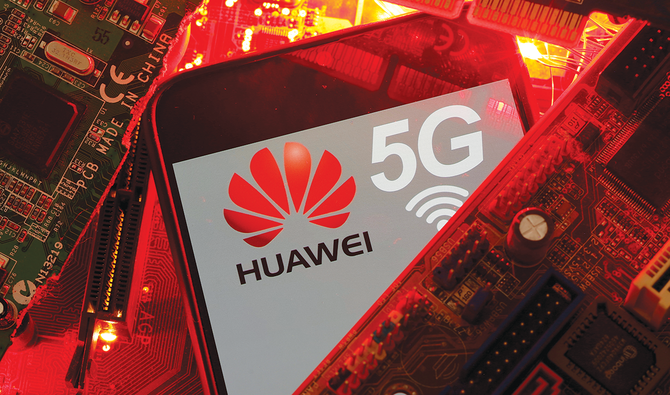
Chinese media outlets accused HSBC of being a US accomplice and ‘setting traps’ for Huawei. (Reuters)
Short Url
Updated 26 July 2020
Follow

HSBC denies Chinese media reports that it ‘framed’ Huawei as part of US conspiracy

  • ‘HSBC has no malice against Huawei, nor has it “framed” Huawei’

BEIJING: HSBC on Saturday denied Chinese media reports that it had “framed” Huawei Technologies and played a role in the arrest of the chief financial officer (CFO) of the world’s biggest telecoms equipment maker.

In a statement posted on the bank’s Chinese WeChat messaging service account, the London-headquartered lender said it did not participate in the decision of the US Department of Justice to investigate Huawei.

The HSBC statement comes a day after China’s official People’s Daily newspaper published a report accusing HSBC of being an accomplice of the US and lying about Huawei, resulting in the arrest of its CFO Meng Wanzhou.

Meng was arrested in December 2018 at Vancouver International Airport on a warrant from US authorities.

She is accused by the US of bank fraud for misleading HSBC about Huawei’s relationship with a company operating in Iran, putting HSBC at risk of fines and penalties for breaking US sanctions on Tehran.

“The context of the development of the Huawei incident clearly shows that the US investigation of Huawei was not triggered by HSBC,” the bank said in its WeChat post, without directly referring to the People’s Daily report.

“HSBC has no malice against Huawei, nor has it ‘framed’ Huawei,” it said.

“In response to information requests from the US Department of Justice, HSBC only provided factual information. HSBC has not ‘fabricated’ evidence or ‘concealed’ facts, nor will it distort facts or harm any customers for our own benefit.”

The People’s Daily report on Friday alleged HSBC was well aware of Huawei’s business in Iran, and had been “setting traps” for the company since 2012.

Other Chinese media, including the China Global Television Network, have made similar allegations against HSBC.

Meng is fighting extradition to the US and has said she is innocent. She has been in house arrest in Vancouver since her detainment.


Education spending surges 251% as students return from autumn break: SAMA

Updated 12 December 2025
Follow

Education spending surges 251% as students return from autumn break: SAMA

RIYADH: Education spending in Saudi Arabia surged 251.3 percent in the week ending Dec. 6, reflecting the sharp uptick in purchases as students returned from the autumn break.

According to the latest data from the Saudi Central Bank, expenditure in the sector reached SR218.73 million ($58.2 million), with the number of transactions increasing by 61 percent to 233,000.

Despite this surge, overall point-of-sale spending fell 4.3 percent to SR14.45 billion, while the number of transactions dipped 1.7 percent to 236.18 million week on week.

The week saw mixed changes between the sectors. Spending on freight transport, postal and courier services saw the second-biggest uptick at 33.3 percent to SR60.93 million, followed by medical services, which saw an 8.1 percent increase to SR505.35 million.

Expenditure on apparel and clothing saw a decrease of 16.3 percent, followed by a 2 percent reduction in spending on telecommunication.

Jewelry outlays witnessed an 8.1 percent decline to reach SR325.90 million. Data revealed decreases across many other sectors, led by hotels, which saw the largest dip at 24.5 percent to reach SR335.98 million. 

Spending on car rentals in the Kingdom fell by 12.6 percent, while airlines saw a 3.7 percent increase to SR46.28 million.

Expenditure on food and beverages saw a 1.7 percent increase to SR2.35 billion, claiming the largest share of the POS. Restaurants and cafes retained the second position despite a 12.6 percent dip to SR1.66 billion.

Saudi Arabia’s key urban centers mirrored the national decline. Riyadh, which accounted for the largest share of total POS spending, saw a 3.9 percent dip to SR4.89 billion, down from SR5.08 billion the previous week.

The number of transactions in the capital settled at 74.16 million, down 1.4 percent week on week.

In Jeddah, transaction values decreased by 5.9 percent to SR1.91 billion, while Dammam reported a 0.8 percent surge to SR713.71 million.

POS data, tracked weekly by SAMA, provides an indicator of consumer spending trends and the ongoing growth of digital payments in Saudi Arabia. 

The data also highlights the expanding reach of POS infrastructure, extending beyond major retail hubs to smaller cities and service sectors, supporting broader digital inclusion initiatives. 

The growth of digital payment technologies aligns with the Kingdom’s Vision 2030 objectives, promoting electronic transactions and contributing to the nation’s broader digital economy.