LONDON: China warned British Prime Minister Boris Johnson on Wednesday that his decision to ban Huawei from the 5G network would cost Britain dearly in investment, casting the move as the result of politicized pressure from US President Donald Trump.
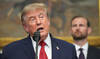
Hours after Johnson ordered Huawei equipment to be purged from the nascent 5G network by the end of 2027, Trump claimed credit for the decision and said that if countries wanted to do business with the US they should block Huawei.
But China, whose $15 trillion economy is five times the size of Britain’s, warned the decision would hurt investment as Chinese companies watched London “dumping” the national telecoms champion.
“Now I would even say this is not only disappointing — this is disheartening,” Chinese ambassador Liu Xiaoming told the Center for European Reform, adding that Britain had “simply dumped this company.”
“The way you are treating Huawei is being followed very closely by other Chinese businesses, and it will be very difficult for other businesses to have the confidence to have more investment,” he said.
As Britain prepares to cast off from the European Union, fears over the security of Huawei have forced New York-born Johnson to take sides in the rivalry between the US and China.
In Beijing, the foreign ministry cast Britain as “a relatively small place” that was becoming subservient to the US.
“Does the UK want to maintain its independent status or be reduced to being a vassal of the United States, be the US’s cats paw?” Chinese foreign ministry spokeswoman Hua Chunying said. “The safety of Chinese investment in the UK is being greatly threatened.”
Britain has become increasingly reliant on Chinese imports. Some 9 percent of all goods imported into Britain in 2018 — worth £43 billion ($54 billion) — came from China, double the proportion from 15 years earlier.
But British companies have also invested increasingly in China. Between 2013 and 2018, they more than doubled their investment position in the world’s No.2 economy to £16 billion, according to official British data.
By contrast, Chinese investment in British companies stood at £1.8 billion in 2018 — far below that of the United States, which is the biggest single foreign investor in Britain.
Trump identifies China as the United States’ main geopolitical rival, and has accused the Communist Party-ruled state of taking advantage over trade and not telling the truth over the novel coronavirus outbreak, which he calls the “plague from China.”
Washington and its allies say Huawei technology could be used to spy for China. Huawei has denied this.
“We convinced many countries, many countries — I did this myself for the most part — not to use Huawei, because we think it’s an unsafe security risk, it’s a big security risk,” Trump told reporters in the White House Rose Garden on Tuesday.
“I talked many countries out of using it: if they want to do business with us, they can’t use it. Just today, I believe that UK announced that they’re not going to be using it.”
Britain has said that its ban on Huawei is motivated by its own security concerns and by worries that supplies of Huawei gear could be interrupted by US sanctions.
It denied that Trump alone was responsible for the Huawei ban. Asked about the comments, British Health Secretary Matt Hancock said: “Well, we all know Donald Trump, don’t we.”