



DUBAI: Just a few months ago the streets of Lebanon were filled with young men and women demanding total political change and an end to the country’s confessional system with its sectarian networks.
But neither the spirited rhythm of the protest movement nor the popular chants and slogans could stave off an impending economic disaster.
Savings are now being wiped out, unemployment is surging, living standards are plummeting and fiscal conditions deteriorating as the worst national crisis since the civil war ended in 1990 cripples the country.
Much of the population has access to just one or two hours of power every day from the national grid. For the remaining hours, electricity has to be sourced from a neighborhood generator operator.
In the midst of this meltdown, however, the Lebanese have gone silent. Why?
“Hopelessness and despair,” said Basel Dalloul, a tech executive. “Wherever there is trash you now see people looking for materials and food so they can survive.”
Then there is fear. Since the outbreak of the protests, activists and journalists critical of government policies and corruption have been routinely detained and interrogated by Lebanese internal security forces and military.
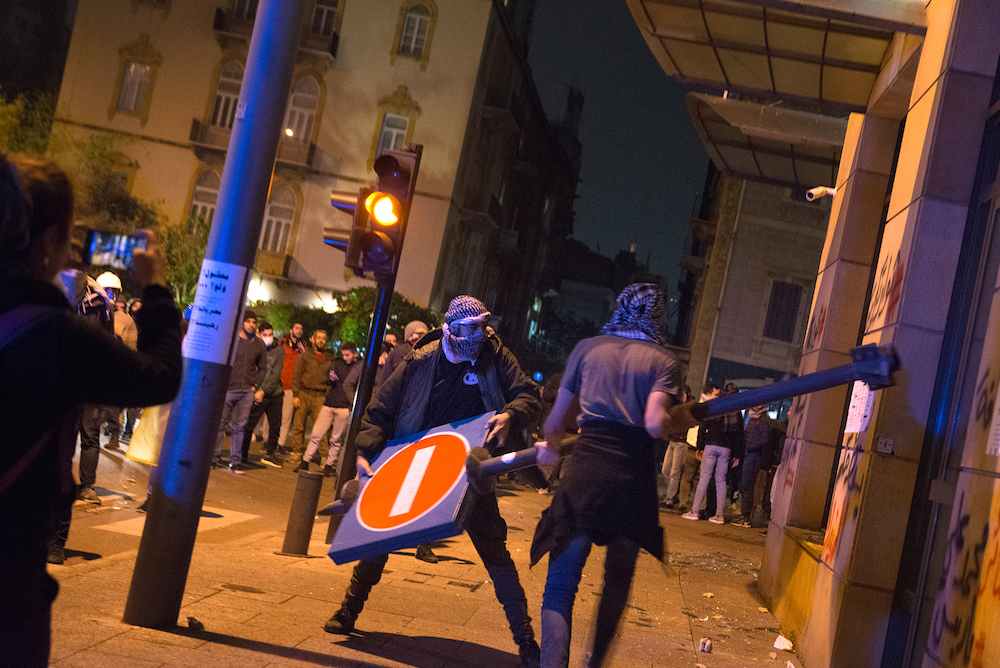
Lebanese politicians continue to resist the reforms that might have prevented violent protests on the streets of Beirut. (AN photo by Elias Moubarak)
“People still protest but not with the same momentum due to fear of the coronavirus and the political mafias that are violating human rights,” said a furniture designer who did not want to be identified. “Liberty of expression is in jeopardy. People have lost fingers, eyes and limbs for the mere act of demanding change.”
The consensus view of experts is that after decades of mismanagement, overspending and corruption, the bills have inevitably come due. Yet Lebanese politicians continue to resist the reforms that might have prevented the meltdown and can still create the conditions for international aid to begin flowing.
An immediate reprieve would be a $10 billion loan injection from the International Monetary Fund (IMF). Since February, Lebanese authorities have had 16 meetings with the organization. According to IMF officials, the talks have stalled and no serious commitments have been made by the Lebanese negotiators.
Many Lebanese are unsurprised at the deadlock, which they see as resulting from a system in which every political faction looks out for its own interests rather than the nation’s best interests.
Does this mean that Lebanon has reached its breaking point, or can it yet be rescued?
“The view of the Hirak (Lebanon’s protest movement) is that we probably need a total breakdown before we can change things,” said Nasser Saidi, Lebanon’s former economy and trade minister and founder of Nasser Saidi & Associates. “I love this quote from Giuseppe Tomasi Di Lampedusa: ‘We have to change everything if nothing is to change.’
“It’s only when it becomes practically unliveable that you are going to get change. But if you look at the experience of other countries in similar situations, two things are comparatively different. The first is that, politicians always shift the discourse to a pro-communitarian versus pro-sectarian, pro-Syrian versus anti-Syrian, pro-Iranian versus anti-Iranian, pro-8th of March versus pro-14th of March, pro-Hariri versus anti-Hariri thing,” he said.
“Once the country’s ruling elites frame the current crisis in sectarian and confessional terms, all the other initiatives concerning reform will go out the window.
“The second thing is to change the narrative. As protests amplify, the ruling elite will say that this is now a matter of national security.”
All of this may be already happening. On June 25, President Michel Aoun delivered a speech on Lebanon’s stability, in which he referred darkly to an “atmosphere of civil war” and portrayed the anti-government protests as an attempt to stir up sectarian discord.
“Ever since we have come to life in this country or in most of the Arab world, we have been told that security and stability is paramount to our survival,” said Saidi. “Any challenge to the existing order is framed as a challenge to security and stability. But once you use that argument, then you can start using the repressive forces of the state, and this is precisely what is happening today in Lebanon.
“The army and security services are quelling rising protests. Internal security services are now checking on the exchange rate prices at foreign exchange dealers.”
The breaking point, said Saidi, will come in early September. “Give it a maximum of 90 days and we will see an explosion in the streets. Hospitals will start closing, schools and universities will not be able to open. People cannot afford to send people to school. You will most likely no longer have electricity and once you no longer have electricity, everything else will break down, including communications.”
Not entirely unsurprisingly, some Lebanese say it will take nothing short of another war for the country’s strong and entrenched political interests to be fatally disrupted.
“War is always an option but never a solution,” said Maha Yayha, director of the Carnegie Middle East Center in Beirut. “In the short term, there needs to be an immediate fiscal stabilization. The economic collapse is now happening at an exponential rate and we cannot predict where it will go next.”
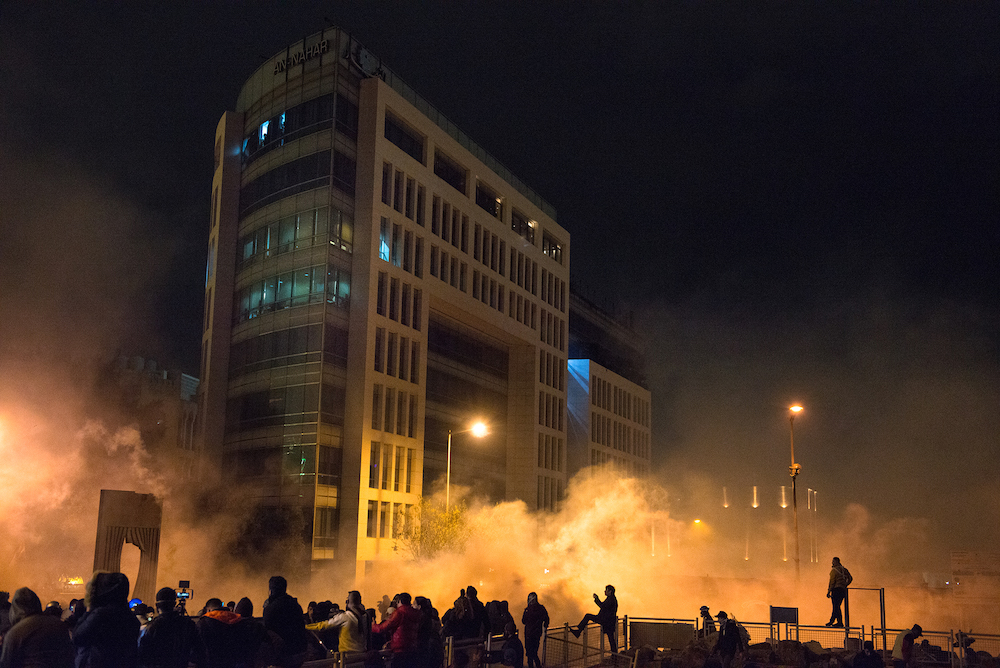
On June 25, President Michel Aoun delivered a speech on Lebanon’s stability, in which he referred darkly to an “atmosphere of civil war” and portrayed the anti-government protests as an attempt to stir up sectarian discord. (AN photo by Elias Moubarak)
Yahya points to an increase in rioting by protesters at a local level, more clashes along sectarian lines and an increase in crime.
“There is now a 50 percent increase in levels of crime across the country, from petty crime, including people holding up pharmacies because they want diapers and baby milk and medicine, to murders,” she said.
In the medium to long term, Lebanon needs a new government that is credible both to the Lebanese and the international community, and with a mandate to carry out much-needed reforms, Yahya said.
However, this will not happen until political parties come together and decide “saving Lebanon is in their best interest,” she said.
“I don’t know what it will take,” said Yahya. “The country is imploding. The damage that is being done will last at least a generation. This will not be a recovery of two to three years as was suggested in December and January if reforms had been adopted immediately. Today, we are in a different zone altogether.”
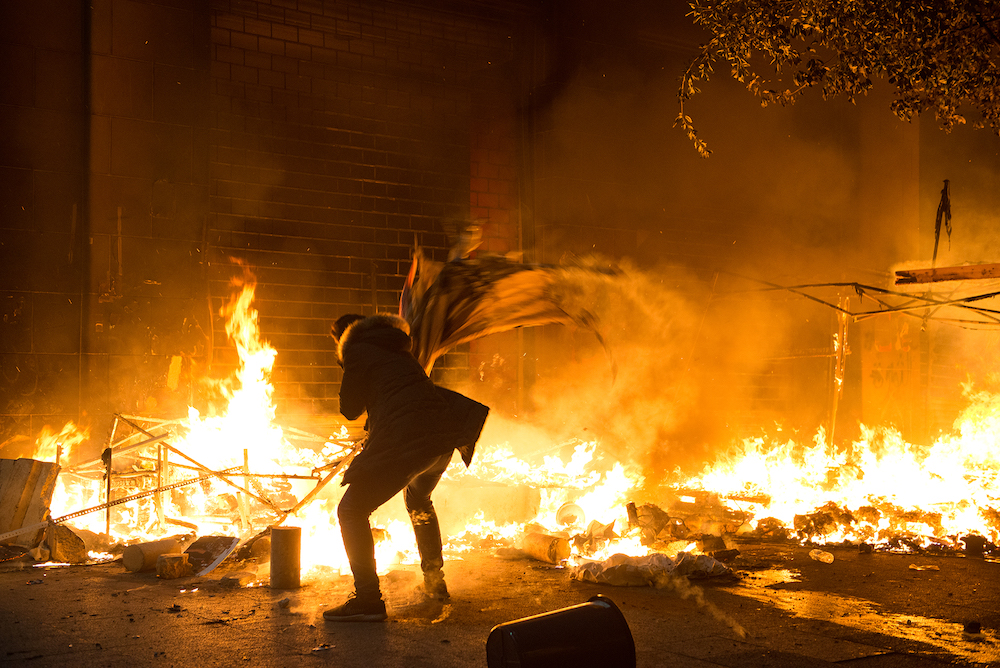
Many Lebanese are unsurprised at the deadlock, which they see as resulting from a system in which every political faction looks out for its own interests rather than the interests of the nation. (AN photo by Elias Moubarak)
An agreement with the IMF, “which the country desperately needs, would bring in other donors to Lebanon, including the EU and possibly other Arab Gulf countries that have some means,” she said.
Saidi believes Lebanon’s ruling elites will try to divert attention from the increasing misery in the country.
“The misery index, which is the sum of the unemployment rate and the inflation rate, in Lebanon now is over 100 percent,” he said.
Pointing to central bank losses of $50 billion and reports of unorthodox accounting practices by the bank’s governor, Saidi said: “They are refusing to admit that they made mistakes, that there are embedded losses in the system, that there was a Ponzi scheme by the central bank — the banks benefited from this, and the shareholders of the banks and big depositors benefited from it.
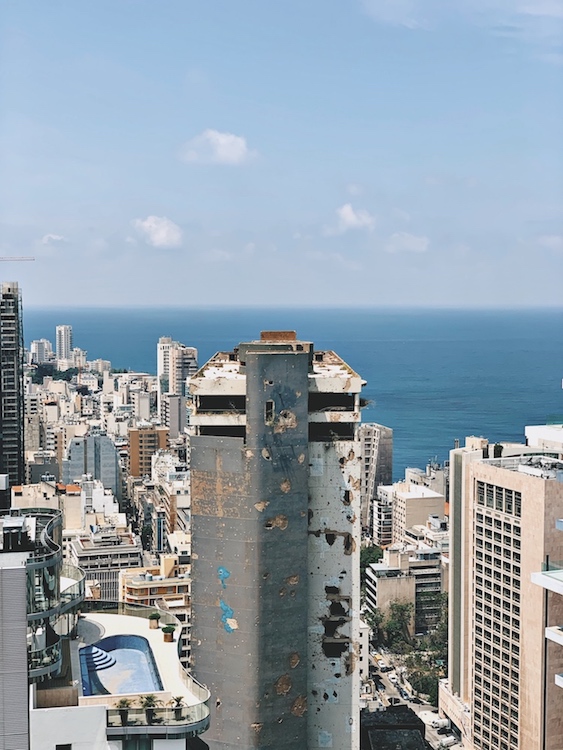
Some Lebanese say it will take nothing short of another war for the country’s strong and entrenched political interests to be fatally disrupted. (AN photo by David Raffoul)
“What’s most significant is that they got their money out with the connivance of the central bank. Individuals who have their deposits or income in Lebanese pounds have seen their wealth and income go down by around 70 percent. The only other cases I have seen like this are following hyperinflation after the two world wars in Europe and the end of the Soviet Union. There is now a destruction of the middle class in Lebanon, as happened in the 1980s.”
Lebanon’s only hope lies with reform, Saidi said. “There will be no help from outside, from other Arab states or Europe, or the IMF and the international community, until reforms are made internally.”
Meanwhile, the streets of Beirut are eerily empty at night. In the popular neighborhoods of Hamra, Ashrafieh and Gemmayze, where bars and restaurants used to overflow with Lebanese and foreign patrons, the buzz is gone. Beggars now seek help from the few passers-by, hoping for momentary reprieve from a slow-motion calamity.
--------------------
Twitter: @rebeccaaproctor


