

British Daesh terrorists dubbed the ‘Beatles’ admit mistreatment of US aid worker

1 / 2
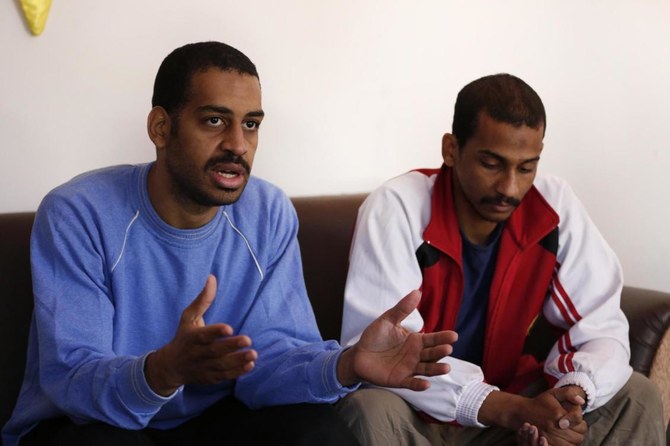
British Daesh terrorists Alexanda Kotey, left, and El Shafee Elsheikh are being held in US military custody in Iraq. (AP Photo)
2 / 2
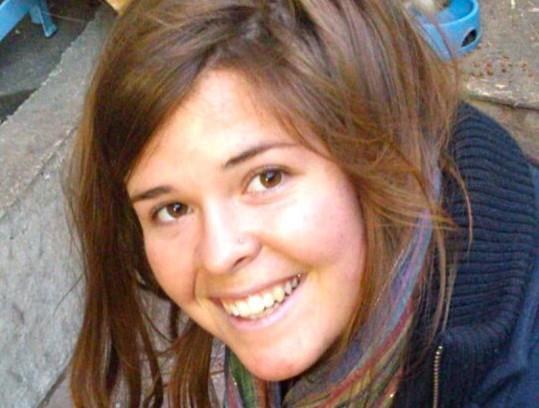
Kayla Mueller was tortured and sexually abused before her death in 2015. (Reuters)
Short Url
Updated 24 July 2020
Follow

British Daesh terrorists dubbed the ‘Beatles’ admit mistreatment of US aid worker

  • Alexanda Kotey and El Shafee Elsheikh have admitted their involvement in the captivity of Kayla Mueller for the first time
  • Daesh demanded the Muellers pay €5m and threatened that if the demands weren’t met, they would send the family ‘a picture of Kayla’s dead body’

LONDON: Two of the British Daesh terrorists dubbed the “Beatles” further incriminated themselves in mistreating Western hostages in Syria, including American Kayla Mueller.

The two men, Alexanda Kotey and El Shafee Elsheikh, for the first time admitted their involvement in the captivity of Mueller, an aid worker who was held captive and tortured and sexually abused before her death in 2015.

In interviews obtained by NBC News, Kotey said: “She was in a room by herself that no one would go in.”

Elsheikh got into more detail, saying: “I took an email from her myself,” meaning he got an email address Daesh could use to demand ransom from the family. “She was in a large room, it was dark, and she was alone, and she was very scared.”

Daesh demanded the Muellers pay €5m (£4.55m) and threatened that if the demands weren’t met, they would send the family “a picture of Kayla’s dead body.”

In captivity, Kayla was taken to live with a senior Daesh official, and was raped by the former Daesh leader, Abu Bakr Al-Baghdadi, US officials have said.

Kayla is believed to have died in 2015 in what Daesh said was a Jordanian airstrike

Kotey and Elsheikh are both in US military custody in Iraq amid questions over how and when they will face justice.

US and British authorities say the so-called Beatles were responsible for 27 killings, including the beheadings of Americans James Foley, Steven Sotloff and Peter Kassig, and British aid workers David Haines and Alan Henning.
Palestinians attempt to use Gaza’s Rafah Border crossing amidst delays

Updated 58 min 22 sec ago
Follow

Palestinians attempt to use Gaza’s Rafah Border crossing amidst delays

  • The Rafah Crossing opened to a few Palestinians in each direction last week, after Israel retrieved the body of the last hostage held in Gaza and several American officials visited Israel to press for the opening

CAIRO: Palestinians on both sides of the crossing between Gaza and Egypt, which opened last week for the first time since 2024, were making their way to the border on Sunday in hopes of crossing, one of the main requirements for the US-backed ceasefire. The opening comes as Prime Minister Benjamin Netanyahu is expected to travel to Washington this week, though the major subject of discussion will be Iran, his office said.
The Rafah Crossing opened to a few Palestinians in each direction last week, after Israel retrieved the body of the last hostage held in Gaza and several American officials visited Israel to press for the opening. Over the first four days of the crossing’s opening, just 36 Palestinians requiring medical care were allowed to leave for Egypt, plus 62 companions, according to United Nations data.
Palestinian officials say nearly 20,000 people in Gaza are seeking to leave for medical care that they say is not available in the war-shattered territory. The few who have succeeded in crossing described delays and allegations of mistreatment by Israeli forces and other groups involved in the crossing, including and an Israeli-backed Palestinian armed group, Abu Shabab.
A group of Palestinian patients and wounded gathered Sunday morning in the courtyard of a Red Crescent hospital in Gaza’s southern city of Khan Younis, before making their way to the Rafah crossing with Egypt for treatment abroad, family members told The Associated Press.
Amjad Abu Jedian, who was injured in the war, was scheduled to leave Gaza for medical treatment on the first day of the crossing’s reopening, but only five patients were allowed to travel that day, his mother, Raja Abu Jedian, said. Abu Jedian was shot by an Israeli sniper while he was building traditional bathrooms in the central Bureij refugee camp in July 2024, she said.
On Saturday, his family received a call from the World Health Organization notifying them that he is included in the group that will travel on Sunday, she said.
“We want them to take care of the patients (during their evacuation),” she said. “We want the Israeli military not to burden them.”
The Israeli defense branch that oversees the operation of the crossing did not immediately confirm the opening.
A group of Palestinians also arrived Sunday morning at the Egyptian side of the Rafah crossing border to return to the Gaza Strip, Egypt’s state-run Al-Qahera News satellite television reported.
Palestinians who returned to Gaza in the first few days of the crossing’s operation described hours of delays and invasive searches by Israeli authorities and an Israeli-backed Palestinian armed group, Abu Shabab. A European Union mission and Palestinian officials run the border crossing, and Israel has its screening facility some distance away.
The crossing was reopened on Feb. 2 as part of a fragile ceasefire deal that stopped the war between Israel and Hamas. Amid confusion around the reopening, the Rafah crossing was closed Friday and Saturday.
The Rafah crossing, an essential lifeline for Palestinians in Gaza, was the only crossing not controlled by Israel prior to the war. Israel seized the Palestinian side of Rafah in May 2024, though traffic through the crossing was heavily restricted even before that.
Restrictions negotiated by Israeli, Egyptian, Palestinian and international officials meant that only 50 people would be allowed to return to Gaza each day and 50 medical patients — along with two companions for each — would be allowed to leave, but far fewer people than expected have crossed in both directions.