

Pakistan telecoms regulator bans Bigo app, gives Tiktok last warning 

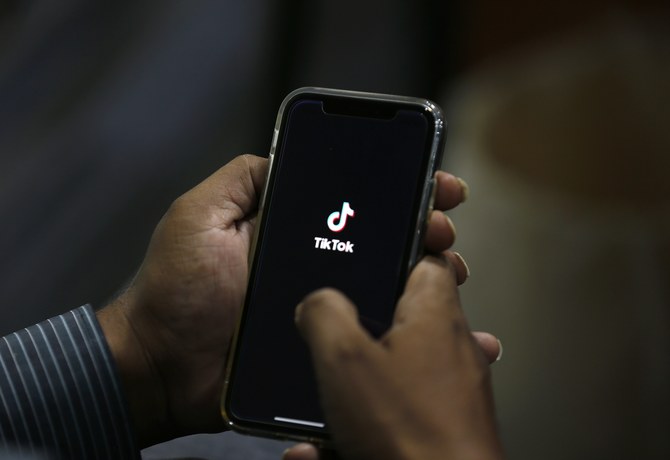
A man opens social media app 'Tik Tok' on his cell phone, in Islamabad, Pakistan, Tuesday, July 21, 2020. (AP)
Short Url
Updated 21 July 2020
Follow

Pakistan telecoms regulator bans Bigo app, gives Tiktok last warning 

  • Bigo blocked over “immoral, obscene and vulgar content”, Tiktok warned on “similar grounds” 
  • PTA this month also banned the hugely popular online game PUBG

ISLAMABAD: Pakistan Telecommunication Authority said on Tuesday it had banned the Singaporean live-streaming app Bigo over “immoral, obscene and vulgar content” and issued a “final warning” to Chinese video sharing platform Tiktok for "similar" reasons. 
Earlier this month, PTA banned the hugely popular online game, PlayerUnknown’s Battlegrounds, or PUBG, saying it was addictive, a waste of players’ time and was having an adverse effect on the mental and physical health of the country’s youth. 
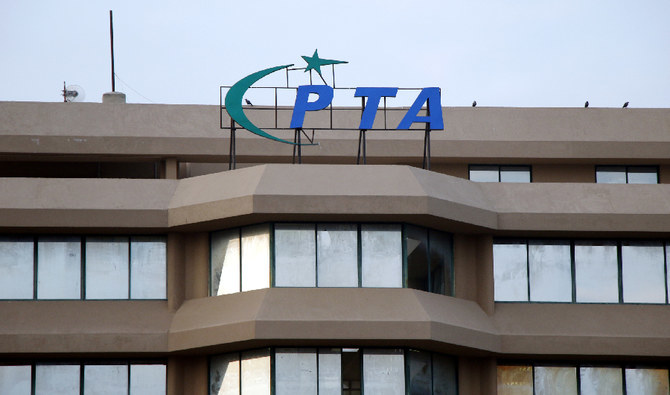


A view of Pakistan Telecommunication Authority (PTA) building in Islamabad, Pakistan, January 22, 2020. (AN photo)

PUBG, made by South Korean firm Bluehole Inc, is a survival-themed battle game that drops dozens of online players on an island to try and eliminate each other. It was launched in 2017 and has a huge global following.
“Number of complaints had been received from different segments of the society against immoral, obscene and vulgar content on social media applications particularly TikTok and Bigo, and their extremely negative effects on the society in general and youth in particular,” PTA said in a statement.
The regulator said it had issued warnings to the social media companies to moderate their content and bring it in line with Pakistani laws, but was not satisfied with the “response.” 
Therefore, the regulator said, it had “decided to immediately block Bigo and issue final warning to TikTok to put in place a comprehensive mechanism to control obscenity, vulgarity and immorality through its social media application.” 
Science and technology minister Fawad Chaudhry has said he is against such bans and they were “killing the tech industry” in Pakistan. 
On July 14, a petition was filed in the Lahore High Court, the highest court in Pakistan’s most populous province of Punjab, seeking a ban on Tiktok “for the sake of securing wellbeing of the people of Pakistan.” The court has yet to accept the plea and begin hearing the case. 


World Bank approves $700 million for Pakistan’s economic stability

Updated 20 December 2025
Follow

World Bank approves $700 million for Pakistan’s economic stability

  • Of this, $600 million will go for federal programs and $100 million will ⁠support a provincial program in Sindh
  • The results-based design ensures that resources are only disbursed once program objectives are achieved

ISLAMABAD: The World Bank has approved $700 million in ​financing for Pakistan under a multi-year initiative aimed at supporting the country’s macroeconomic stability and service delivery, the bank said on Friday.

The funds will be released under the bank’s Public ‌Resources for Inclusive ‌Development — Multiphase ‌Programmatic ⁠Approach (PRID-MPA) that ‌could provide up to $1.35 billion in total financing, according to the lender.

Of this amount, $600 million will go for federal programs and $100 million will ⁠support a provincial program in ‌the southern Sindh province. The results-based design ensures that resources are only disbursed once program objectives are achieved.

“Pakistan’s path to inclusive, sustainable growth requires mobilizing more domestic resources and ensuring they are used efficiently and transparently to deliver results for people,” World Bank country director Bolormaa Amgaabazar said in a statement.

“Through this MPA, we are working with the Federal and Sindh governments to deliver tangible impacts— more predictable funding for schools and clinics, fairer tax systems, and stronger data for decision‑making— while safeguarding priority social and climate investments and strengthening public trust.”

The approval ‍follows a $47.9 ‍million World Bank grant ‍in August to improve primary education in Pakistan’s most populous Punjab province.

In November, an IMF-World Bank ​report, uploaded by Pakistan’s finance ministry, said Pakistan’s fragmented ⁠regulation, opaque budgeting and political capture are curbing investment and weakening revenue.

Regional tensions may surface over international financing for Pakistan. In May, Reuters reported that India would oppose World Bank funding for Pakistan, citing a senior government ‌source in New Delhi.

“Strengthening Pakistan’s fiscal foundations is essential to restoring macroeconomic stability, delivering results and strengthening institutions,” said Tobias Akhtar Haque, Lead Country Economist for the World Bank in Pakistan.

“Through the PRID‑MPA, we are launching a coherent nationwide approach to support reforms that expand fiscal space, bolster investments in human capital and climate resilience, and strengthen revenue administration, budget execution, and statistical systems. These reforms will ensure that resources reach the frontline and deliver better outcomes for people across Pakistan with greater efficiency and accountability.”

In Sindh, the program is expected to increase provincial revenues, enhance the speed and transparency of payments, and broaden the use of data to guide provincial decision making. The program will directly support the increase of public resources for inclusive development, including more equitable and responsive financing for primary health care facilities and more funding for schools.