

British Airways retires entire fleet of Boeing’s jumbo jets

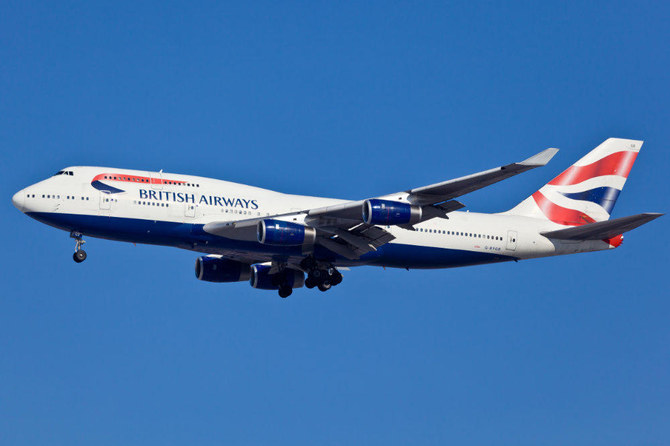
A Boeing 747 of the British Airways climbs after take off from JFK in New York on March 20, 2011. (Shutterstock)
Short Url
Updated 17 July 2020
Follow

British Airways retires entire fleet of Boeing’s jumbo jets

  • British Airways is the world’s largest operator of Boeing 747
  • Boeing Co’s 747 marked its 50-year flying anniversary in February 2019

LONDON: British Airways, the world’s largest operator of Boeing 747, said late Thursday it would retire its entire jumbo jet fleet with immediate effect due to the downturn in travel industry caused by the coronavirus pandemic.
Global curbs imposed to stem the spread of the virus led to a turbulence in air travel, placing the future of many airline companies in doubt.
“It is unlikely our magnificent ‘queen of the skies’ will ever operate commercial services for British Airways again,” the company said in a statement.
BA, which is owned by International Consolidated Airlines Group, added that it will operate more flights on modern, fuel-efficient aircraft such as its new A350s and 787s and expects such aircraft to help in achieving net-zero carbon emissions by 2050.
A wave of restructuring triggered by the virus outbreak is hitting airlines and industrial firms across the world.
The Sun reported last month that BA had reached an agreement with its pilots to sack 350 and another 300 in ‘pool’ for rehiring when needed.
The majority of pilots being ‘pooled’ were expected to be the jumbo jet first officers, according to the report.
Boeing Co’s 747, a plane that democratized global air travel in the 1970s but fell behind modern twin-engine aircraft, marked its 50-year flying anniversary in February 2019.
The US-based aerospace company and its suppliers signalled the end of the plane, when they set the final number of parts it would need for the 747 jumbo jet program at least a year ago.
However, the decision was left in limbo for years amid falling orders and pricing pressure.


Saudi Arabia’s foreign reserves rise to a 6-year high of $475bn

Updated 22 February 2026
Follow

Saudi Arabia’s foreign reserves rise to a 6-year high of $475bn

RIYADH: Saudi Arabia’s foreign reserves climbed 3 percent month on month in January to SR1.78 trillion, up SR58.7 billion ($15.6 billion) from December and marking a six-year high.

On an annual basis, the Saudi Central Bank’s net foreign assets rose by 10 percent, equivalent to SR155.8 billion, according to data from the Saudi Central Bank, Argaam reported.

The reserve assets, a crucial indicator of economic stability and external financial strength, comprise several key components.

According to the central bank, also known as SAMA, the Kingdom’s reserves include foreign securities, foreign currency, and bank deposits, as well as its reserve position at the International Monetary Fund, Special Drawing Rights, and monetary gold.

The rise in reserves underscores the strength and liquidity of the Kingdom’s financial position and aligns with Saudi Arabia’s goal of strengthening its financial safety net as it advances economic diversification under Vision 2030.

The value of foreign currency reserves, which represent approximately 95 percent of the total holdings, increased by about 10 percent during January 2026 compared to the same month in 2025, reaching SR1.68 trillion.

The value of the reserve at the IMF increased by 9 percent to reach SR13.1 billion.

Meanwhile, SDRs rose by 5 percent during the period to reach SR80.5 billion.

The Kingdom’s gold reserves remained stable at SR1.62 billion, the same level it has maintained since January 2008.

Saudi Arabia’s foreign reserve assets saw a monthly rise of 5 percent in November, climbing to SR1.74 trillion, according to the Kingdom’s central bank.

Overall, the continued advancement in reserve assets highlights the strength of Saudi Arabia’s fiscal and monetary buffers. These resources support the national currency, help maintain financial system stability, and enhance the country’s ability to navigate global economic volatility.

The sustained accumulation of foreign reserves is a critical pillar of the Kingdom’s economic stability. It directly reinforces investor confidence in the riyal’s peg to the US dollar, a foundational monetary policy, by providing SAMA with ample resources to defend the currency if needed.

Furthermore, this financial buffer enhances the nation’s sovereign credit profile, lowers national borrowing costs, and provides essential fiscal space to navigate global economic volatility while continuing to fund its ambitious Vision 2030 transformation agenda.